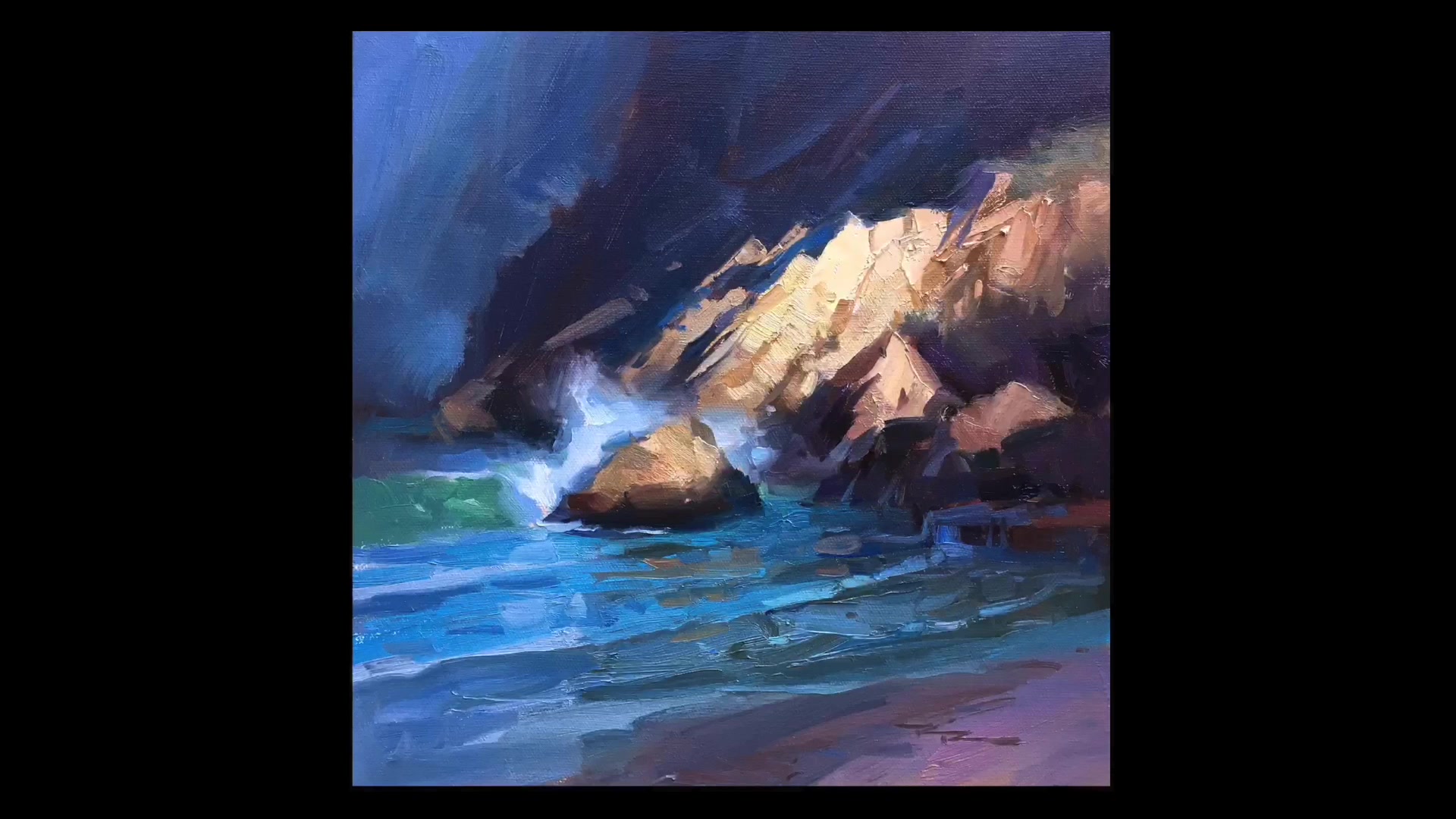
In this chapter, we'll embark on an exciting journey to master the art of painting waves, a subject that has captivated artists for centuries with its dynamic beauty and complexity. We'll dive into a series of demonstrations, starting with the mesmerizing tropical waters, moving through the vibrant energy of a green breaker, the serene beauty of a sunrise wave, and the raw power of an ocean storm. Each demo is crafted to build your understanding of how to capture the essence of waves on canvas. We'll also delve into the art of painting rocks, exploring how to see them in three dimensions and skillfully incorporate them as supporting actors in your compositions. You'll learn to simplify these elements, enhancing your wave paintings with depth and interest. Throughout this chapter, we'll focus on composition, guiding the viewer's eye to the focal point using the natural flow of the waves. By thoughtfully arranging elements and using contrasting values, you'll create paintings that not only depict the ocean's beauty but also evoke the emotions you wish to convey. Join me, and let's transform your wave painting skills from zero to hero, unlocking the secrets of the sea in your art.
This guide accompanies the full video lesson. The lesson includes the complete narrated video, the printable PDF chapter, and personalised critique support.
Consider the composition of your wave painting. Focus on leading the viewer's eye to the focal point by arranging elements thoughtfully. Use the natural flow of the waves to guide the viewer's gaze.
Use Value for Design
Incorporate different values to create depth and interest. Contrast light and dark areas to emphasize the focal point and enhance the overall design.
Create an Emotional Color Scheme
Choose a color scheme that evokes the desired emotion in your painting. Harmonize colors to enhance the mood and bring out the emotional impact you wish to convey.
Pro tipUse the natural flow of the waves to guide the viewer's gaze to the focal point.
Summary & key takeaways
Embark on your wave painting journey by thoughtfully designing the composition. Arrange the elements to naturally guide the viewer's eye towards the focal point, using the inherent flow of the waves. This strategic arrangement not only captures attention but also creates a dynamic visual experience.
As you build your painting, play with values to introduce depth and intrigue. The interplay of light and dark areas will not only emphasize your focal point but also add a layer of complexity to your work. Selecting a color scheme that resonates with the emotion you wish to convey is crucial. Harmonize these colors to enhance the mood, ensuring that your painting communicates the intended emotional impact.
Finally, as you refine your painting, remember that each brushstroke contributes to the overall narrative. By balancing composition, value, and color, you create a cohesive and compelling piece that captures the essence of the sea's movement and energy.
Points to remember
Use the natural flow of the waves to guide the viewer's gaze to the focal point.
Contrast light and dark areas to emphasize the focal point.
Incorporate different values to create depth and interest.
Choose a color scheme that evokes the desired emotion.
Harmonize colors to enhance the mood of your painting.