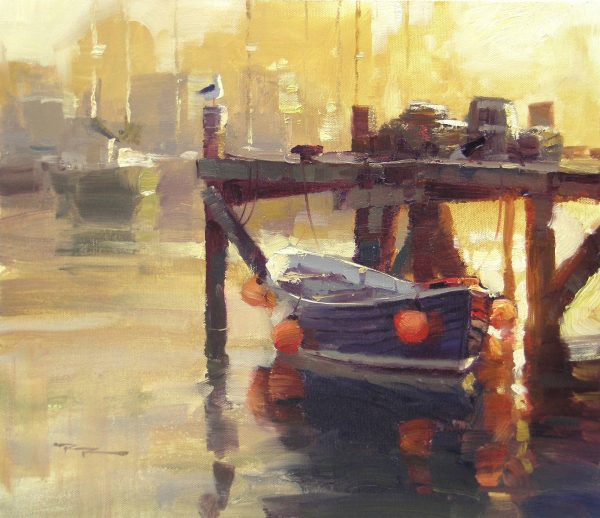
In this project, I invite you to explore the captivating world of color harmony, a crucial element in painting stunning sunsets. We'll dive into the use of the gamut mask tool, which will guide us in creating color strings that bring our paintings to life. As we paint, we'll delve into the fascinating interplay of light and water, uncovering the special effects that can transform a scene into something truly magical. I'll also share techniques for brushwork that can enhance the beauty of a sunset, making it more vivid and expressive. By considering the overall color scheme and balancing vibrant hues with subdued tones, we can create striking contrasts that highlight the brilliance of the sunset. This chapter is designed to deepen your understanding of color and light, empowering you to capture the essence of a sunset with confidence and creativity.
This guide accompanies the full video lesson. The lesson includes the complete narrated video, the printable PDF chapter, and personalised critique support.
Use a larger brush and dip it in walnut oil. Begin painting the dark areas with a thinner application, incorporating more walnut oil or painting medium. This will allow the lights to be applied thicker and juicier later.
Add Reflections and Variation
Paint the reflections for the rocks, knowing these will be covered with other colors later. Introduce dark blue violet into the rocks to create color variation.
Paint Shadowy Areas
Add a bit of the next lightest color for the dark shadowy area at the base of the wave. Mix in a little yellow ochre to vary the color and continue painting dark shadowy water areas.
Prepare for Lighter Values
Extend the dark areas beyond what is needed, as you will paint back into these with the next lightest value. Add more yellow ochre and start working color into the face of the wave.
Pro tipUse more walnut oil in the darks to keep them thinner, allowing for thicker, juicier lights later.
Embark on your sunset painting journey by thoughtfully considering your color scheme. Balance vibrant hues with subdued tones to create a striking contrast that highlights the sunset's natural beauty. Embrace complementary colors like yellow and violet to enhance harmony and depth in your scene. Choose a subject that captures the essence of a sunset, using your memory and references to guide your composition.
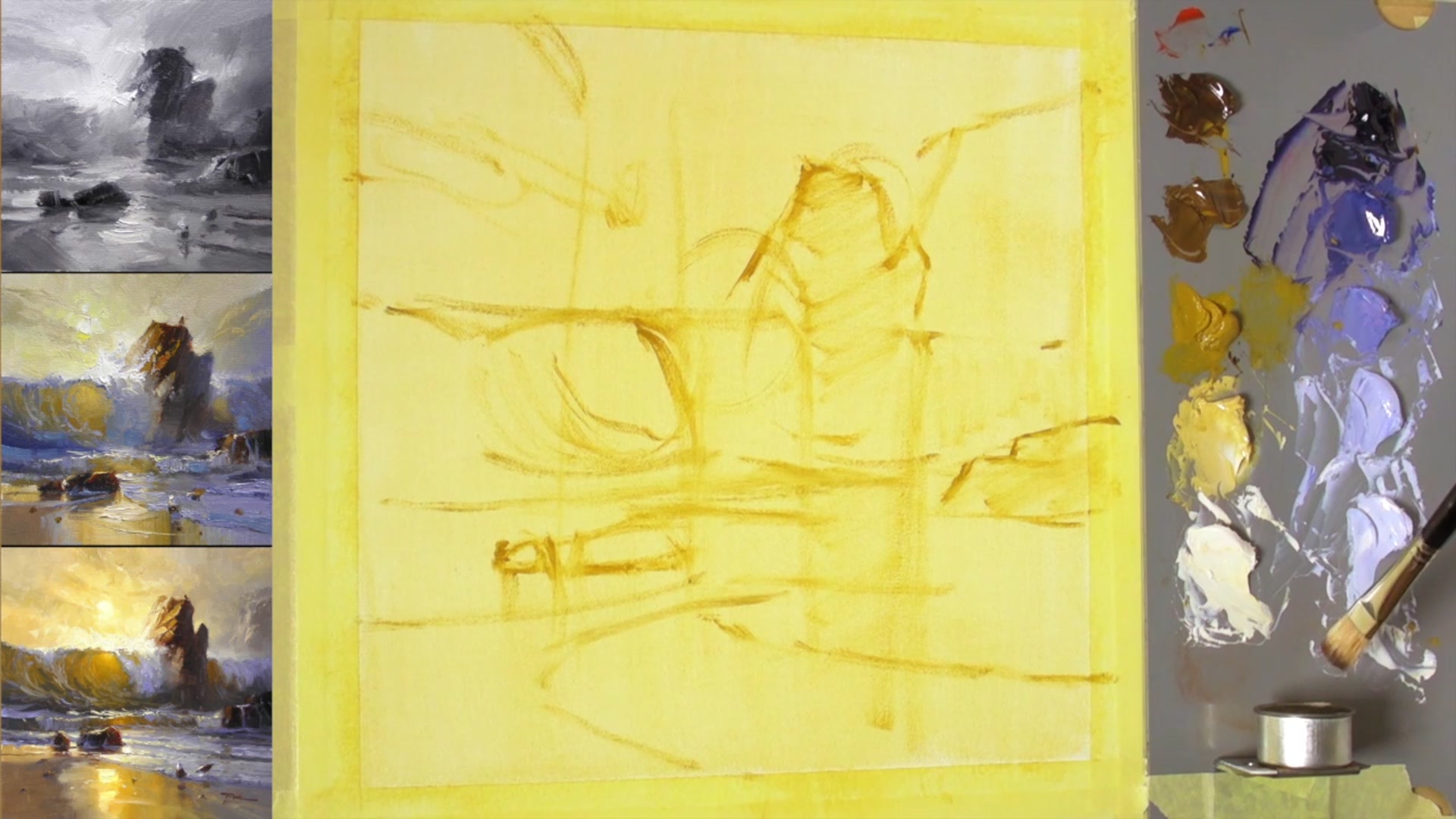
As you progress, explore different color schemes using tools like the gamut mask to refine your palette. Mix color strings to achieve a range of values, ensuring your colors remain vibrant yet balanced. Prepare your canvas with a smooth, toned surface to set the stage for your composition. Sketch your scene with attention to perspective and focal points, guiding the viewer's eye to the glowing heart of your sunset.
In the final stages, focus on painting the darks and shadows with a thinner application, allowing for thicker, more vibrant lights later. Build up the wave and foam with careful attention to light and shadow, enhancing the realism of your scene. Add texture and highlights to capture the dynamic movement of water and the brilliance of the setting sun. Use thick, vibrant strokes to convey the energy and warmth of a sunset, creating a cohesive and captivating painting.
Points to remember
Use grey tones to balance and enhance the vibrancy of your sunset colors.
Use complementary colors to naturally enhance and balance your sunset painting.
Choose a subject with dynamic elements, such as waves, to add interest to your sunset painting.
Use the gamut mask tool to explore different complementary color schemes for your painting.
Balance the addition of red to prevent the color from becoming too grey when darkening yellow ochre.
Experiment with different color schemes to deepen your understanding of color interactions.
Use a lint-free paper towel to wipe the canvas for a smooth finish.
Make sure major lines in your sketch lead the eye back to the glowing spot in the wave, the center of focus.