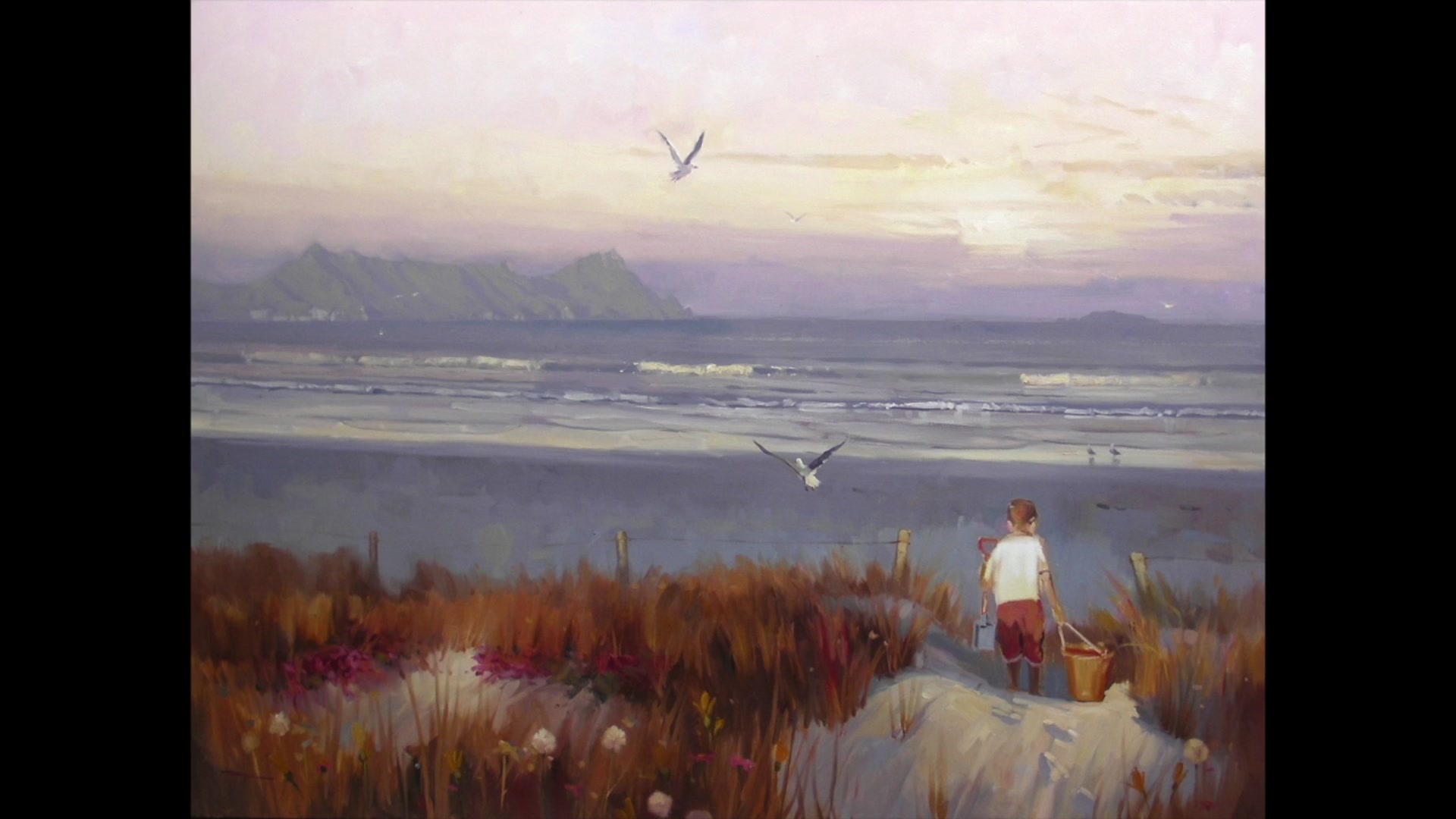
I'm thrilled to invite you to join me in exploring the captivating world of sunsets, right here from New Zealand, the first country to witness the sunrise and sunset each day. Sunsets hold a special allure for artists, offering a palette of colors and emotions that beckon us to capture their fleeting beauty on canvas. In this chapter, we'll delve into the art of painting sunsets with skill and expression. While anyone can pick up a brush and attempt a sunset, mastering the nuances of light and color is what truly brings these scenes to life. We'll start with simple compositions to build your foundational skills, gradually increasing complexity as you gain confidence. This hands-on approach will guide you through the pitfalls of muddy colors and poor composition, setting you on a path to paint with knowledge and passion. By the end of this course, you'll not only paint sunsets but also understand the interplay of light and atmosphere that makes them so enchanting. Let's embark on this colorful journey together and transform the way you see and paint sunsets.
This guide accompanies the full video lesson. The lesson includes the complete narrated video, the printable PDF chapter, and personalised critique support.
"Mastering Color AND Sunsets" by Richard Robinson.
Step 3Light scattering and sunset colors
Understand Light Scattering
Recognize that white light from the sun contains all colors of the spectrum. When this light hits the Earth's atmosphere, it scatters due to moisture in the air. Longer wavelengths like orange and red scatter less, which is why sunsets appear redder.
Consider Atmospheric Effects
Be aware that dust and pollution can enhance the red hues in a sunset. For example, volcanic smog can create stunning sunsets by increasing the scattering effect.
Visualize the Atmosphere's Role
Imagine the atmosphere as the peel of an orange. Light coming straight down at midday has less atmosphere to pass through, while at sunset, light travels through more atmosphere, enhancing red and orange hues.
Pro tipUse the concept of light scattering to enhance the reds and oranges in your sunset paintings.
Embark on your painting journey by starting with simple sunset scenes. This foundational step allows you to build essential skills before tackling more complex compositions. Gradually increase the complexity of your paintings as you gain confidence and mastery over the techniques. Remember, each project you complete adds to your skill set, so take your time and enjoy the process.
Understanding the science behind sunsets will significantly enhance your ability to capture their beauty on canvas. Recognize how light scattering affects the colors you see, with red and orange hues becoming more pronounced as the sun sets. Use this knowledge to enrich your paintings, creating vibrant and realistic sunset scenes.
Experiment with mixed lighting effects to add depth and interest to your compositions. By incorporating both sunset and sunrise lighting, you can create unique and engaging scenes that capture the viewer's attention. Pay attention to the entire sky, not just the western horizon, to discover the full range of colors and effects that nature offers.
Points to remember
Start with simple sunset scenes to build foundational skills.
Study the science behind sunsets to improve your technique.
Use light scattering concepts to enhance reds and oranges.
Visualize the atmosphere's thinness as the skin of an apple.
Observe the eastern sky during sunset for unique light effects.
Incorporate mixed lighting effects for vibrant compositions.