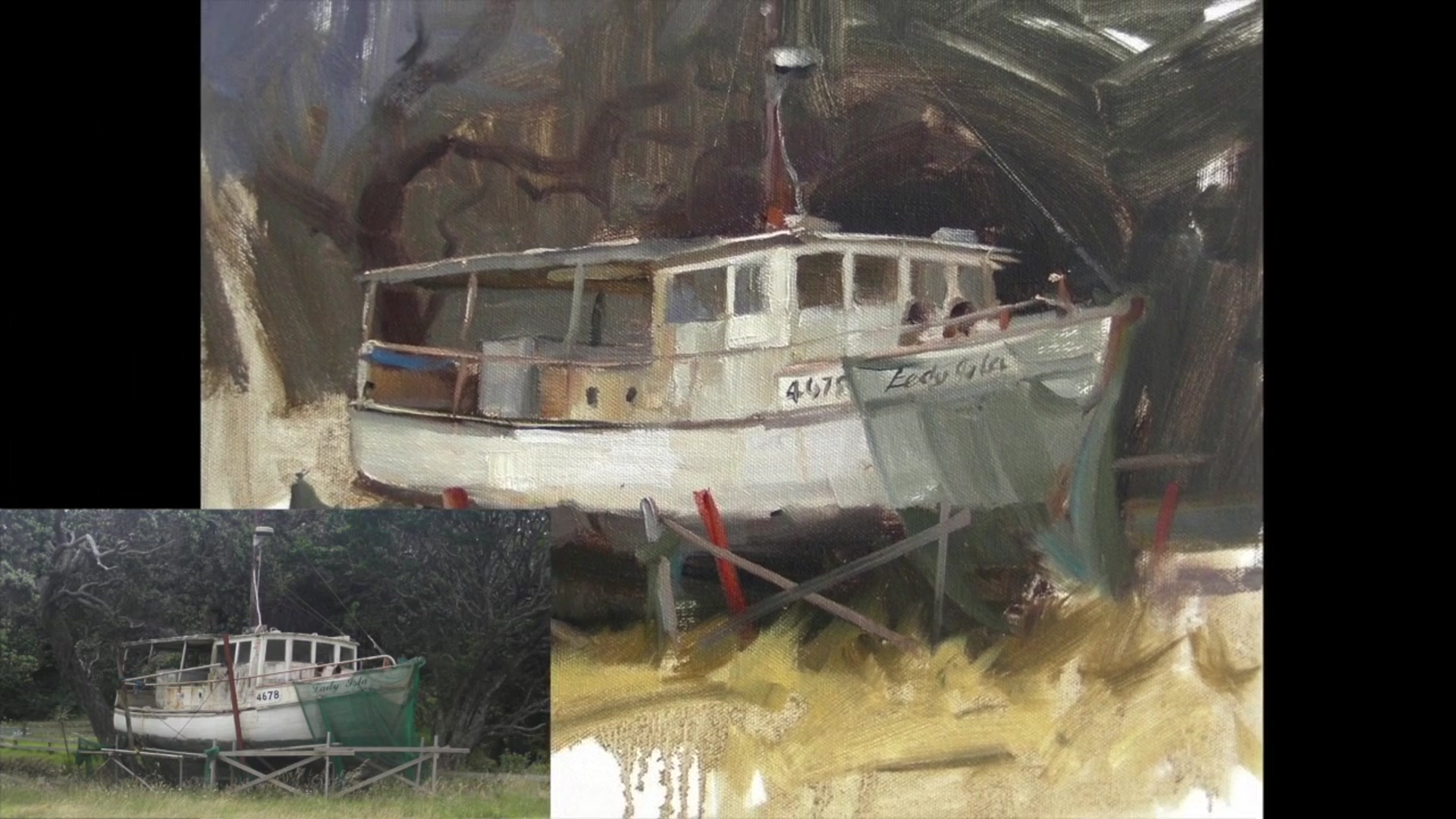
In this chapter, I invite you to bring the beauty and inspiration of painting into your home. As you explore this collection, you'll be treated to an inspiring slideshow of over 120 of my paintings, all set to the soothing sounds of classical guitar music. While this chapter includes several painting demonstrations, its primary purpose is to entertain and inspire you, rather than to instruct. One of the key lessons you'll discover is how to observe the subtle interplay of light on a grey day. Unlike the harshness of direct sunlight, the gentle light allows the true colors of objects to shine through, unwashed and vibrant. This scene offers a rewarding subject as it challenges us to capture the essence of color and light in its most natural form. Whether you're here to learn or simply to enjoy the art, I hope this chapter fills your creative well and inspires you to see the world through a painter's eyes.
This guide accompanies the full video lesson. The lesson includes the complete narrated video, the printable PDF chapter, and personalised critique support.
"Richard Robinson Home Gallery" by Richard Robinson.
Step 6Importance of drawing accuracy
Focus on Drawing Accuracy
Pay close attention to the accuracy of your drawing, especially in a subject with complex curves and lines. Ensure that all lines and curves are positioned correctly relative to each other. This step is crucial as drawing inaccuracies are often the first issue that arises in a painting.
Pro tipConcentrate on getting the drawing right before moving on to painting to avoid early mistakes.
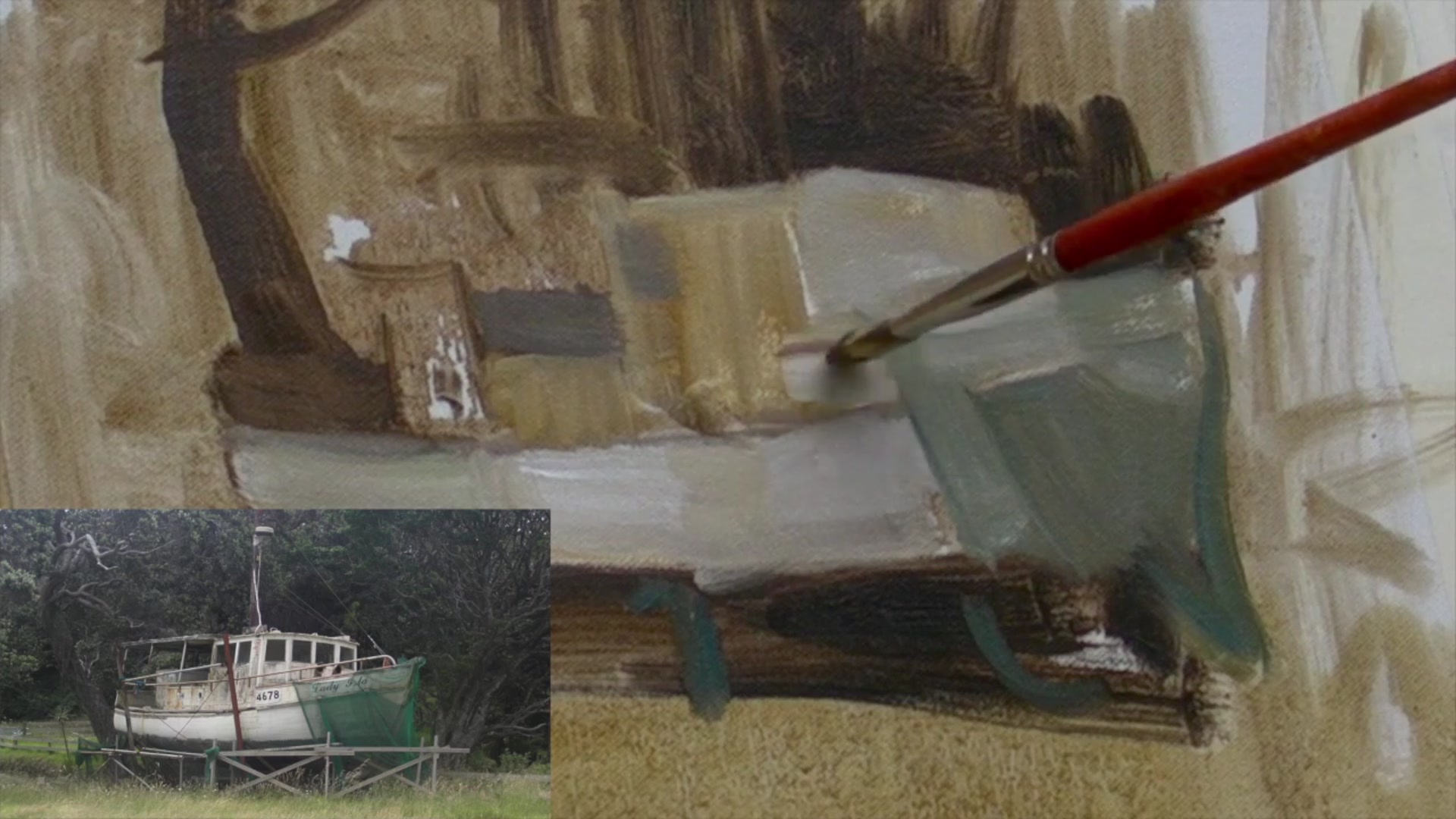
Embrace the gentle light of a grey day to capture the true colors of your subject without the interference of harsh sunlight. Begin your painting journey with a thin wash, allowing dribbly paint to add spontaneity and texture. As you progress, focus on blocking in the major areas of color to establish a strong foundation of values.
Maintain a balance between detail and the overall composition to prevent over-detailing. Pay close attention to drawing accuracy, especially when dealing with complex curves and lines. Simplify the background with overlapping gradients to enhance depth and interest.
Finish your painting with single, deliberate strokes to preserve the value structure and avoid overblending. Embrace the subtle changes in light and texture, using tools like a palette knife to add depth and character to your work. Remember, the key is to unify the composition with thoughtful detail.
Points to remember
Use the soft light of a grey day to capture true colors.
Start with a thin wash for dynamic dribbly paint effects.
Block in major areas of color first for a solid foundation.
Maintain a balance between detail and the larger picture.
Ensure drawing accuracy before moving on to painting.
Use overlapping gradients to create depth and interest.
Apply light over dark with single strokes to maintain value structure.
Incorporate texture with a palette knife for added depth.