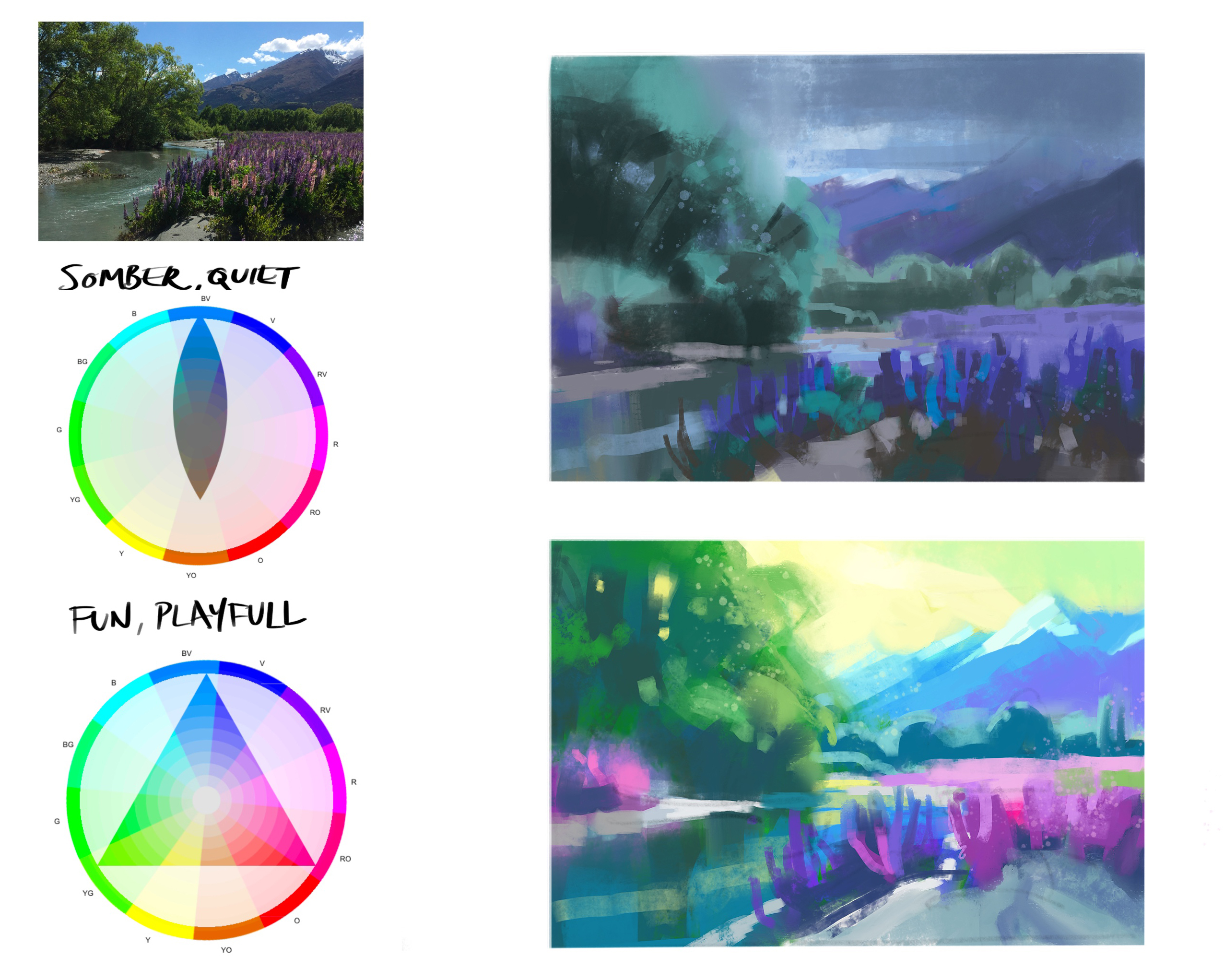
In this chapter, I invite you to explore the fascinating world of color moods in painting. Imagine the power of deciding the mood of your painting and then using color to convey that emotion to your audience. Just like Hollywood uses color grading to evoke emotions in films, you can do the same with your art. We'll start by choosing a mood for your scene and experimenting with digital tools to approximate that feeling. Using the gamut mask tool, we'll create a color scheme and mix color strings based on it. As you paint, you'll see how these colors transform your work, creating a somber or vibrant mood as desired. I discovered that by adjusting my color mixtures, I could deepen the emotional impact even further. This process opens up endless possibilities for expressing emotion through your paintings. You'll have all the tools you need to start this exciting journey. Remember, there's no single correct color scheme—experiment and let your subject guide you. Enjoy the creative freedom this brings to your art.
This guide accompanies the full video lesson. The lesson includes the complete narrated video, the printable PDF chapter, and personalised critique support.
Select a subject that inspires you. If you're struggling, remember that the subject isn't crucial when exploring color. Consider using abstract designs by cropping interesting shapes from photos on your phone.
Experiment with Color
Use the cropped image as a subject to experiment with colors. Paint small studies and try different color ideas to see what works.
Repaint with New Colors
Revisit one of your old paintings and experiment with a new color palette. This approach encourages creativity and exploration.
Choose a Color Scheme First
Select a color scheme before choosing a subject. Search for images by color online to find inspiration that suits your chosen palette.
Pro tipUse the Gamut Mask tool to create harmonious color schemes for your paintings.
Embark on your painting journey by thoughtfully selecting a color scheme that resonates with your subject. Let the natural hues of your subject guide you, whether it's a vibrant red boat against a serene green backdrop or a lively beach scene bursting with high saturation colors. Remember, the palette you choose sets the mood, so experiment with different combinations until you find the one that aligns with your artistic vision.
As you delve deeper into your painting, consider the emotional impact of hue, value, and saturation. These elements are powerful tools in conveying the mood you wish to express. Use vibrant, high saturation colors for energy and positivity, or opt for subdued, low saturation tones for depth and introspection. Adjust your values to enhance the mood, with high-key values bringing light and positivity, and low-key values adding a somber touch.
Finally, embrace the creative process by experimenting with different subjects and color schemes. Use tools like the Gamut Mask to refine your palette and digital adjustments to visualize your desired mood. Mix your colors with intention, starting with generous amounts to ensure consistency across values. As you apply your colors, let your intuition guide you, and don't shy away from bold choices that reflect your unique artistic expression.
Points to remember
Let your subject suggest a natural color scheme.
Limit your palette to create specific moods.
Combine saturated colors with high-key values for positivity.
Experiment with abstract designs to explore color.
Use digital tools to visualize mood and color schemes.
Employ the Gamut Mask to focus on desired colors.
Start with generous amounts when mixing colors.
Use thicker paint for lighter colors to add texture.