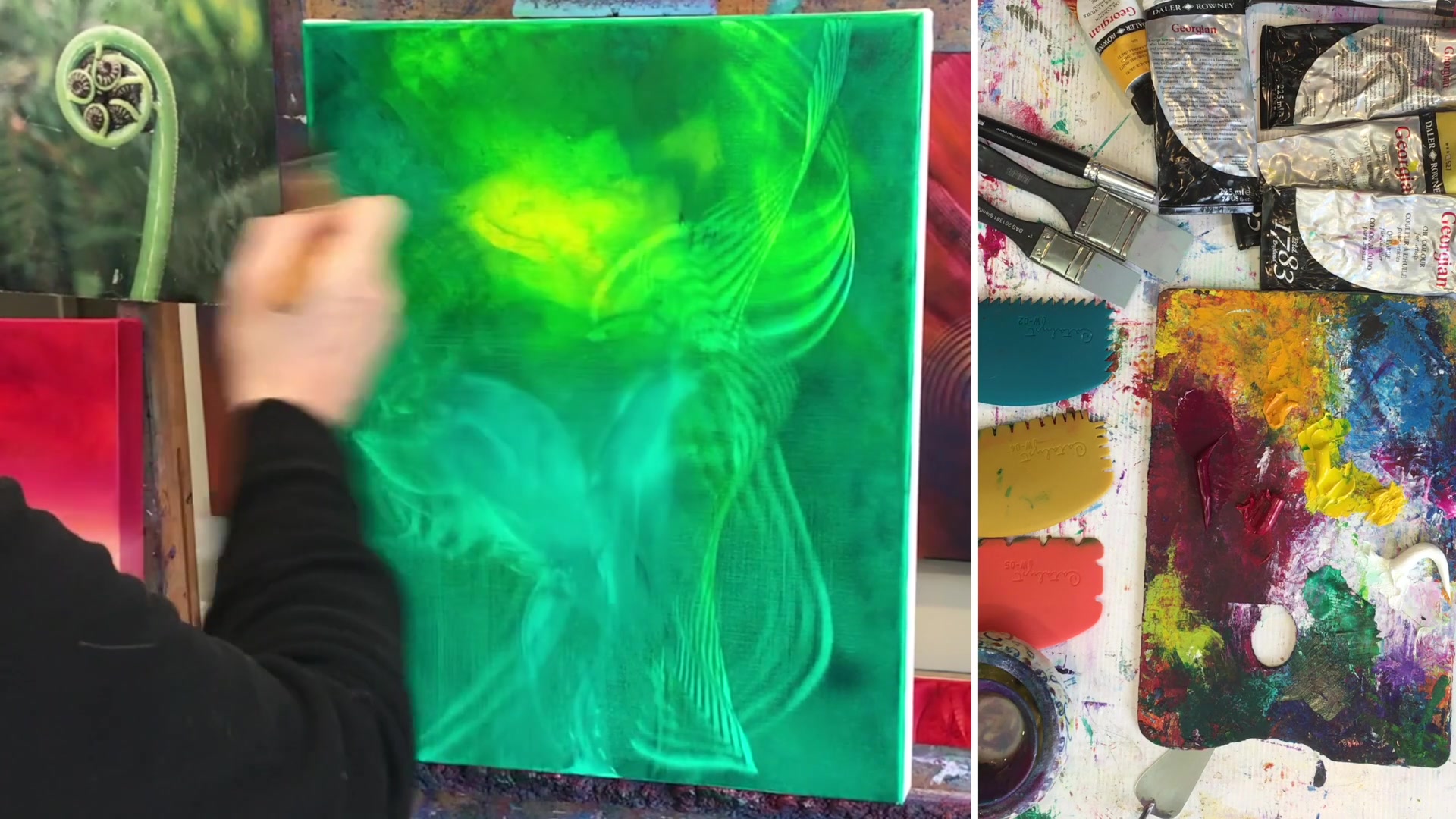
In this chapter, I invite you to join me on a creative journey alongside the remarkable New Zealand artist Vjekoslav Nemesh. This lesson is a gateway to an exciting world of artistic expression, where you'll learn to let your spirit soar across the canvas. Together, we'll delve into the secrets of Nemesh's unique techniques, honed over 35 years of dedicated painting. As we progress through each stage, you'll discover how to listen to your inner muse and follow its subtle guidance. We'll start by squeezing some Viridian Green onto our palettes, ready to mix with Primary Yellow for a vibrant, luminous effect. By using a palette knife to apply a thin layer of paint, you'll master the 'scrape on' technique, which primes the canvas beautifully without leaving any brush marks. As we spread the green paint across the canvas, a crisscross motion will help blend the colors seamlessly. This lesson is designed to unlock the door to your innate creativity, making it an enjoyable and enriching experience. Let's paint together and see where our creativity takes us!
This guide accompanies the full video lesson. The lesson includes the complete narrated video, the printable PDF chapter, and personalised critique support.
Clean the shaper thoroughly before starting to ensure precise application. This prevents unwanted dots from spreading when brushing.
Create the First Leaf Layer
Use the shaper to apply the first layer of leaves, extending them all the way down to avoid a floating appearance. Brush the leaves in a crisscross pattern to achieve a fuzzy, blurry effect, similar to a photograph with a focused foreground and a blurred background.
Add the Second Leaf Layer
Apply a second layer of leaves over the first, brushing them slightly less than the initial layer. This creates depth and contrast between the layers, enhancing the realistic appearance of the leaves.
Pro tipExtend leaves all the way down to avoid them appearing as if they are floating.
Embark on your painting journey by laying a vibrant foundation with a mix of Viridian Green and Primary Yellow. Use a palette knife to achieve a smooth, brush-mark-free base, and blend with a crisscross motion to ensure even coverage. As you progress, experiment with catalyst wedges to add texture and depth, pushing layers to create a dynamic background.
Enhance your painting's depth by layering with linseed oil and introducing semi-abstract elements. Use shapers to manipulate textures and forms, and apply realistic leaf layers to add contrast and dimension. When painting the koru, use a combination of white, yellow, and green to create a balanced and harmonious focal point.
Conclude your painting with a dirty brush exercise to explore color transitions and texture manipulation. Draw inspiration from natural patterns and light sources to enrich your artwork. Remember to photograph your process to capture and reflect on successful elements, and don't shy away from using your fingers for unique effects.
Points to remember
Use a palette knife for a thin, even layer without brush marks.
Brush in opposite directions to the lines to create texture and depth.
Use linseed oil to smoothly apply layers and create depth.
Extend leaves all the way down to avoid them appearing as if they are floating.
Use the tip of your shaper to easily correct any mistakes by brushing them off.
Use white as a bridge between colors to create smooth transitions.
Photograph your painting process to catch successful elements you might miss during painting.
Avoid over-brushing to maintain lively and dynamic details.