In this chapter, I invite you to explore the fascinating world of color as light. Imagine each colored object in your painting as its own light source—a red object as a red light, a yellow one as a yellow light, and so forth. This approach transforms the way you perceive and depict light interacting with objects. By visualizing each object as if it were radiating its own glow, you can create a vibrant area around it where its color infuses the surrounding space. This technique will enrich your understanding of how light influences nearby areas, allowing you to capture the essence of any subject with simple light and shadow shapes. As we delve deeper into mastering color, you'll find this perspective not only enhances your paintings but also brings a new level of depth and vibrancy to your work. Let's embark on this colorful journey together and unlock the secrets to making your paintings truly glow.
This guide accompanies the full video lesson. The lesson includes the complete narrated video, the printable PDF chapter, and personalised critique support.
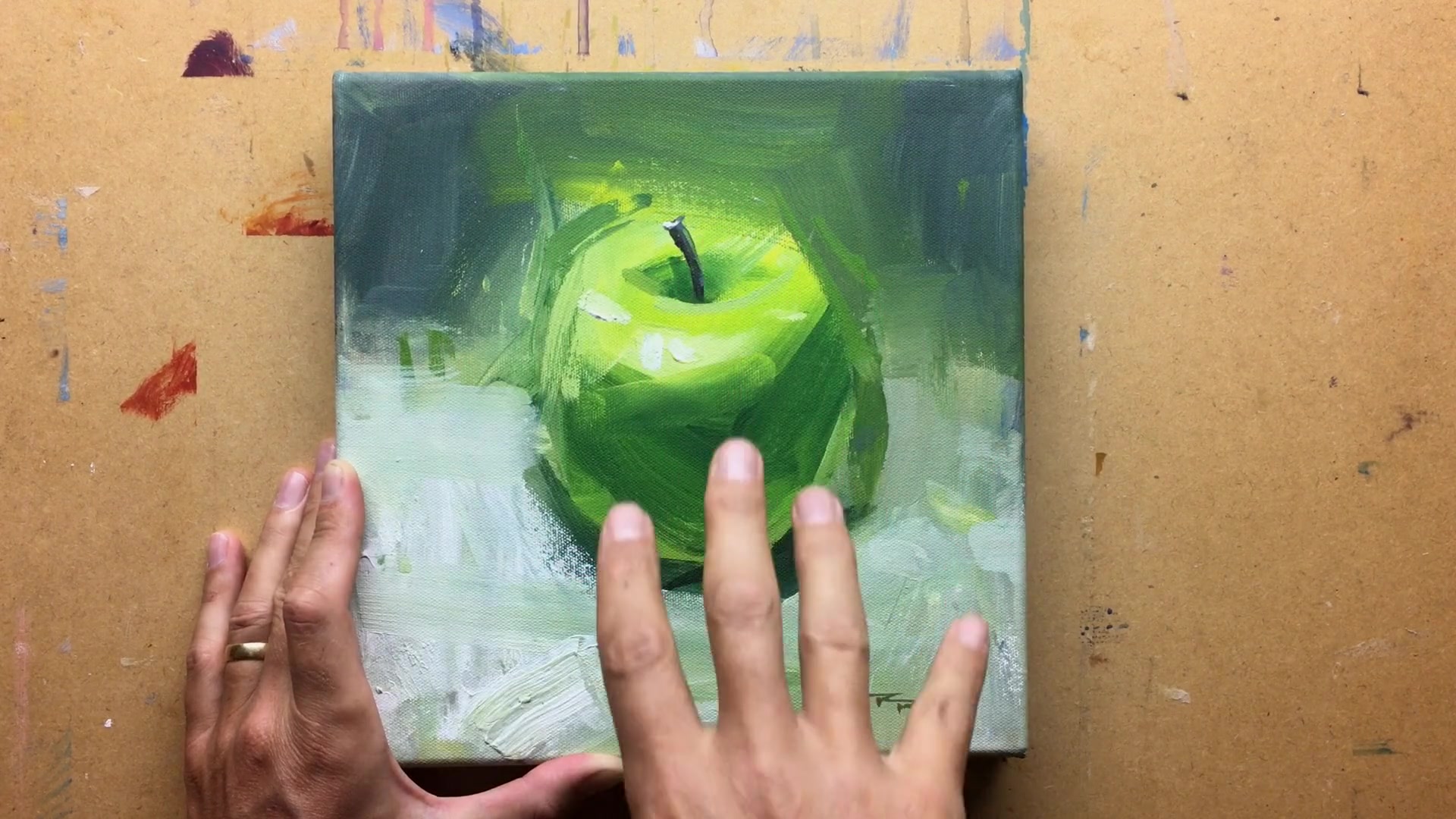
Focus on infusing your piece with a dominant color, like green, to create a painterly glow. Allow this color to emanate into the background, creating a soft, romantic effect.
Incorporate Sky Holes
Surround sky holes with a blue haze and soft edges. This technique enhances the glowing effect and adds a sacred, ethereal quality to the painting.
Work with Light and Dark
Use lighter and thicker paint in the lightest areas to enhance the glow. Allow the color to drift into the background, creating interesting color vibrations and reflections.
Highlight Transitions
Focus on the transition between strong light and dark areas. This glowing area is a point of interest where the light color seems to eat away at the dark, creating a striking contrast.
Pro tipSurround sky holes with a blue haze and soft edges to enhance the glowing effect.
In this lesson, you explored the concept of treating objects as light sources, allowing you to capture the interplay of light and color in your paintings. By visualizing each object as a glowing entity, you can infuse your work with vibrant energy and depth. This approach is particularly effective in still life and figure studies, where the glowing effect can transform the atmosphere of your composition.
You learned to enhance the glowing effect by lightening and saturating mid values, using thicker paint in light areas, and varying edges for a dynamic look. These techniques help create a striking contrast between light and dark, making your subjects pop against their backgrounds. Whether painting still life or landscapes, these methods allow you to achieve a painterly glow that captivates the viewer.
As you continue your painting journey, remember to experiment with different tools and techniques, such as using a palette knife for unique textures. By focusing on the glowing effect and its impact on the surrounding environment, you can elevate your artwork and bring a new level of vibrancy and interest to your compositions.
Points to remember
Treat each colored object as a light source to capture its interaction with light.
Lighten and saturate mid values to enhance the glowing effect.
Surround sky holes with a blue haze and soft edges for a sacred glow.
Vary the edges around your object for a dynamic, painterly effect.
Use a palette knife to create textures and shapes not achievable with a brush.
Increase color saturation in half tones and shadows for a glowing effect.
Use fewer and lighter brush strokes when blending complementary colors.
Aim to make your object glow with vibrant color to enhance its presence.