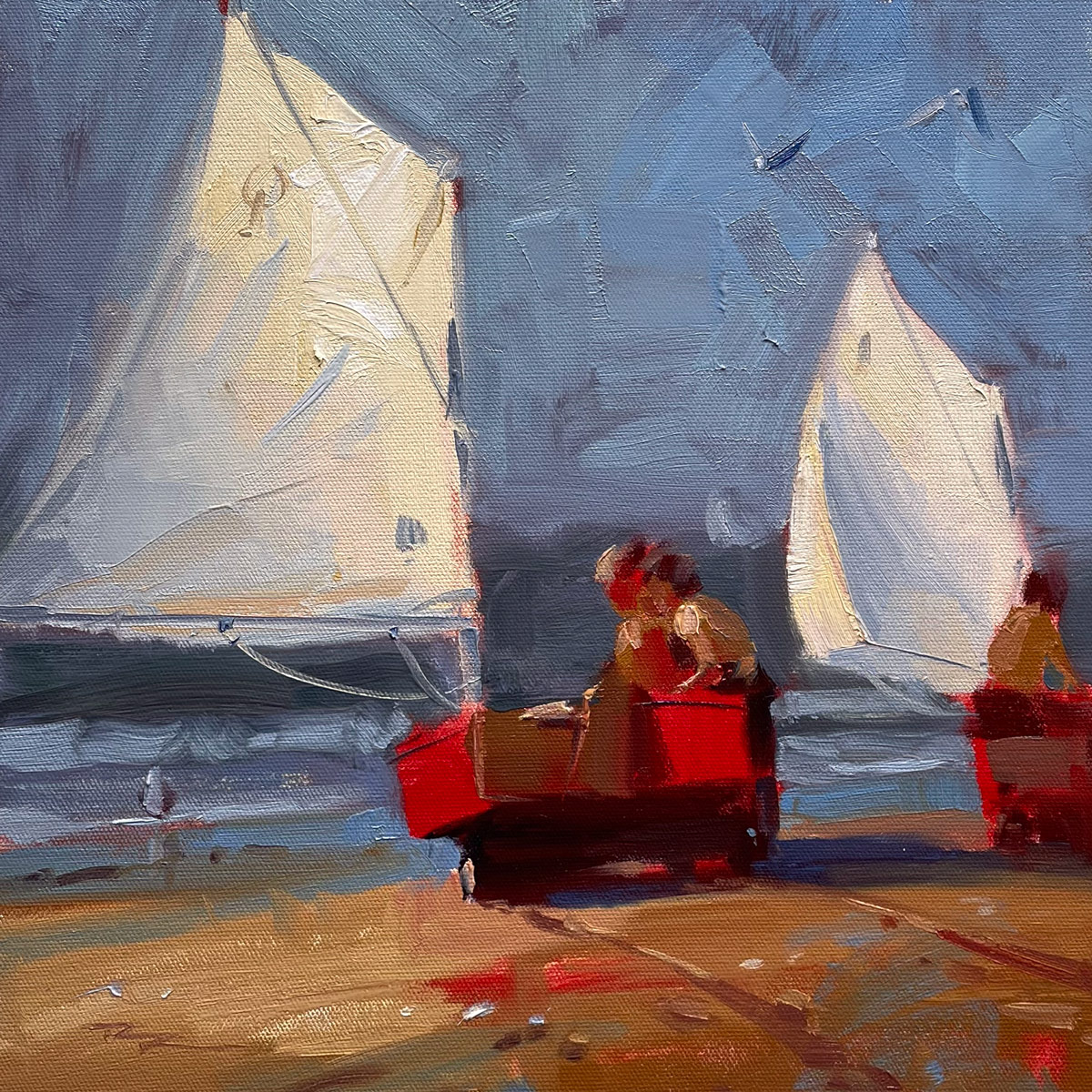
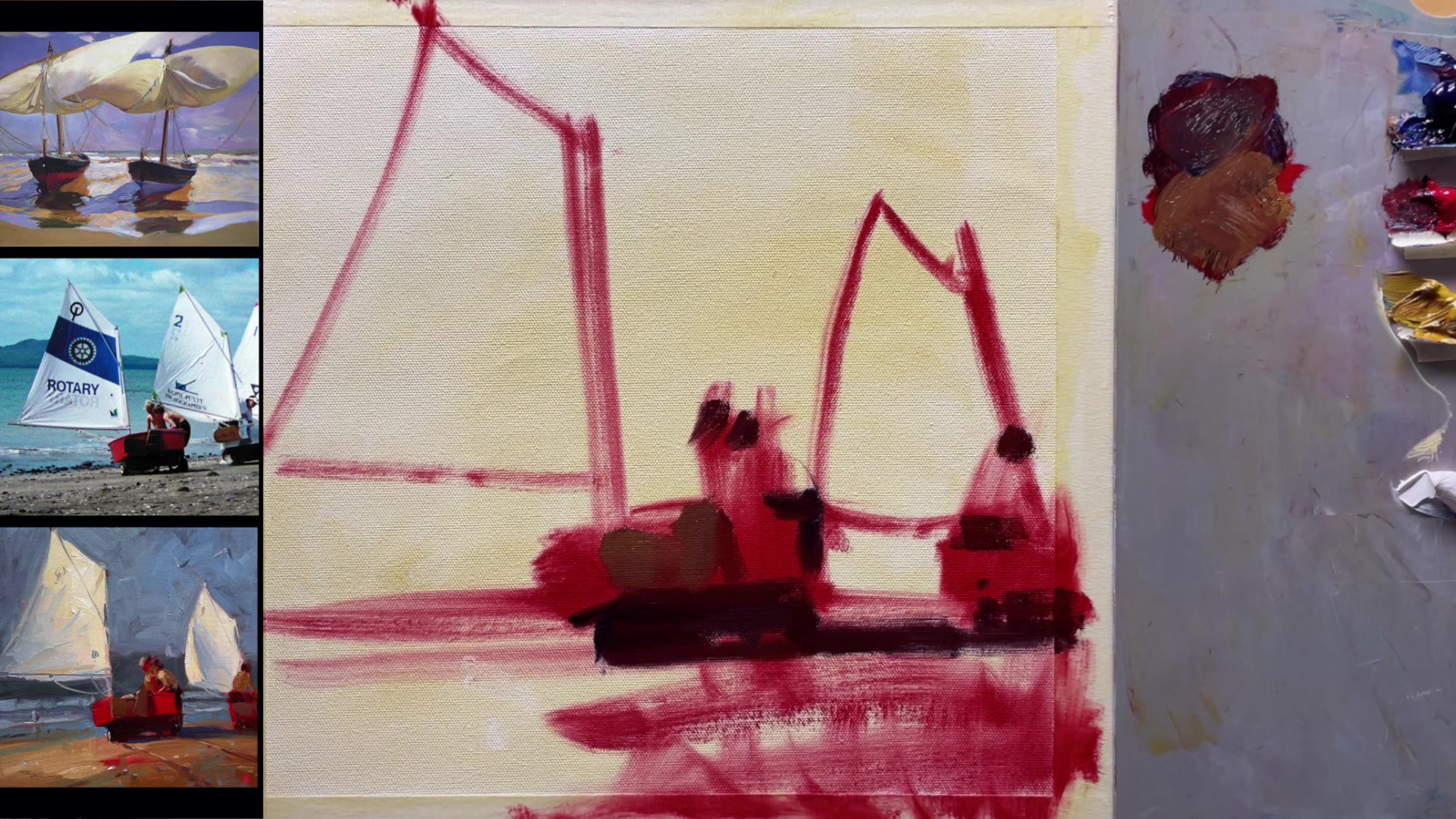
In this chapter, we'll embark on an exciting journey of transformation as I guide you through the process of reimagining an older painting into something fresh and captivating. We'll begin by exploring the initial design on my iPad, where I'll share my thought process for enhancing the composition to make it more intriguing. This lesson is a wonderful opportunity to loosen up your painting style, embracing a colorful and impressionistic approach with large brushes and generous amounts of paint. We'll draw inspiration from the works of Joaquín Sorolla, a master of capturing the essence of boats at the seaside, to enrich our understanding of handling similar subjects. As we move from digital design to canvas, you'll learn to infuse your painting with variety and expressiveness, making it not only visually appealing but also deeply engaging. Whether you're working with oils or acrylics, this lesson promises to be a rewarding exploration of light, color, and creativity. Let's dive in and discover the joy of painting this beautiful scene together.
This guide accompanies the full video lesson. The lesson includes the complete narrated video, the printable PDF chapter, and personalised critique support.
Mix a grey-purple color using your palette. Apply it thinly across the background to create a contrast with the vibrant foreground. Use walnut oil to thin the paint for a smooth application, leaving intentional gaps for texture.
Add a Second Layer
Mix a lighter blue-green-grey and apply it over the purple layer. Allow some of the first layer to show through for interesting painterly effects. Maintain a loose style, with a mix of sharp and soft edges for visual interest.
Paint the Ocean
Mix a darker grey-green for the ocean area. Add yellow, blue, and a touch of red to grey it down. Use big strokes to apply the paint, and adjust the horizon line higher to avoid intersecting with the bottom of the boom. Soften the horizon line slightly.
Pro tipUse walnut oil to thin your paint for smoother application and to achieve a loose, painterly effect.
Embark on your painting journey by embracing the expressive and painterly style inspired by the works of Joachim Sorolla. Begin by examining his dynamic compositions and the way he captures the essence of boats at sea. As you translate these elements onto your canvas, focus on introducing variety and interest to keep your viewers engaged. Remember, the key to a captivating painting lies in its ability to tell a story through movement and contrast.
As you progress, consider the impact of composition adjustments and color harmony. Use digital tools to experiment with design variations, such as adjusting the angle of the beach or adding vibrant colors to the background. These changes can enhance the sense of motion and balance within your painting. Pay attention to the interplay of light and shadow, and how they contribute to the overall mood and depth of your work.
In the final stages, focus on the details that bring your painting to life. Use a limited palette to simplify color mixing and maintain harmony. Incorporate textures and varied brushwork to add interest and realism. Whether you're painting sails, reflections, or figures, aim for a balance between sharp and soft edges to create a dynamic and engaging composition. Let your creativity flow, and enjoy the process of bringing your vision to the canvas.
Points to remember
Introduce variety to keep your painting engaging.
Consider cropping elements for a dynamic composition.
Focus on the contrast between light and dark.
Use diagonals to enhance motion and balance.
Add tracks in the sand to guide the viewer's eye.
Toggle between before and after views to evaluate adjustments.
Use a limited palette for color harmony.
Squint at your subject to simplify it into big shapes.