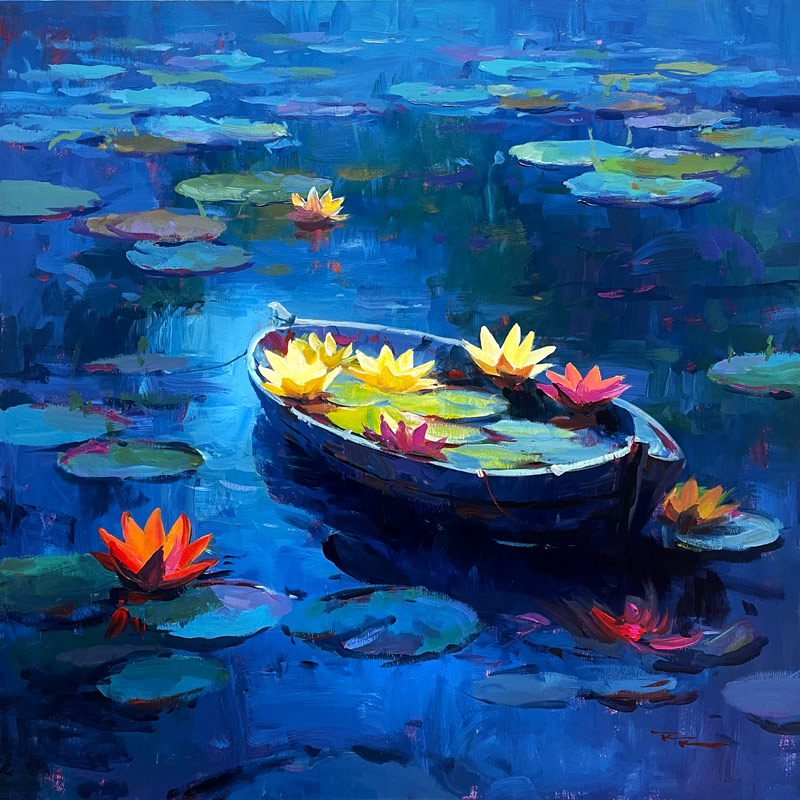
In this chapter, we're diving into the exciting world of using Artificial Intelligence to enhance your creativity as a painter. We all know how much time can be spent searching for that perfect image to paint, only to come up empty-handed or uninspired. With AI, you can now generate your own inspiring images in just minutes, saving you countless hours of frustration. Although PaintyBot is no longer active, you can easily use OpenArt.ai to achieve the same results. I'll guide you through the process of creating beautiful, unique images using AI, and then we'll transition into painting that image step by step with acrylics on canvas. Oils work just as well if that's your preference. This scene, 'The Lily Boat,' is a particularly rewarding subject because it combines the tranquility of nature with the creativity of technology, offering a fresh perspective and a chance to explore new artistic possibilities. By the end of this chapter, you'll not only have a stunning painting but also a new tool in your creative arsenal. Let's get started and enjoy the journey!
This guide accompanies the full video lesson. The lesson includes the complete narrated video, the printable PDF chapter, and personalised critique support.
The Lily Boat 30x30" Acrylic on Canvas by Richard Robinson
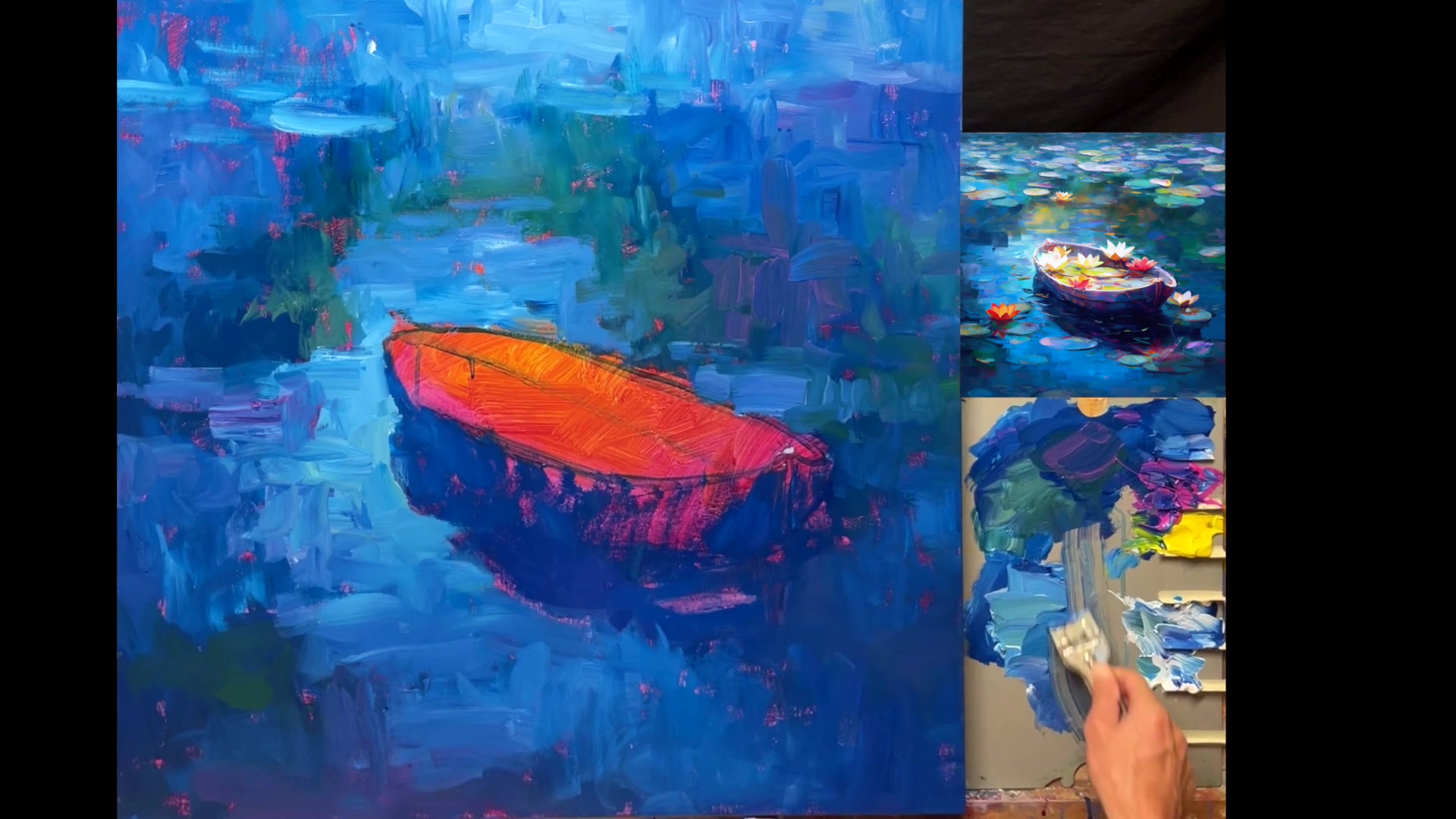
Step 10Mixing Dark Colors
Prepare Your Palette
Scrape off any light colors, including white, from your palette. This ensures a clean space for mixing pure darks without contamination from lighter hues.
Choose Your Dark Colors
Avoid using black to prevent dulling other colors on your palette. Opt for Napthol Red Light and Phthalo Blue to create a rich, dark color for the boat.
Mix the Dark Color
Combine Napthol Red Light with Phthalo Blue on your palette. Ensure the mixture is dark and vibrant, suitable for expressive painting.
Pro tipKeep a clean space on your palette for mixing dark colors to avoid contamination from light colors.
Embark on your painting journey by selecting an inspiring image and experimenting with variations to find a unique composition. Begin with a warm Bordeaux base on your canvas, setting the stage for vibrant colors and a glowing focal point. As you prepare your palette, embrace the freedom of using generous amounts of paint to encourage a bold, expressionistic style.
As you progress, focus on efficient techniques, such as sketching the boat's perspective accurately and layering your water lilies with natural, painterly strokes. Step back frequently to evaluate the overall effect, ensuring smooth transitions and a cohesive composition. Use expressive brushstrokes to maintain movement and energy, allowing colors to blend naturally on the canvas.
In the final stages, refine your painting by adding shadows, highlights, and details to the flowers, ensuring each element contributes to the shimmering, vibrant scene. Embrace the unpredictability of under-mixing colors directly on the canvas, allowing for unique textures and variations that bring your painting to life. Remember, each step is an opportunity to explore and express your creativity.
Points to remember
Experiment with different levels of similarity in the variation tool for unique compositions.
Use a Bordeaux tone as a warm base to enhance blues and greens.
Buy paint in bulk for large paintings to save money and paint more freely.
Position your palette to prevent paint from running, maintaining control over your materials.
Use a center line to help sort out the perspective when drawing boats.
Leave bits of the background color showing through to enhance vibrancy.
Step back 10 feet from your painting to evaluate the overall effect.
Use large, expressive brushstrokes to cover big areas without focusing on details.