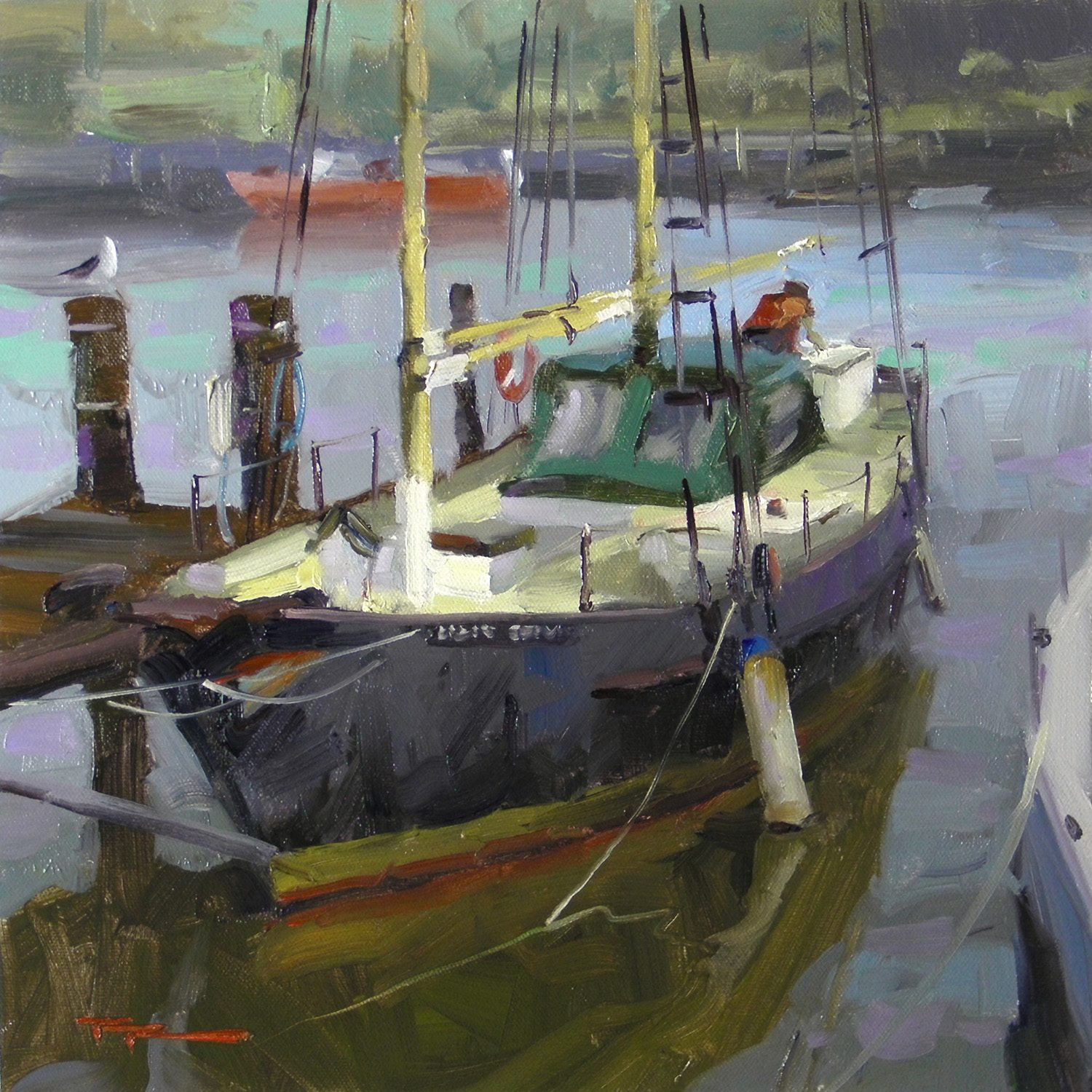
In this chapter, I invite you to join me in painting a serene harbour scene, where boats gently sway under the southern light. While boats are the focal point, the essence of this lesson is to perceive your painting as a symphony of visual elements. Much like a piece of music, a painting harmonizes shapes, colors, lines, and textures to evoke a particular feeling. We'll delve into the use of warm and cool color variations and expressive brushwork to bring this scene to life. Drawing inspiration from the works of Charles Movelli, you'll learn how a broader, more lyrical style can enhance your plein air painting. I encourage you to experiment with composition, perhaps by flipping elements like a boat to alter the flow and perspective of your piece. Adding more green throughout your painting will create depth and cohesion, while red accents will inject energy and contrast. This scene offers a rewarding opportunity to explore these techniques and make the painting truly your own.
This guide accompanies the full video lesson. The lesson includes the complete narrated video, the printable PDF chapter, and personalised critique support.
"Southern Light - Studio" 13x13" Oil on Canvas by Richard Robinson
Step 6Using Broken Color
Mix the Color
Add blue and red to a mid-gray base, incorporating a touch of dark gray. Aim to match the value of the color already present on the side of the boat.
Check the Value
Place a small blob of your mixed color onto the existing color. Squint at it to reduce the color intensity and see if the blob stands out. If it does, adjust the mix to match the value more closely.
Adjust and Test Again
If the color is too light or too dark, add more blue and red as needed. Test again by squinting to ensure the blob blends in and matches the value.
Pro tipSquinting helps you see if the new color matches the value of the existing color.
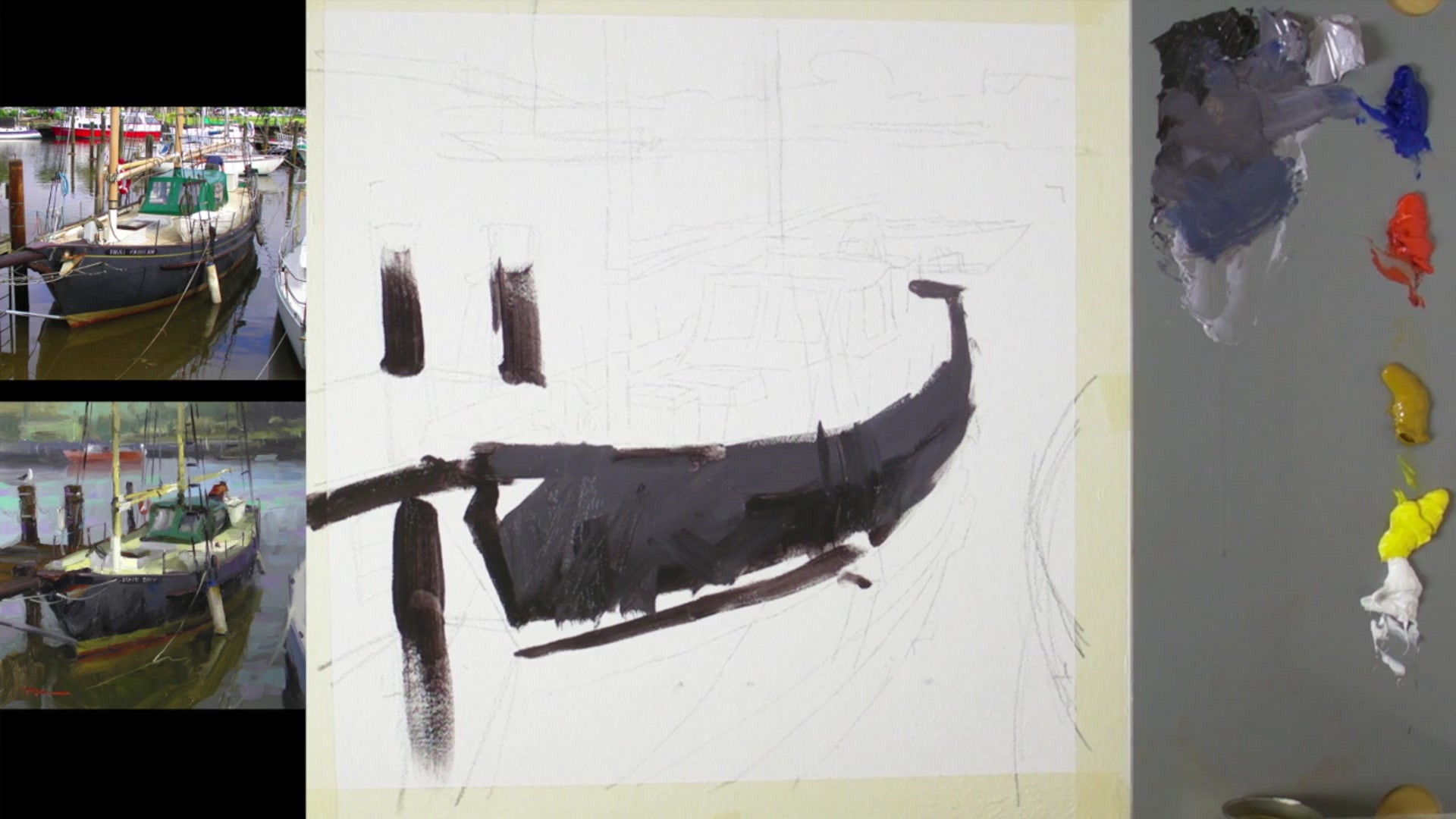
Embark on your painting journey by drawing inspiration from the broader, lyrical style of Charles Movelli. Begin by reimagining your composition, focusing on the most compelling elements and eliminating distractions. Transfer your drawing onto the canvas with precision, setting the stage for a vibrant interplay of colors.
As you progress, mix a range of neutral greys to serve as the foundation for your painting, and boldly block in dark shapes to establish depth. Embrace the use of broken color and color variations to add vibrancy and movement, ensuring your brushstrokes remain visible to enhance texture.
In the final stages, refine your painting with delicate details and lines, using soft edges to create depth in the background. Add finishing touches like a seagull or a life-saving ring to bring your artwork to life. Sign your painting with pride, marking the completion of your creative journey.
Points to remember
Use contrasting colors like red and green to create vibrancy.
Focus on compelling elements and eliminate unnecessary details.
Cover the back of your printed image with pencil for easy transfer.
Mix neutral greys to tone down other colors where needed.
Leave visible brush marks to add texture and interest.
Use walnut oil to keep paint thin and translucent.
Treat painting like a jigsaw puzzle for color consistency.
Use soft edges in the background to enhance depth.