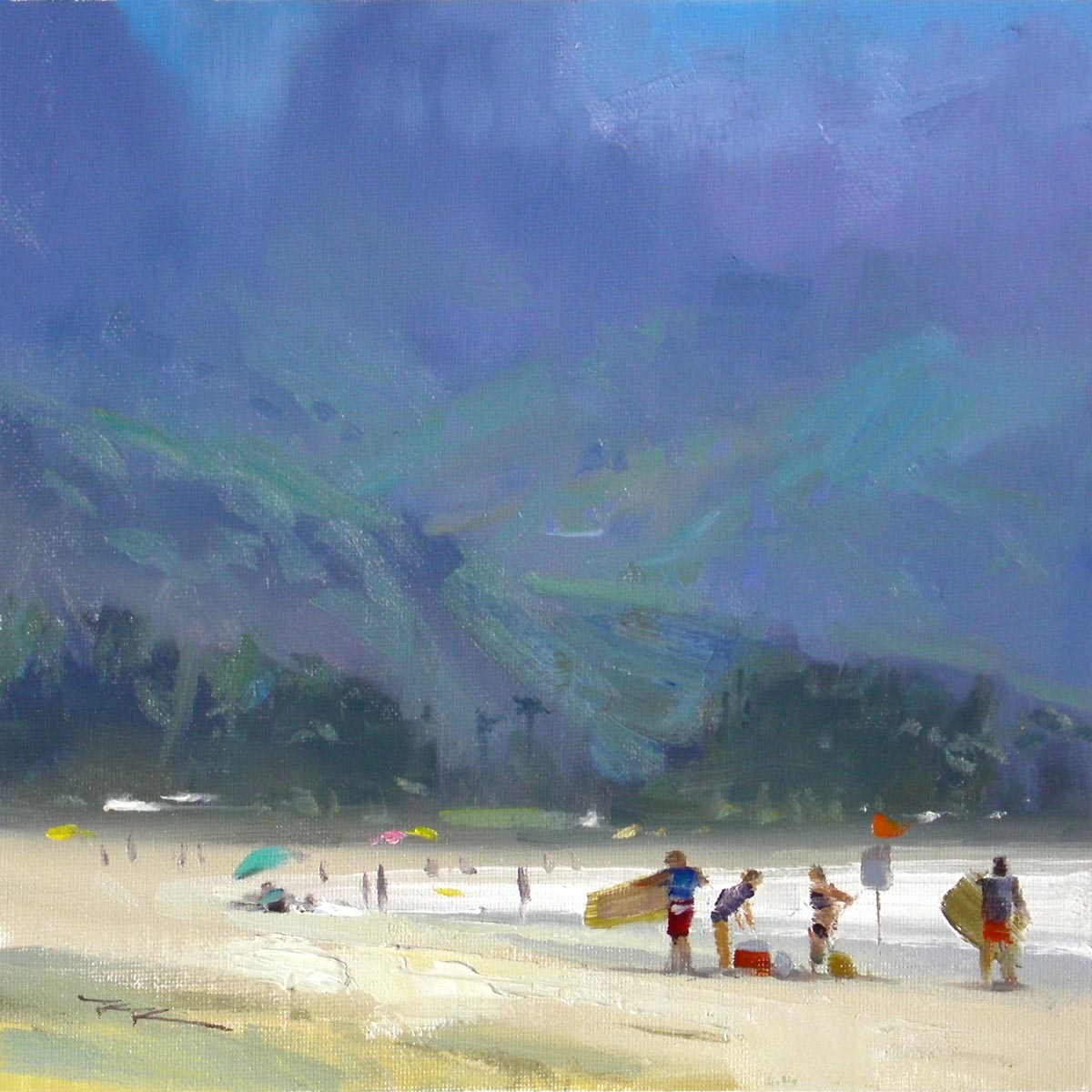
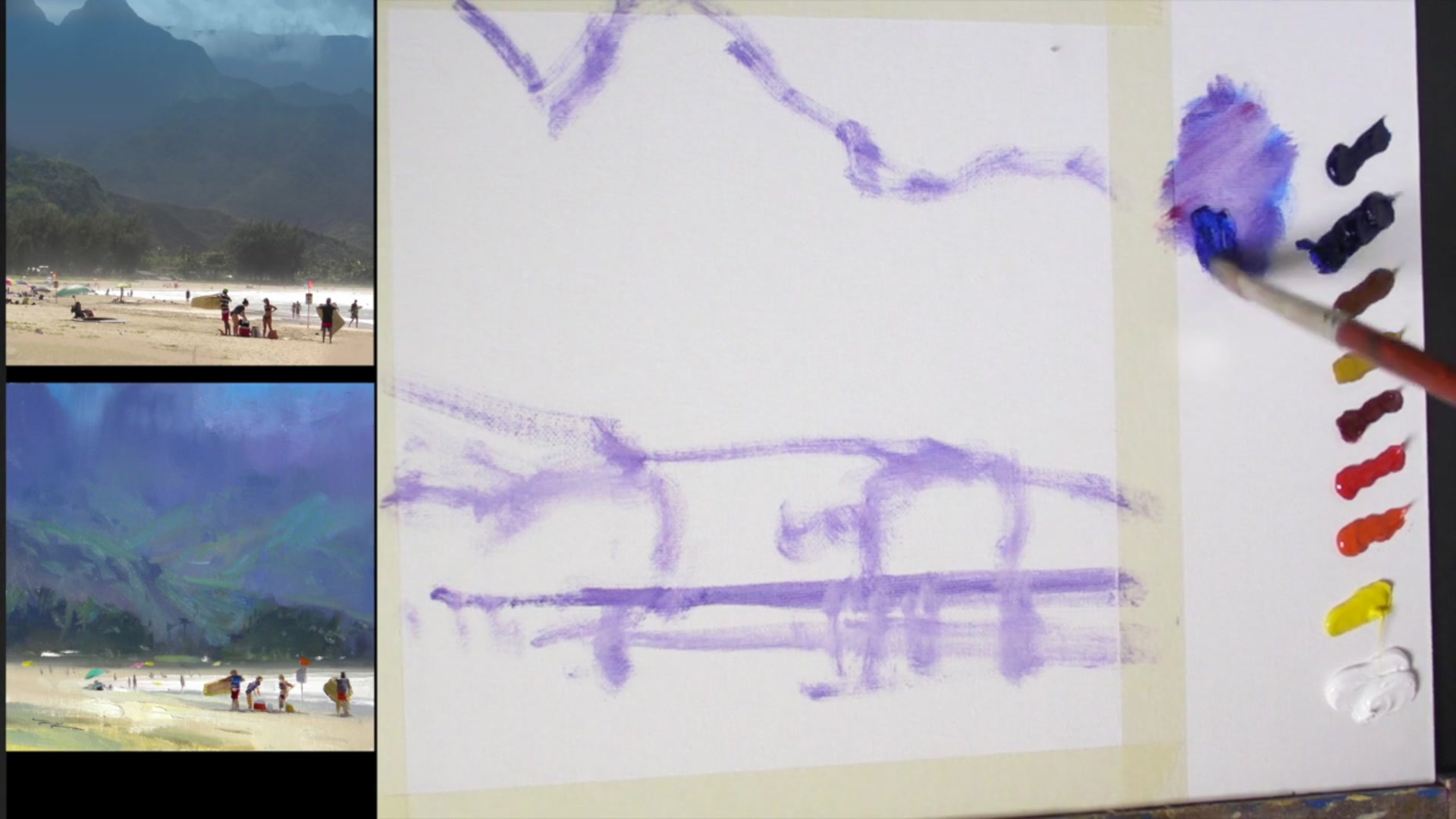
In this chapter, we'll explore the vibrant scene of Hanalei Bay, capturing its essence on an 11-inch square canvas board. I'm experimenting with Duo Aqua water mixable oil paints, which offer a versatile range of colors. While I might not use every hue on my palette, the variety allows for creative exploration. To achieve smooth, flowing backgrounds, I utilize linseed oil as my painting medium, particularly effective for thinning colors. As we delve into the finer details, especially the figures, a quality synthetic or sable brush becomes essential. This lesson draws inspiration from Eugene Bodin, a classical French painter renowned for his beach scenes populated with lively figures. Bodin's influence on Monet, encouraging him to embrace outdoor painting, highlights the importance of capturing life and movement in our work. By the end of this chapter, you'll learn how to add figures to your landscapes with a few expressive strokes, enhancing the scale and narrative of your painting. Join me as we bring Hanalei Bay to life, infusing it with energy and storytelling through the art of painting figures.
This guide accompanies the full video lesson. The lesson includes the complete narrated video, the printable PDF chapter, and personalised critique support.
"Hanalei Bay" 11x11" Oil on Canvas by Richard Robinson
Step 5Mixing Dark Colors for Trees
Mix the Darkest Color for Trees
Start by mixing ultramarine blue with a little orange and a touch of yellow ochre. Aim for a blue-gray with a hint of green. This will be the darkest color in the landscape, apart from the foreground figures.
Adjust the Hue with White
Add a small amount of white to the mix to reveal the hue more clearly. If the color appears too blue, gradually add more orange and yellow ochre to gray it down.
Determine the Value
Aim for a value that is about three-quarters of the way towards black, roughly a 7 on a 10 value scale. This will ensure that every subsequent color in the mountains is slightly lighter and bluer.
Fine-Tune the Color
Add some yellow ochre and a little bit of white to adjust the color at the bottom of the trees. This adjustment accounts for the sea and integrates the trees into the landscape.
Pro tipAdd white to your dark mix to clearly see the hue and adjust as needed.
Embark on your painting journey by understanding the foundational influences of artists like Eugene Bodin and Monet, who pioneered outdoor painting. Begin your composition by sketching the horizon and establishing the overall scene before adding figures, ensuring they are proportional and well-placed. This initial groundwork sets the stage for a cohesive and balanced painting.
As you progress, pay close attention to the interplay of colors and atmospheric effects. Mix and adjust your colors to capture the natural light and depth of the landscape, using techniques like softening edges and adding texture to enhance realism. Remember to test your color mixes with small strokes to maintain the right balance and harmony throughout the painting.
In the final stages, focus on the details that bring your scene to life. Practice your brushstrokes for figures, ensuring they are minimal and precise to avoid muddying colors. Use impasto techniques to add texture and depth to the foreground, contrasting with the smoother background to create a dynamic and engaging composition. With patience and attention to detail, your painting of Hanalei Bay will capture the beauty and essence of the scene.
Points to remember
Recognize the impact of mentors like Bodin in shaping artistic techniques.
Ensure figures are the right shape and size to be recognizable from a distance.
Mix a large batch of your base color to easily adjust for atmospheric effects.
Test your paint mix with a small stroke to ensure the right color balance.
Use the side of a rubber spatula or palette knife to add texture without digging into the paint.
Focus on the big shapes and angles when sketching figures to ensure correct proportions.
Use minimal brushstrokes on a wet background to avoid muddying colors.
Scrape off thick background paint before placing a figure to ensure better adhesion and clarity.