
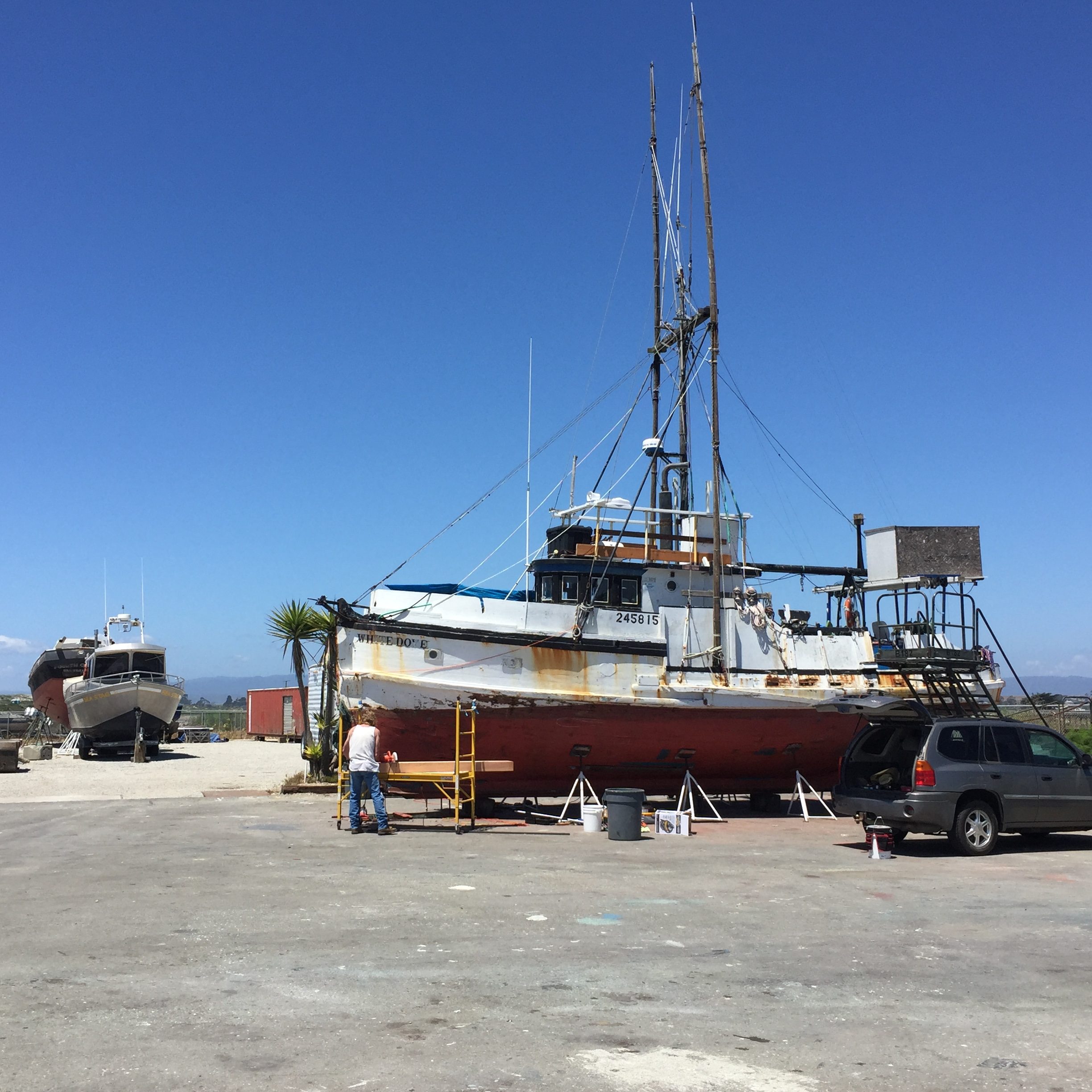
Paint this classic boat scene with broad gestural brushwork. Learn how to make a leading gestural foreground and how to paint with big masses and finish with calligraphic details. Follow me step by step or use the resource photos below to paint something more your own. Enjoy!
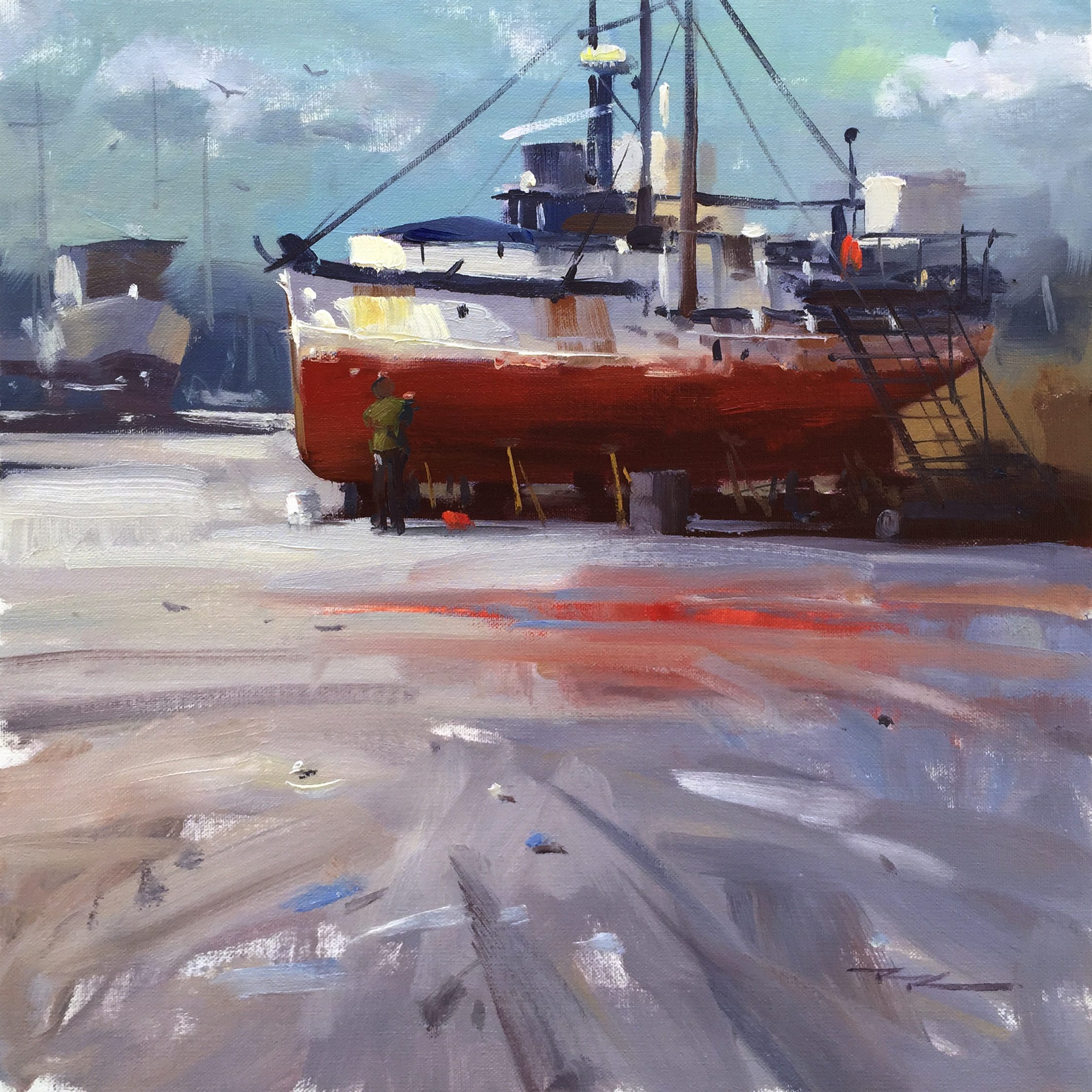
"Boat Repairs" 14 x 14" Oil on Canvas by Richard Robinson.
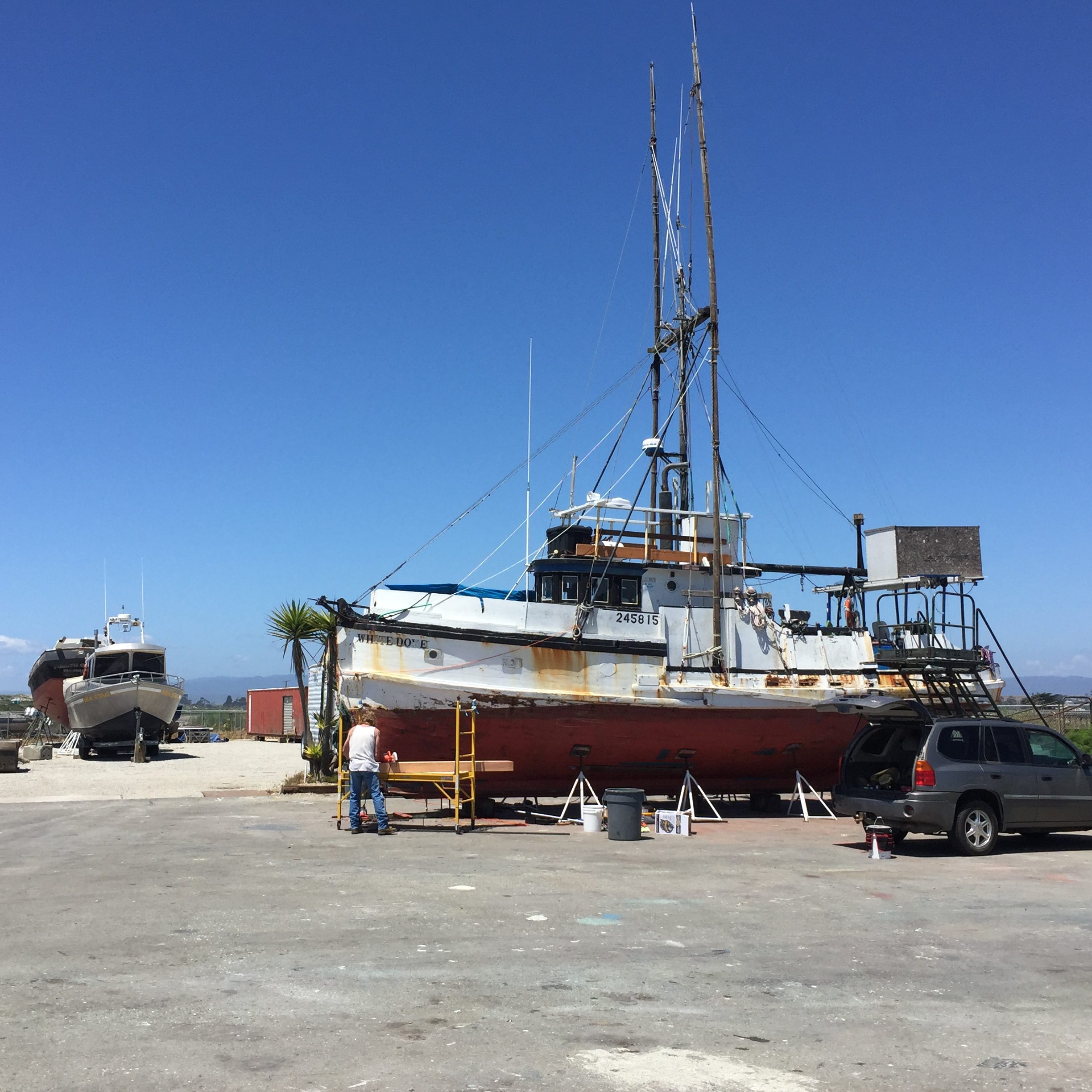
Moss Landing, California, USA.
Welcome to the "Boat Repairs" painting workshop! In this lesson, we'll explore the charm of an old, weathered fishing boat. This scene is a painter's dream, offering a perfect balance of bold, gestural brushwork and delicate, calligraphic details. My goal in creating this painting was to convey the character of the boat through its vibrant colors and worn textures, set against a simple, muted background. This juxtaposition creates a striking composition that captures the viewer's attention from across the room. We'll focus on working with big shapes and masses to establish the overall design, then refine it with expressive details that bring the scene to life.
To start, we’ll block in the composition with broad strokes, paying attention to the major shapes and their placement on the canvas. This initial stage is all about creating a strong foundation, so don’t worry about details yet. Think of it as setting the stage for the story you’re about to tell. I encourage you to use a large brush and work loosely, allowing the freedom to adjust as you go. Focus on the overall balance of the composition and establish the relationship between the boat, the foreground, and the surrounding space.
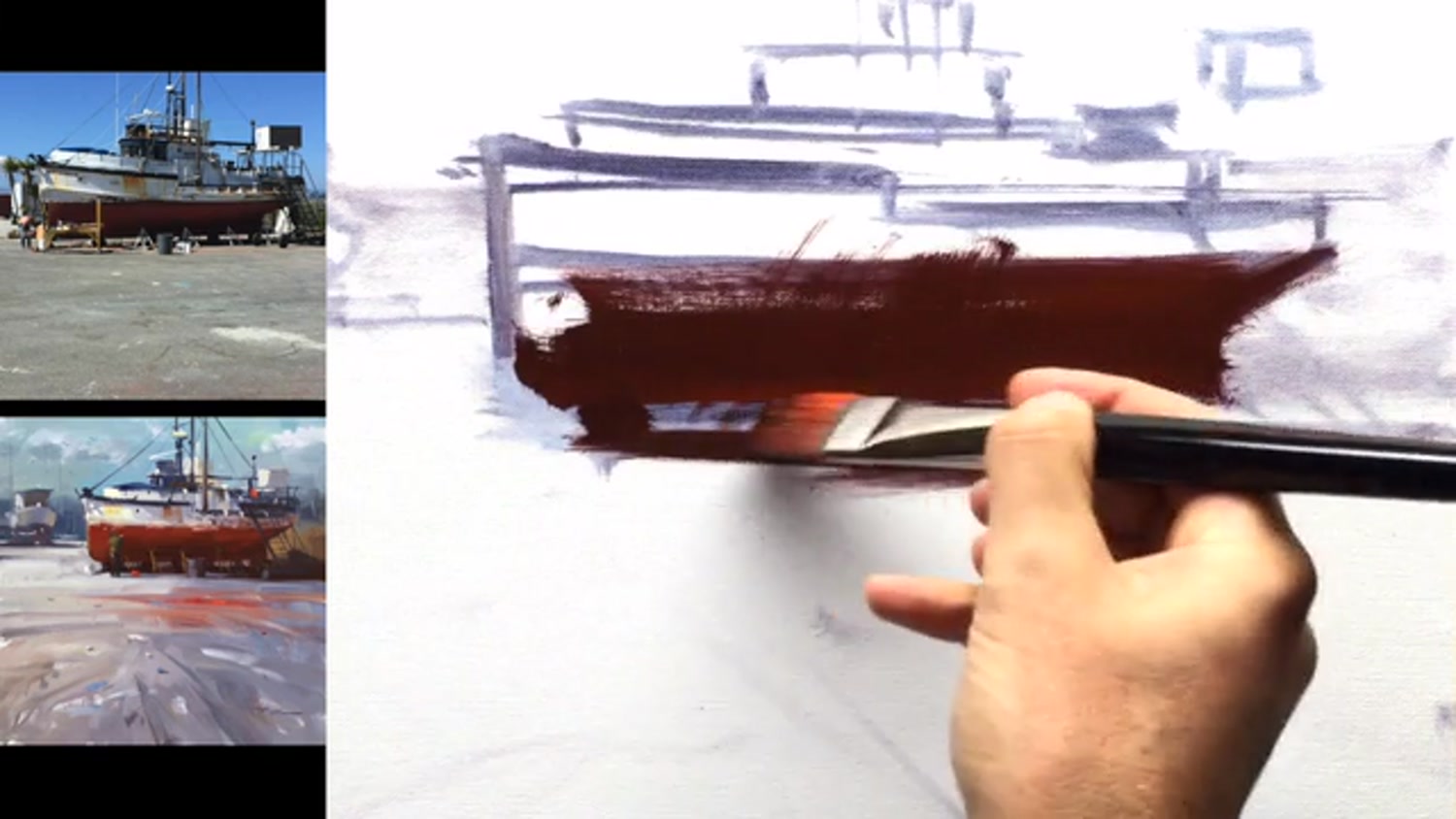
Starting the painting: Blocking in the major shapes to establish the composition.
Once the composition feels right, we’ll move on to establishing the values—the lights, darks, and midtones that define the structure of the scene. This step is crucial for creating depth and clarity. At this stage, try to squint at your reference or painting to simplify the values into large, distinct areas. This will help you create a strong visual hierarchy that guides the viewer’s eye through the scene.
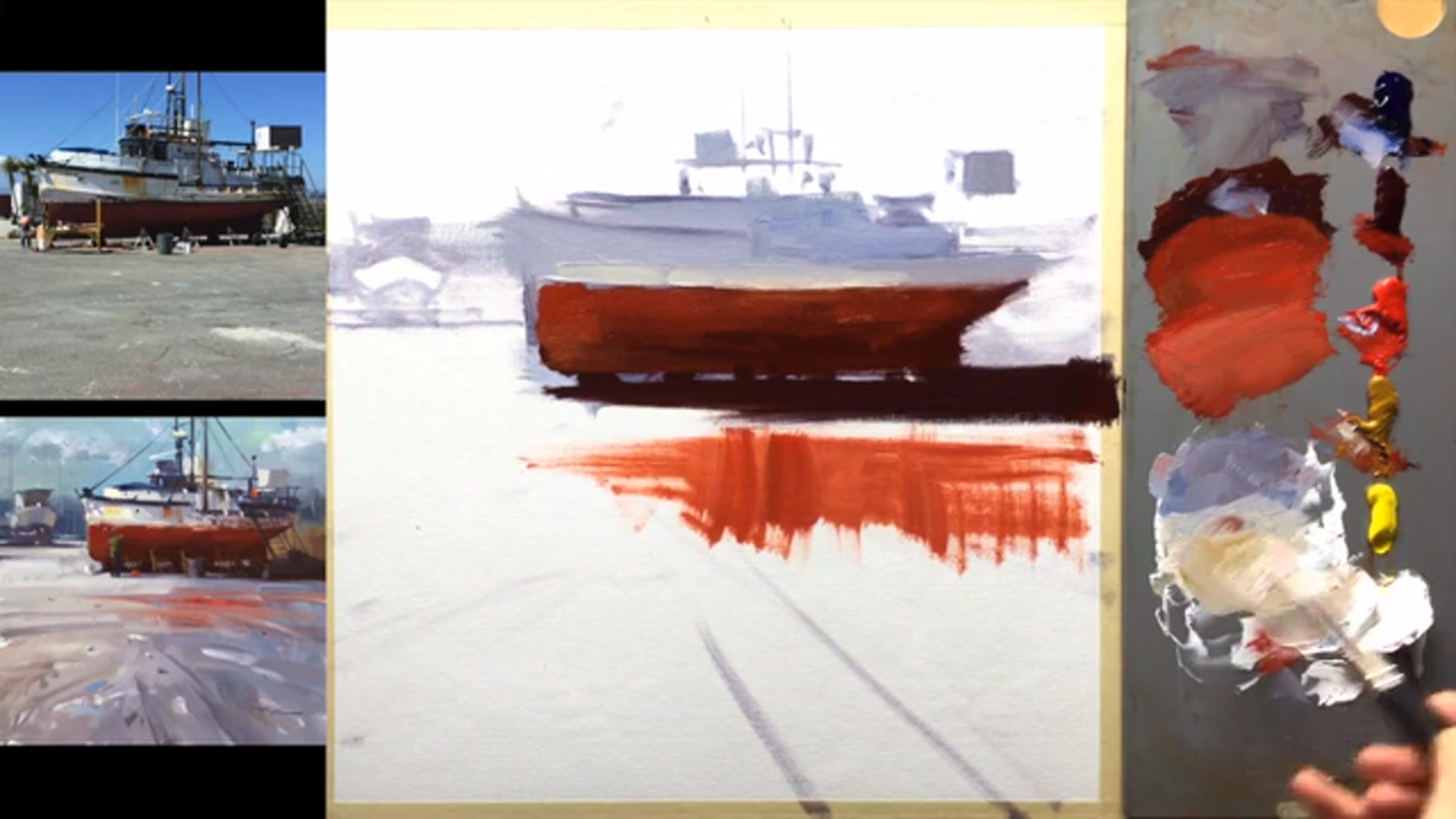
Establishing values: Laying down the lights and darks to create structure and depth.
With the values in place, it’s time to build up the color. This is where the painting starts to come alive! I focused on the boat’s vibrant red and yellow hues, contrasting them against the soft greys and blues of the background. Use bold, confident brushstrokes to lay down the color, and pay attention to the temperature shifts in the light and shadow areas. Remember, you can always refine these areas later, so don’t be afraid to experiment. It’s important to keep the colors harmonious, so use a consistent palette and mix your paints thoughtfully.
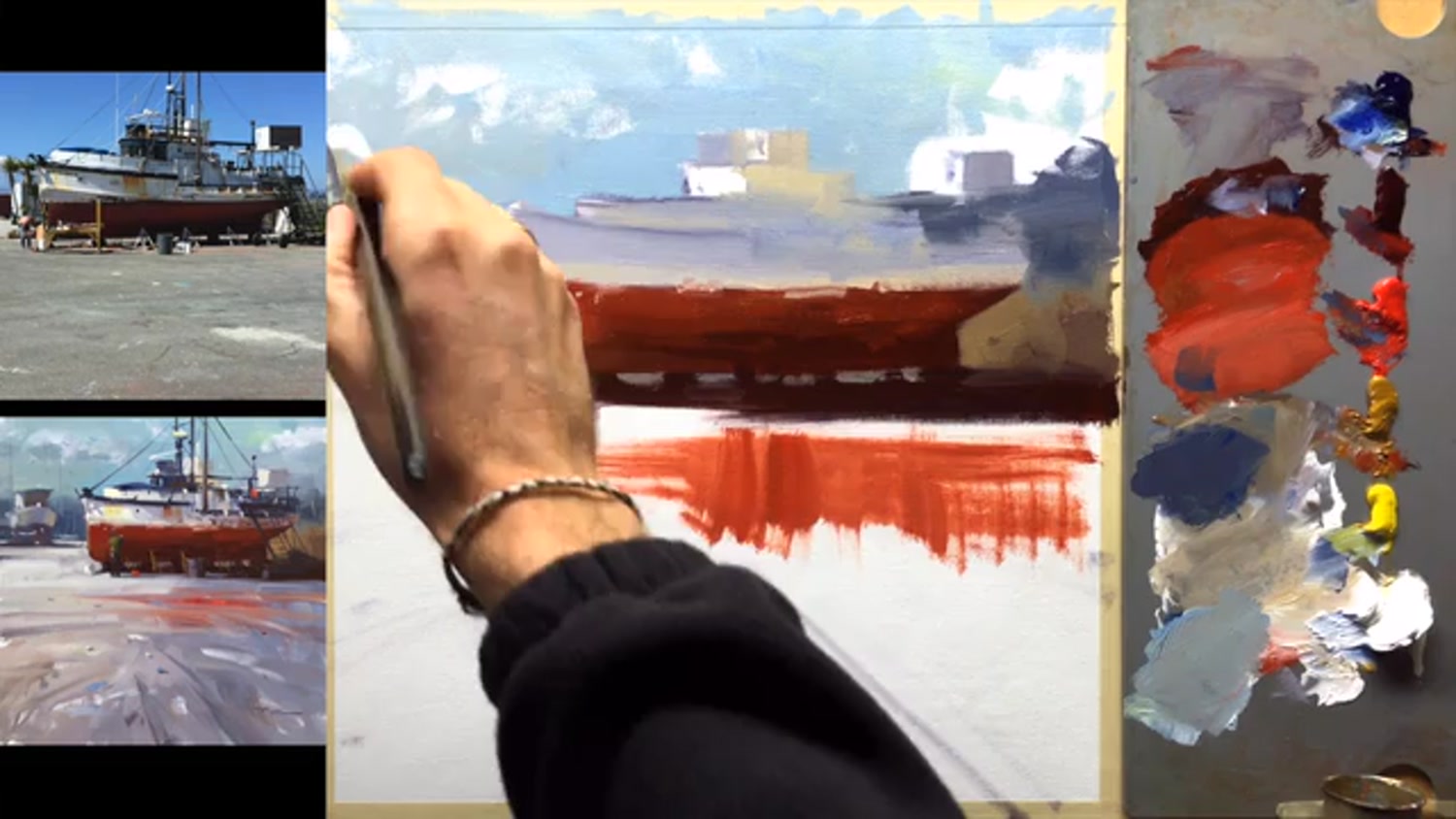
Building up color: Adding vibrancy and contrast to the boat and surrounding scene.
Next, we’ll develop the scene further by refining edges and introducing more texture. This stage is about creating a sense of realism while maintaining the loose, expressive style that gives the painting its charm. I added subtle details to the boat, such as the lines and marks that suggest its weathered history, while keeping the background soft and understated. This balance helps the boat remain the focal point. Pay attention to the edges—soften them where you want the forms to recede, and sharpen them around the focal area to draw attention.
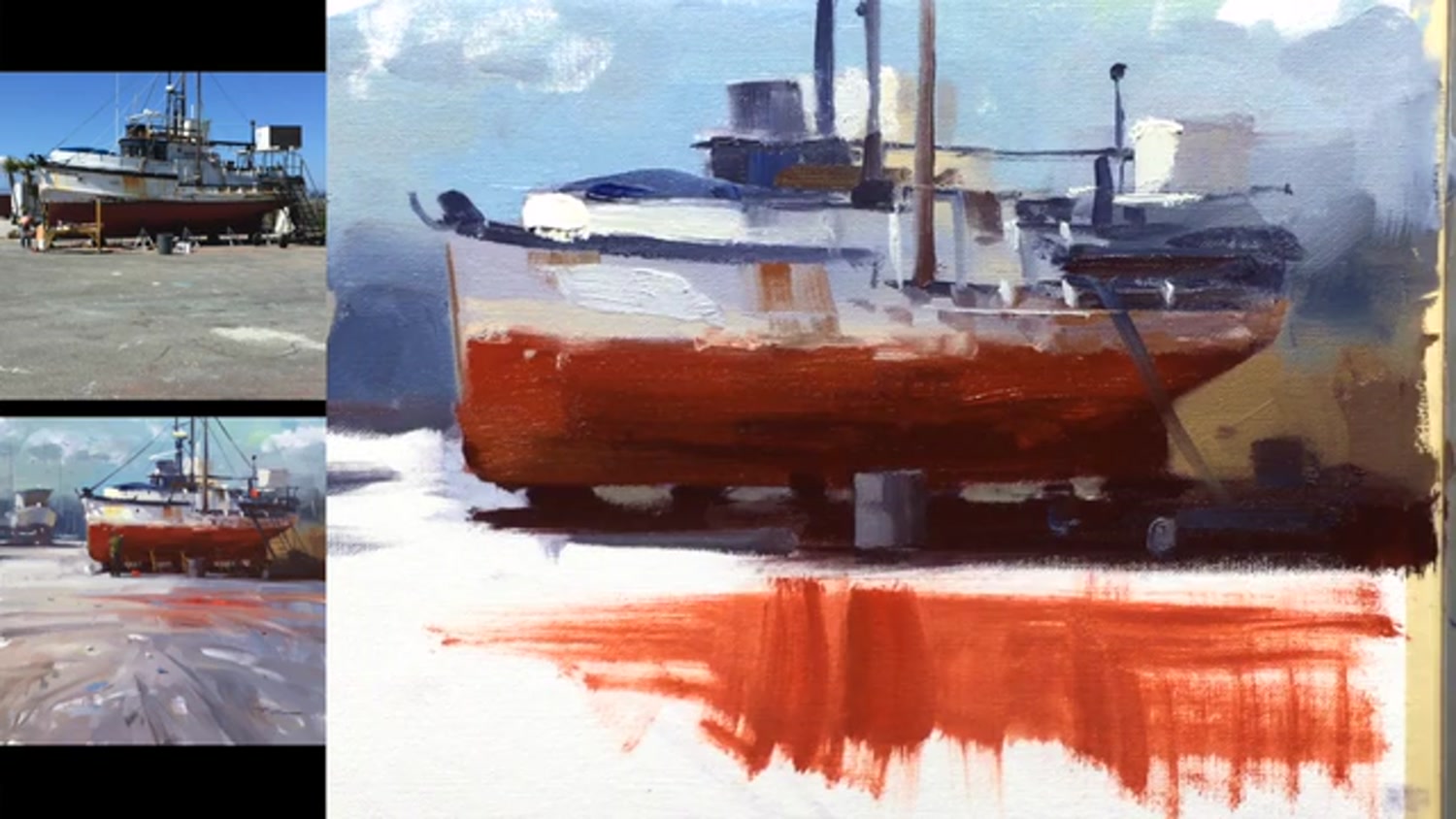
Developing the scene: Adding texture and refining edges to enhance realism and focus.
Finally, we’ll add the finishing touches. This is where the calligraphic details come into play, bringing the painting to life. I used a fine brush to suggest ropes, poles, and other small elements that give the boat its character. These details should be applied sparingly, as they’re the icing on the cake. Step back frequently to view your painting from a distance, ensuring that the overall composition and impact remain strong. Remember, it’s the big shapes and values that carry the painting, not the tiny details.
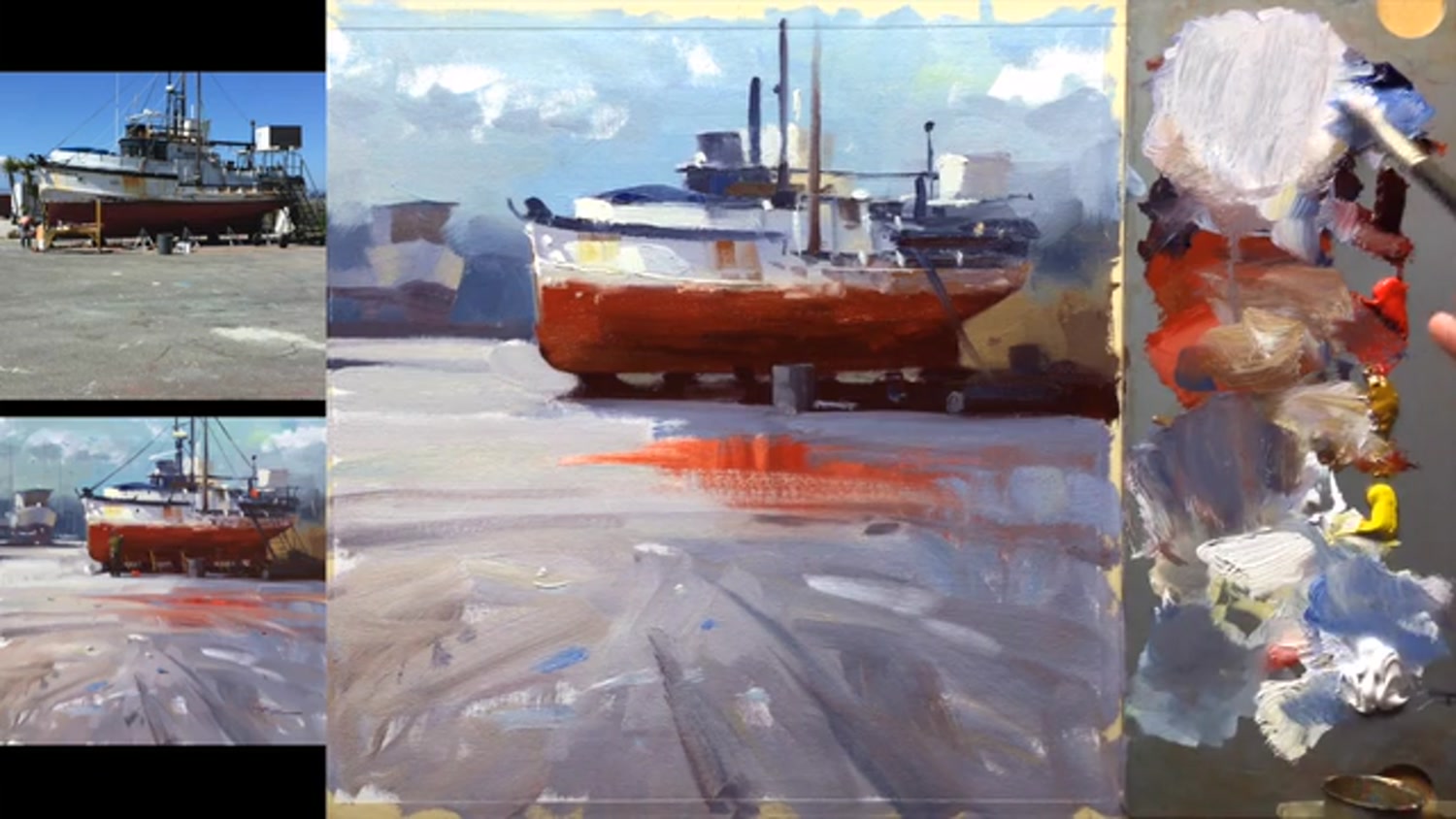
Finishing touches: Adding calligraphic details and final refinements to bring the painting to life.
Painting a scene ILIKE this is a great opportunity to practice working with big shapes, bold colors, and expressive brushwork. Don’t worry if your painting doesn’t turn out exactly ILIKE mine—every artist brings their own voice and interpretation to the canvas. Take your time, enjoy the process, and remember that each brushstroke is a step toward building your skills. I hope this workshop inspires you to embrace the beauty of timeworn subjects and the freedom of a loose, painterly style. Happy painting!
"Boat Repairs" 14 x 14" Oil on Canvas by Richard Robinson.
Here are some of the great student paintings from this workshop, along with my critiques.
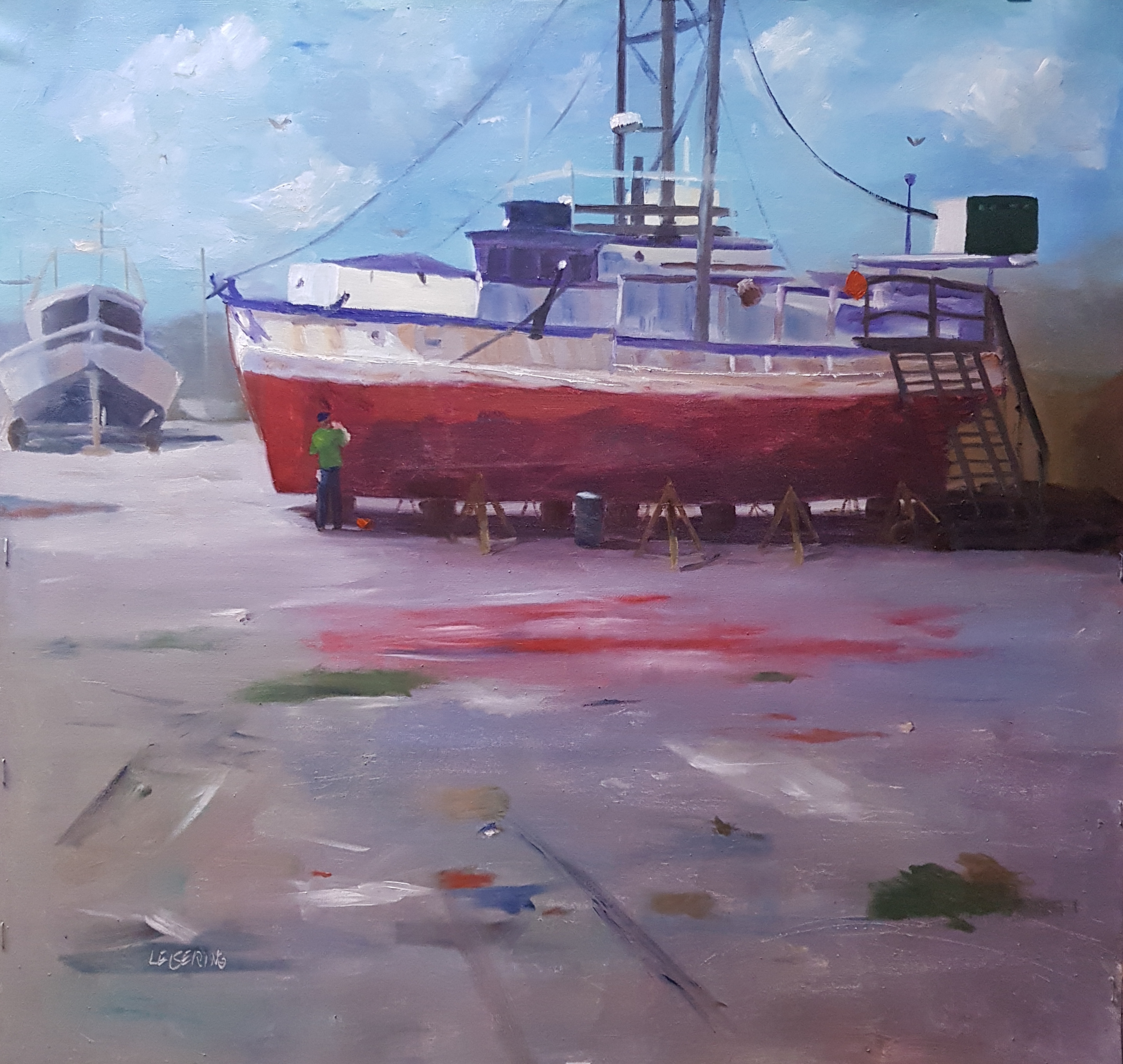
Boat repair Oil on canvas 50cm x 50 cm
Artist: Anne-Dore Leisering
Hi Anne-Dore, this is a dynamic piece with a graphic edge to it! You've captured the character of the boat beautifully, and I especially enjoy the contrast between the warm red hull and the cooler blue sky. The way you've handled the light and shadow on the boat feels natural and believable, giving the scene a grounded realism. One area to consider refining is the foreground. While it has a loose, painterly quality that works well, perhaps you could introduce a few larger areas of tonal variety to suggest texture or interest without overwhelming the composition. Overall, this is a wonderfully composed and executed painting—you’ve done a fantastic job conveying the mood and setting. Keep up the great work! Looking forward to seeing your next piece.
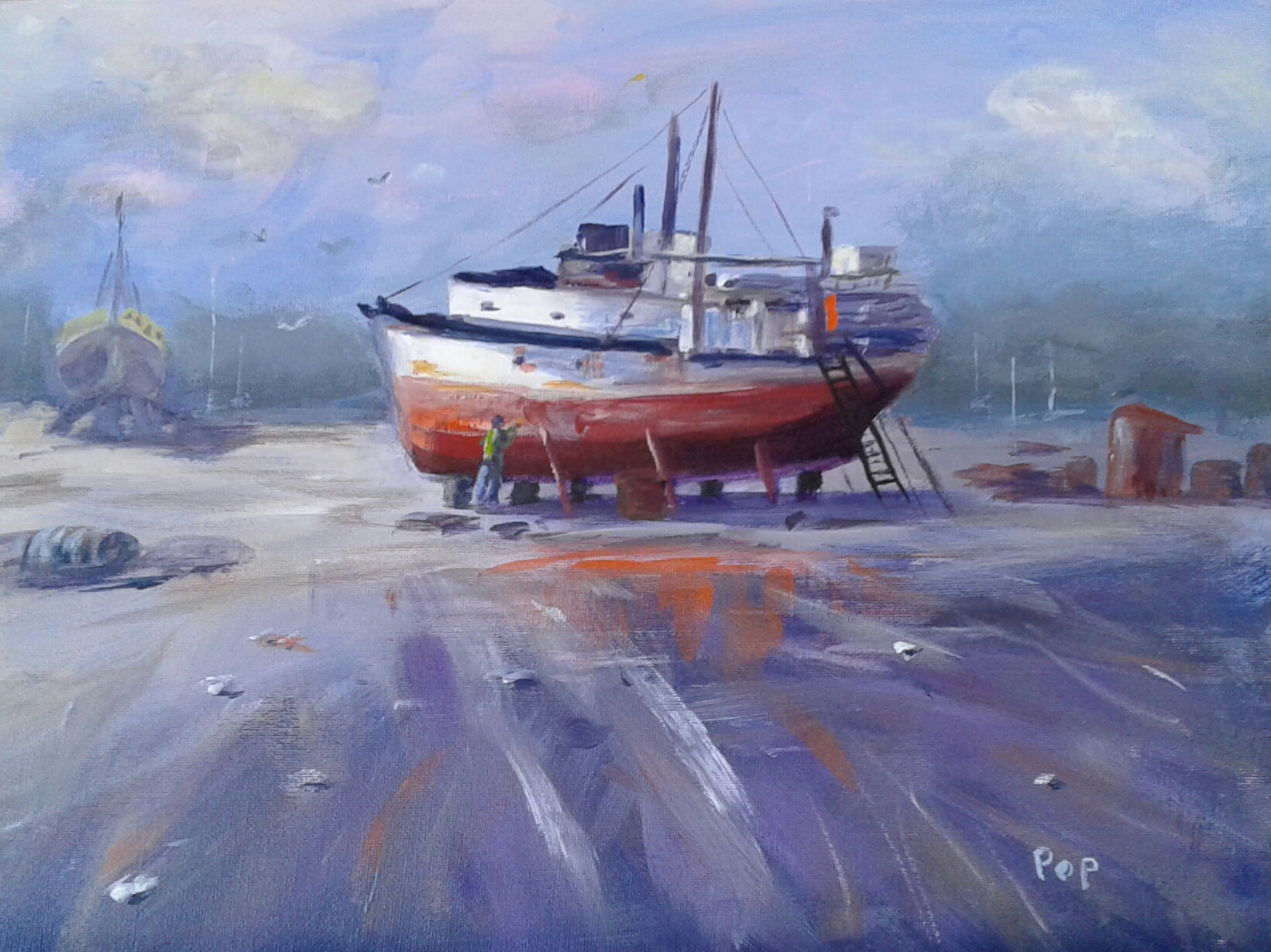
Boat repairs, acrylic
Artist: Evelyn Tuhi-Herewini
What a lovely soft sense of mood and atmosphere you’ve achieved here, Evelyn. The soft, diffused light and muted colours give a peaceful, almost nostalgic feel to the scene, while the movement in the brushstrokes adds energy and life to the foreground. The reflections and wet ground plane are beautifully painted, with those streaks of colour leading the eye naturally toward the boat. One area you could refine is the foreground, where the brushwork feels slightly hurried and could benefit from a touch more detail or texture for added interest. Additionally, consider darkening the shadows under the boat just a fraction to ground it more firmly and enhance the sense of depth. Overall, this is a charming piece with great storytelling, and I love how you’ve captured the character of the boat so well—keep up the fantastic work!
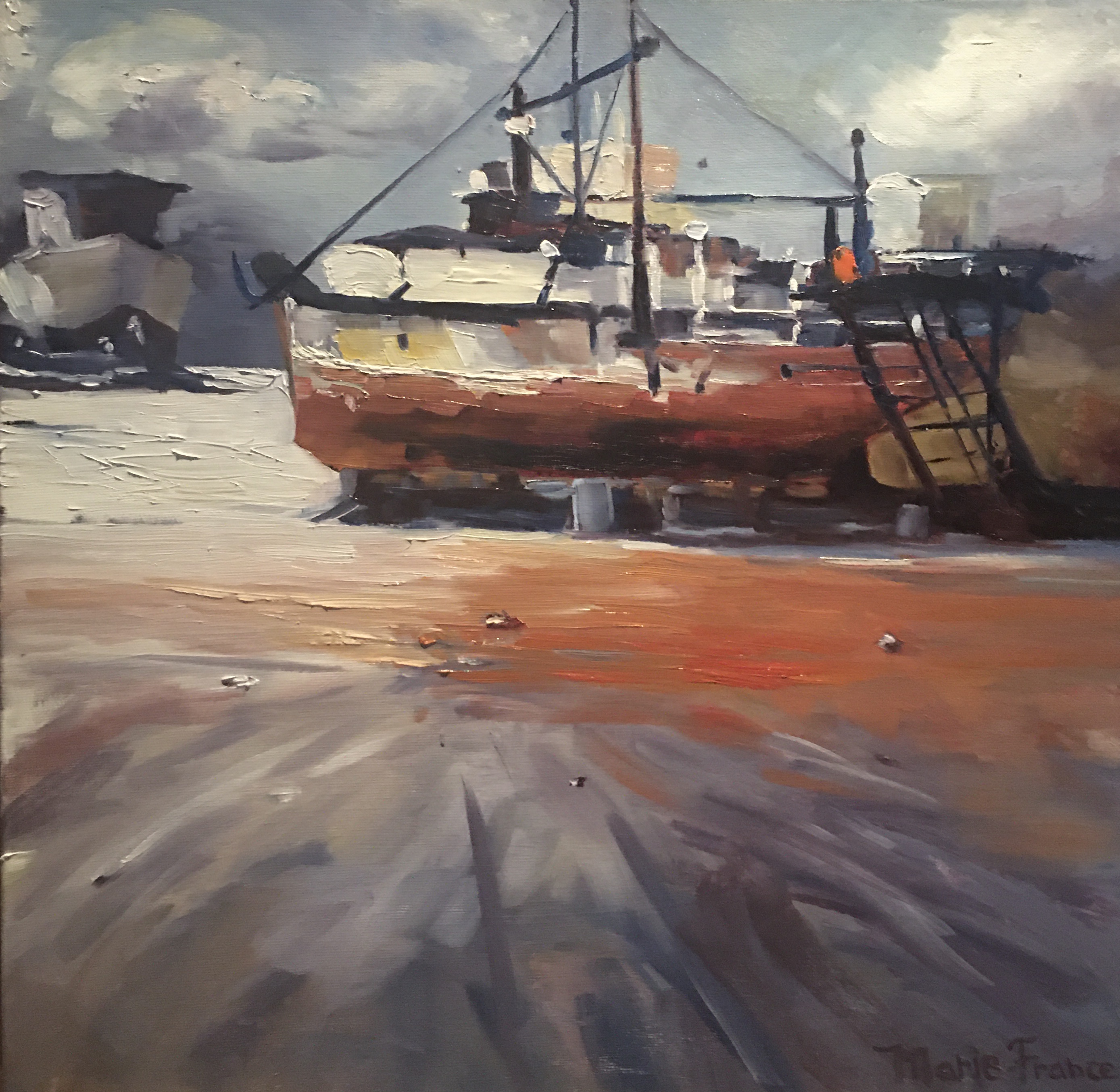
The OldTimer, 16 x 16, oils, by Marie-France L'Ecuyer, QC, Canada
Artist: Marie L'Ecuyer
You’ve captured such a wonderful sense of atmosphere here, Marie. The moody sky, the warm reflections in the wet ground, and the characterful old boat all work together beautifully to create a strong narrative. Your brushwork feels confident and expressive, especially in the sky and the foreground, and I love how you’ve created such a strong contrast between soft and sharp edges throughout the painting. You’ve really nailed the dramatic light and colour harmony here. Fantastic work—keep exploring this kind of drama!
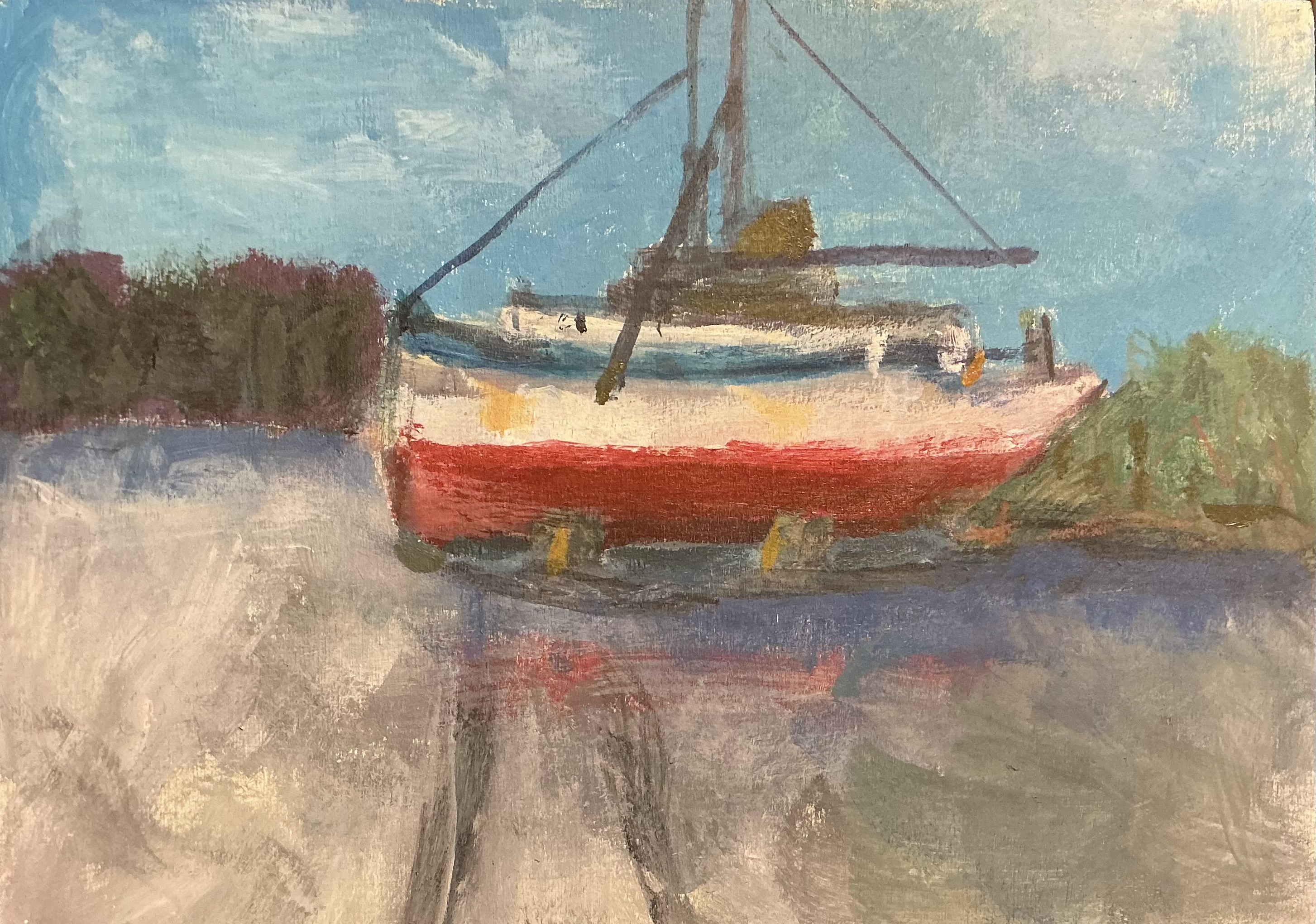
On the Blocks
Artist: Leslie Hoffman
You've done a great job capturing the character of the boat and its surroundings, Leslie. I love the bold choice of the red hull—it immediately catches the eye and adds a wonderful pop of color against the softer background tones. The way you've suggested the reflections in the wet ground below the boat also creates a nice sense of connection between the vessel and its environment. One area to develop might be the values, particularly in the shadow areas of the boat and the darker elements in the background. These could be pushed a little darker to create more depth and contrast, helping the boat feel more three-dimensional. You might also soften the transition between the sky and treeline to make that edge sink behind, letting the boat take the spotlight with it's crisp edges. Great effort here—keep experimenting with these techniques, and I look forward to seeing where your painting journey takes you!
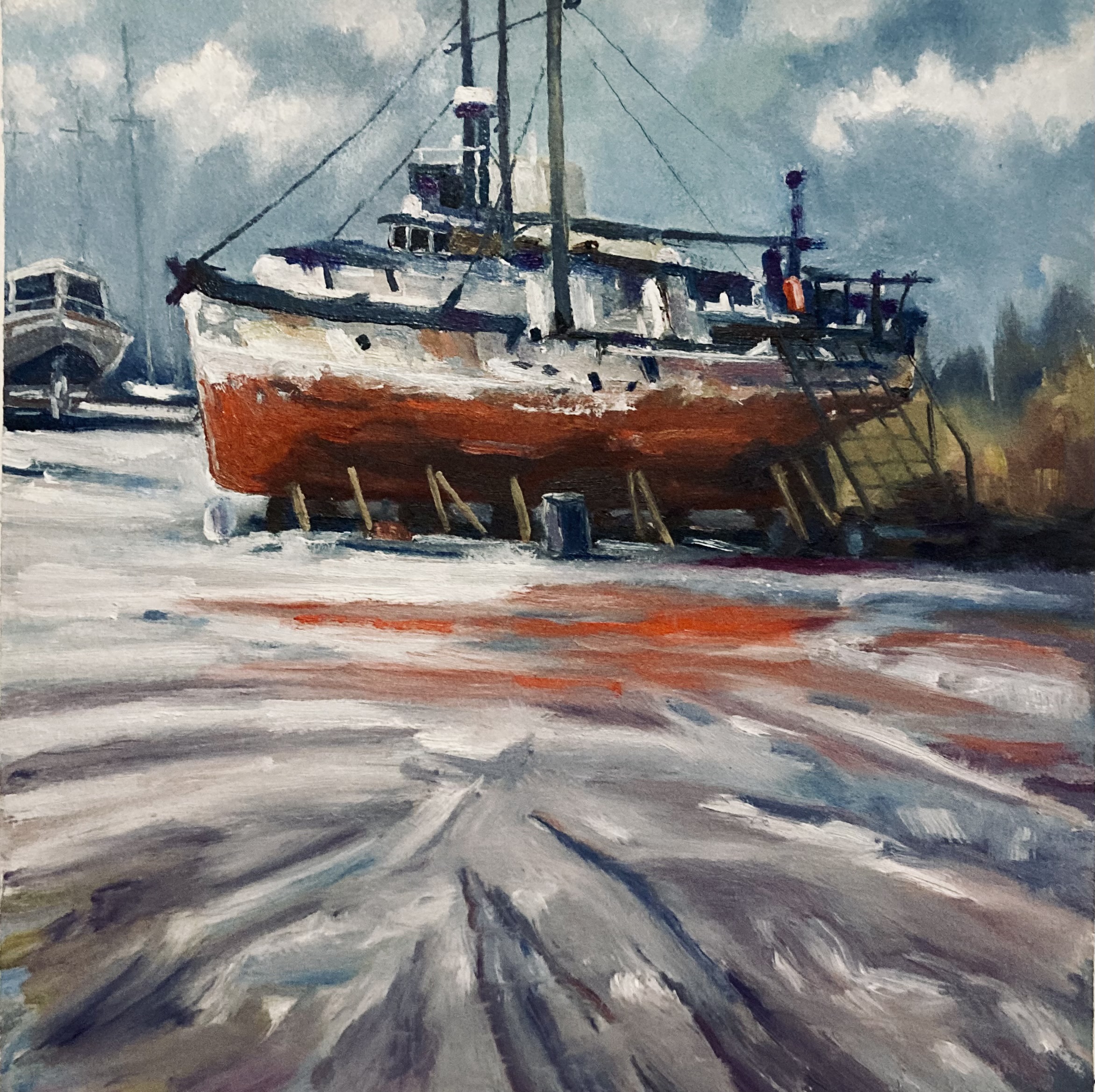
Boat Repairs Oil on oil paper
Artist: Geoffrey Geeson
What a striking painting! I love how you’ve captured the character of the old boat — the warm, rusty reds against the cooler blues and grays really make it the focal point. Your brushwork on the boat is confident and expressive, giving it a wonderful texture and sense of age. One area to refine might be the foreground. The diagonal lines leading in are a great choice compositionally, but consider softening a few edges and varying the tones to create a more natural, receding sense of depth. Right now, it feels a little stark compared to the detailed boat. Overall, this is a fantastic piece with so much energy and atmosphere — great work! Keep it up!
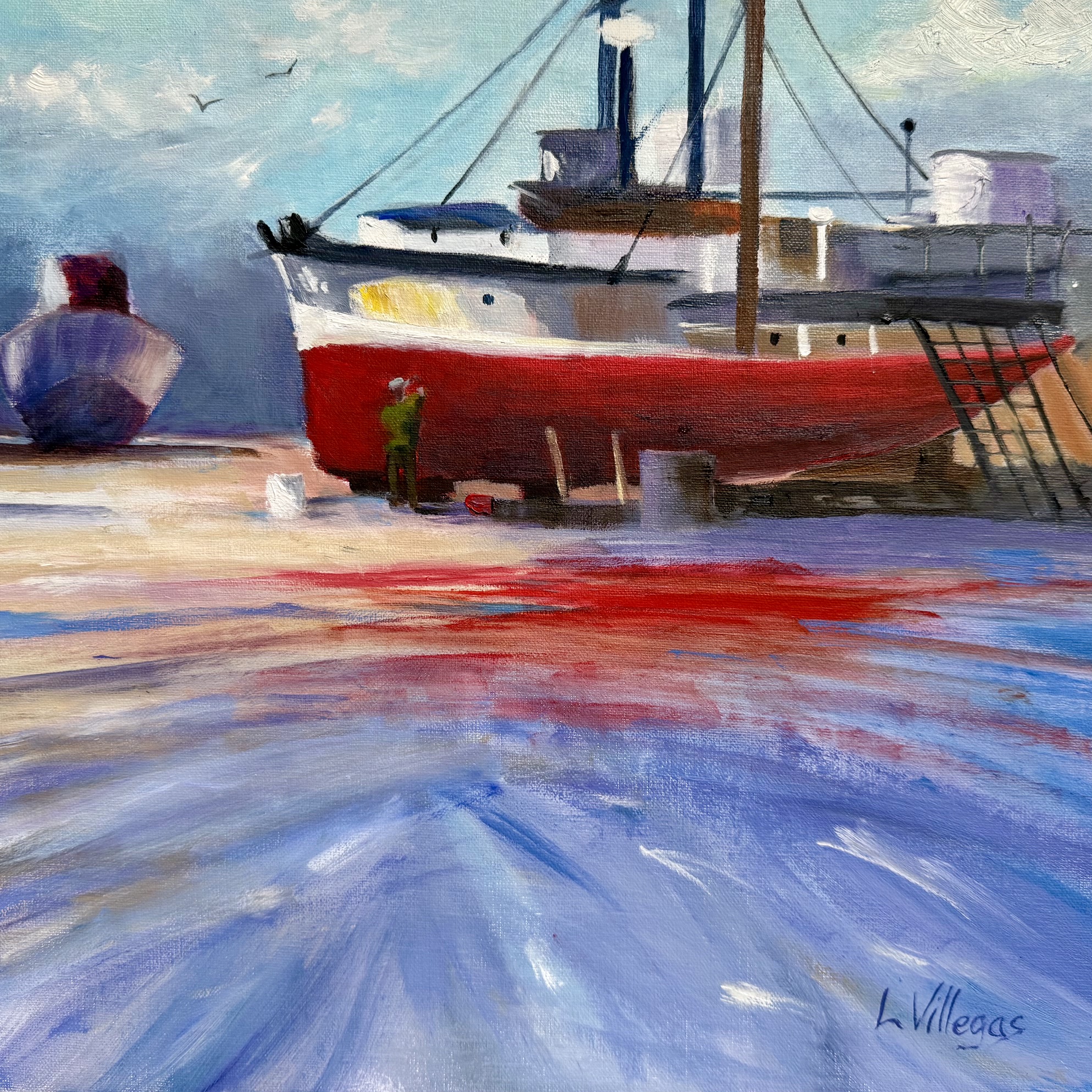
Boat Repairs - 12 x 12 Oil on Linen Pad. A great lesson in painting loosely.
Artist:Louise Villegas
Lovely job capturing the energy and atmosphere of a working harbour here, Louise! Your loose brushwork and vibrant colour palette, particularly the interplay of reds and blues in the foreground, immediately grab attention and give the piece a lively, dynamic feel. The perspective of the strokes leading toward the boat create a wonderful sense of depth and movement.
Overall, this is such a cheerful and engaging painting—well done! Keep up the fantastic work!
Congratulations and thanks to everyone who entered a painting into the workshop. Great work!
Get the full lesson here: https://mypaintingclub.com/lessons/13-Boat-Repairs
- Richard.
Login to your account to post a comment.