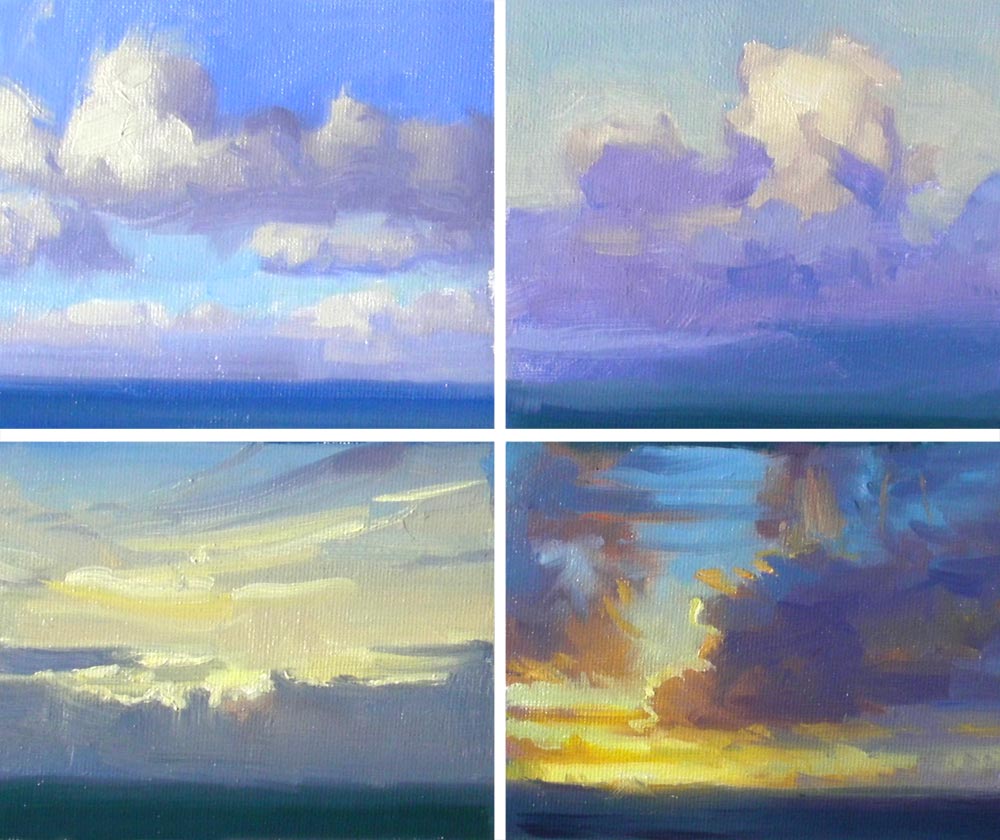
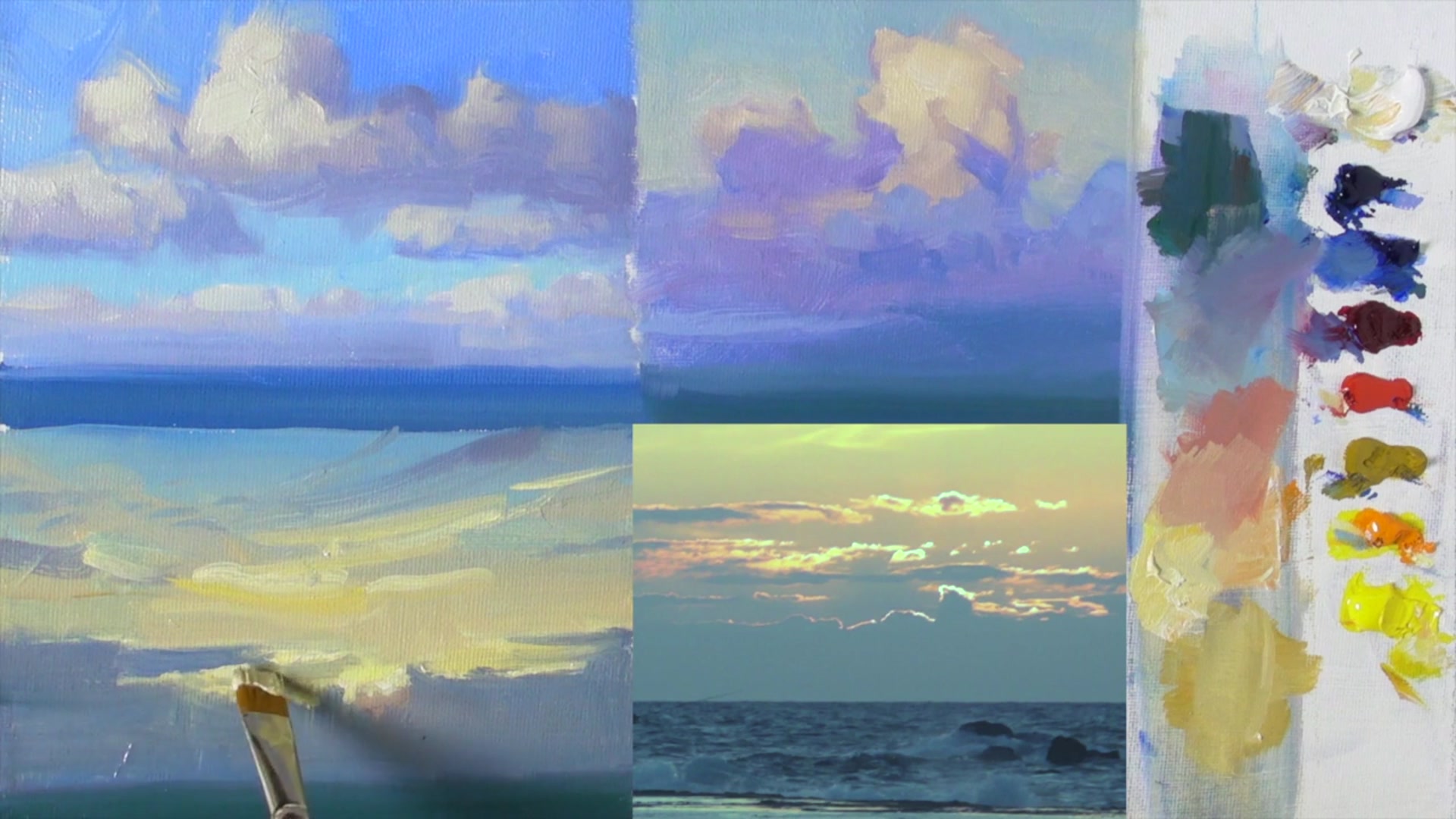
In this chapter, we delve into the captivating world of painting clouds, a subject that has intrigued many of you and is one of the most requested topics in my workshops. Hawaii, with its breathtaking skies, serves as the perfect backdrop for this exploration. Painting clouds is both thrilling and a bit daunting, as they embody a unique blend of structure and unpredictability. As artists, we must balance the analytical construction of their forms with the freedom to capture their abstract essence. My approach is to simplify the scene, which not only helps manage the complexity but also makes the painting more accessible to viewers. I often find myself challenged to add more detail, while some of you might face the opposite struggle of needing to simplify. In this lesson, I will guide you through my process of painting various cloud forms, encouraging you to observe and translate these 'wee beasties' onto your canvas. Together, we'll learn to visualize clouds as solid geometric shapes, understand their light and shadow dynamics, and simplify color mixing to achieve a realistic effect. Let's embrace the challenge and joy of painting clouds in all their glory.
This guide accompanies the full video lesson. The lesson includes the complete narrated video, the printable PDF chapter, and personalised critique support.
"Cloud Studies" 11x12" Oil on Canvas by Richard Robinson
Step 12Approaching Dramatic Sunsets
Start with Bright Yellow
Lay down a very thin mixture of bright yellow to begin your sunset. This color represents the warm sun and will be the base for the clouds closest to the sun.
Work from Light to Dark
Unlike usual, start with the lighter colors and work towards the darker ones. This helps in capturing the dramatic effect of a sunset without creating mud.
Transition from Warm to Cool
As you move away from the sun, transition your colors from yellows to oranges, then to pinks and blues. This gradient reflects the natural cooling and darkening of clouds further from the sun.
Avoid Muddy Colors
Mix a large batch of your sky color to maintain consistency. Keep the bright, clean colors separate from the darker areas until you are ready to blend them carefully.
Pro tipWork from light to dark when painting sunsets to avoid creating muddy colors.
Embark on your cloud painting journey by visualizing clouds as solid geometric forms, focusing on their structure and lighting. Begin with blocky shapes, refining them gradually to create unique and dynamic cloud formations. Pay attention to the direction of light to establish realistic light and shadow sides, and use a simplified color palette to capture the essence of clouds.
As you progress, incorporate perspective to add depth, making sure closer clouds appear larger and more detailed, while distant clouds flatten and recede. Use atmospheric perspective by lightening and cooling colors as they move into the distance, enhancing the sense of space and realism. Manage edges carefully, blending most to softness while reserving a few sharp ones for contrast.
Finally, add drama and interest by incorporating accents and details, such as crisp shadows and highlights that reflect the natural light. When painting sunsets, work from light to dark to capture the vibrant transitions of color without muddiness. Throughout, maintain clean brushwork and vibrant color relationships to ensure a harmonious and dynamic composition.
Points to remember
Visualize clouds as solid geometric shapes to understand form and lighting.
Ensure every cloud and part of the cloud is unique to avoid repetition.
Think of the sky as a city of clouds with streets running between them.
Use atmospheric perspective by lightening and cooling colors as they recede.
Most cloud edges should be soft, with only a few sharp edges for contrast.
As clouds recede, adjust their contrast to blend more with the sky color.
Use phthalo blue for cooler sky tones that lean towards green.
Keep your brush clean and reload it with fresh paint for vibrant colors.