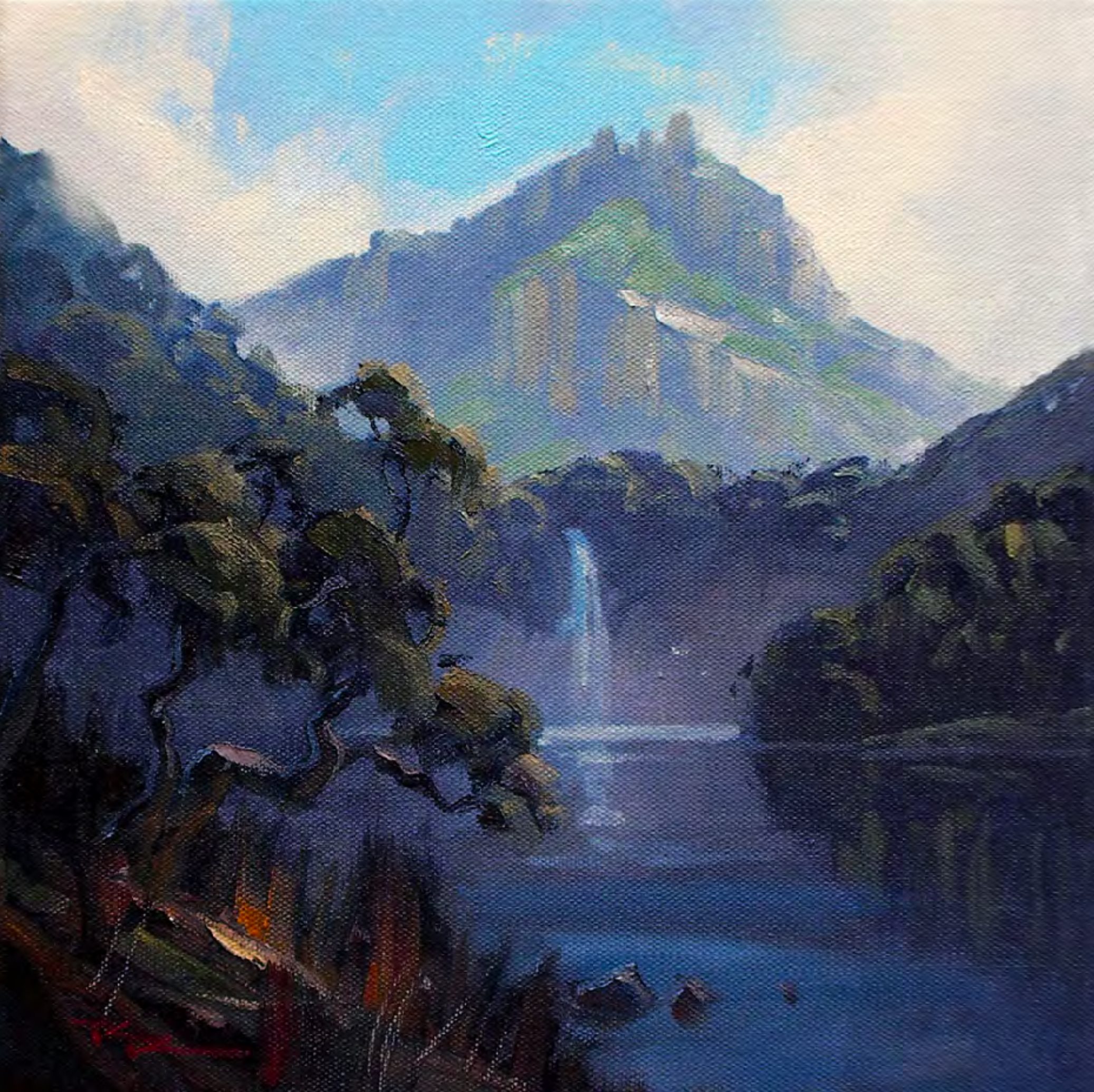
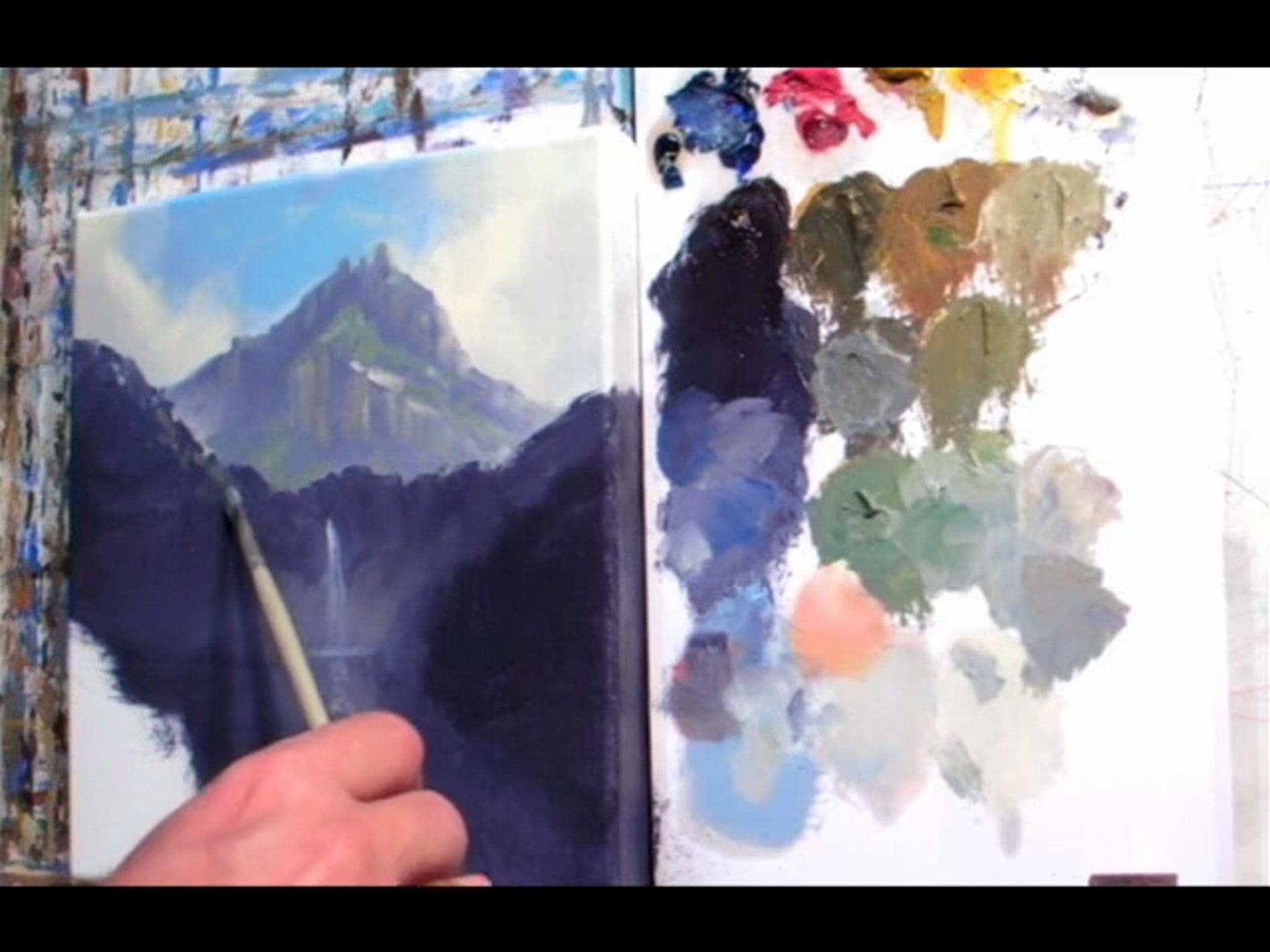
In this chapter, I invite you to join me in the studio as we explore the captivating beauty of Mount Manaia, a dormant volcano that stands majestically over Whangarei Harbour in Northland, New Zealand, where I call home. This iconic landmark has been a source of inspiration for me, and despite having painted it numerous times, I am continually drawn to its allure, striving to capture its essence more fully with each attempt. Together, we'll delve into the process of transforming a photograph into a vibrant painting, using our knowledge and artistic license to bring the scene to life. You'll learn how to harness the benefits of studio painting, such as consistent lighting, which allows us to maintain control over the light on our canvas and avoid the exaggerated contrasts often found in photographs. We'll also discuss how to compensate for these contrasts by understanding outdoor lighting conditions. While studio painting may lack the spontaneity of plein air work, it offers the opportunity to plan and refine our compositions, ultimately leading to a polished final piece that conveys the spirit of this remarkable location. Let's embark on this artistic journey and capture the timeless beauty of Mount Manaia together.
This guide accompanies the full video lesson. The lesson includes the complete narrated video, the printable PDF chapter, and personalised critique support.
Use a color value similar to the hill behind it, but increase the saturation slightly. Add a tiny bit more yellow to the mix to suggest the headland is less shrouded by mist. Roll the brush to create the round tops of the trees.
Paint Reflections
Use the same color as the headland but make it slightly darker for the reflections. Ensure that vertical strokes are directly beneath the objects being reflected to maintain accuracy.
Pro tipRoll the brush to create the round tops of the trees, adding a natural look to the headland.
Embark on your painting journey by understanding the unique advantages of both studio and outdoor settings. While the studio offers controlled lighting, allowing for consistent work, outdoor painting captures the dynamic essence of natural light. Use your studio time to refine your compositions and sketches, ensuring that your final piece conveys the spirit of the location, even if painted indoors.
Begin your painting with strong compositional sketches, focusing on tonal values to create depth and interest. Simplify your values to maintain clarity and use a limited palette to streamline your color mixing process. As you progress, pay attention to the subtle shifts in color and value, ensuring that each element of your painting contributes to a cohesive whole.
As you add the final touches, focus on the details that bring your painting to life. Use your brushstrokes to express texture and movement, and carefully adjust colors to capture the light and shadow play across your scene. Remember, your brushstroke is your signature, so let it reflect your unique style and vision.
Points to remember
Control studio lighting to avoid glare and maintain consistent lighting on your subject.
Limit the number of values in your sketch to create a strong tonal base and enhance the composition.
Avoid mixing values on the canvas to maintain clarity in your tonal range.
Mix larger piles of base colors to serve as parent colors, allowing easy adjustments for variations.
Use phthalo blue to cool down your sky color when needed.
Squint through your eyelashes to reduce color intensity and focus on checking values accurately.
Use ultramarine blue for a warm sky color to add variation and interest.
Avoid overdoing highlights; focus on one major highlight with a few supporting ones.