I believe that encouragement is one of the most valuable gifts we can receive, and this art course is designed to offer just that. Whether you're 5 or 95, the principles you'll learn here are timeless and universal. I've found that art and design skills can be quickly grasped by anyone with average ability, and as you progress through these steps, you'll see your drawing and artistic skills flourish. We begin by honing our pencil work, focusing on the fundamentals of shapes, proportions, perspective, and the magic of light and shade to bring your drawings to life. As you advance, you'll explore the vibrant world of color, enhancing your ability to convey action, character, and emotion. We'll build confidence with pen work, delve into the expressive potential of pastels, and eventually embrace the fluid beauty of watercolors. Finally, we'll venture into the rich textures of oil painting and mixed media. This journey is crafted to inspire and encourage you every step of the way, and I am thrilled to be part of your artistic growth.
This guide accompanies the full video lesson. The lesson includes the complete narrated video, the printable PDF chapter, and personalised critique support.
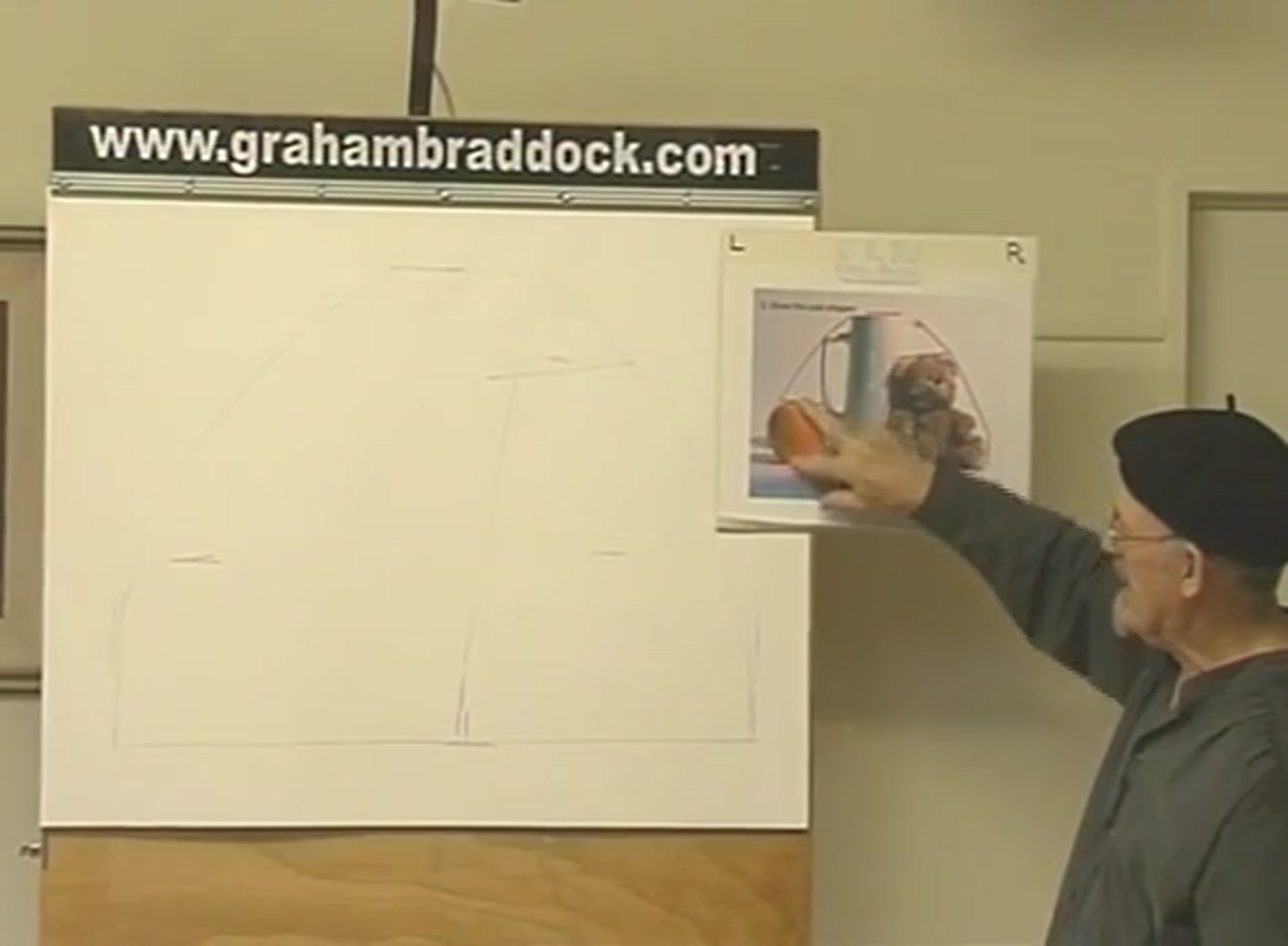
Sketch a square to represent the orange, ensuring it is as high as it is wide. This square will serve as the guide for your round orange.
Position the Jug
Estimate the space between the jug and the orange, noting that the space between the jug and the teddy is larger. Draw the jug slightly sloped, not straight up and down, to capture its angle.
Transform the Square into a Circle
Mark halfway points on each side of the square. Then, make marks at the top and bottom centers. Use these marks to guide your curves, drawing a circle that touches the bottom and passes through the marks to form a smooth, round shape.
Pro tipUse halfway marks on each side of the square to guide your curves for a perfect circle.
Embark on your artistic journey by honing your foundational skills with pencil work. Begin by mastering shapes, proportions, and textures, and gradually incorporate light and shade to bring your drawings to life. As you progress, introduce color to your pencil drawings to express emotion and character, and experiment with pen, wash, and pastels for added depth and detail.
Warm-up exercises are essential to train your hand-eye coordination and build confidence. Start each session by practicing simple patterns, focusing on accurate replication and proportion. This preparation will enhance your control and precision as you move on to more complex subjects, such as still lifes and detailed compositions.
As you refine your drawing, pay attention to the big shapes and sub-shapes within your subject. Use light lines to sketch and adjust proportions, and gradually add details and textures. Remember to incorporate shadows and highlights to enhance the three-dimensional quality of your work. With practice and patience, your drawings will become more expressive and realistic.
Points to remember
Start with pencil to build foundational skills.
Always begin with a warm-up exercise to improve control.
Use your fingers to measure consistent distances.
Measure new elements against existing shapes for accuracy.
Use halfway marks to guide curves for perfect circles.
Draw lightly to allow for easy adjustments.
Leave spaces between lines where light hits for texture.