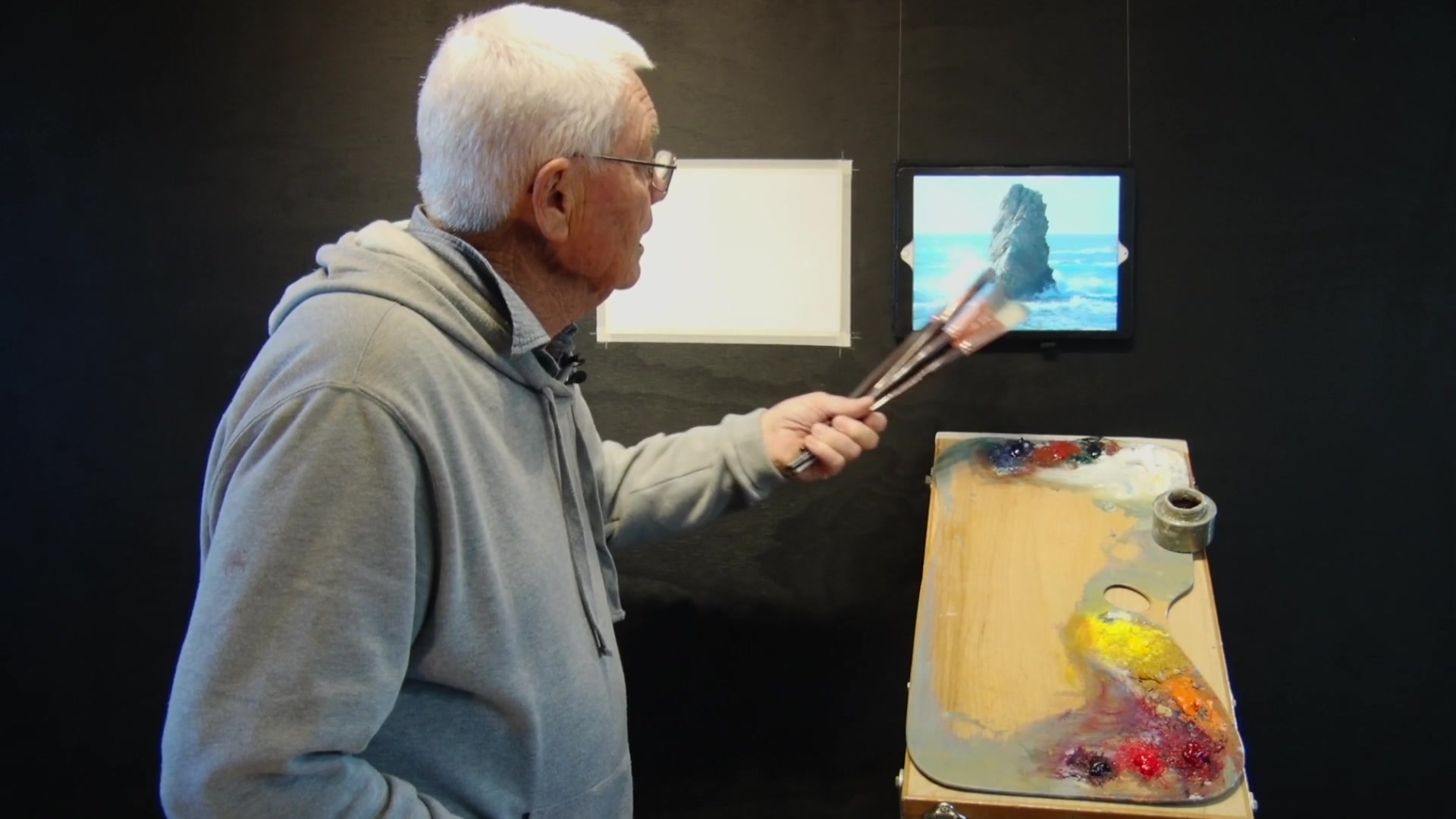
In this chapter, I invite you to explore the exhilarating world of expressive brushwork alongside the esteemed New Zealand artist John Crump. As we delve into this workshop, you'll witness three captivating demo paintings that beautifully illustrate John's mastery of a painterly style developed over more than four decades. This lesson is designed for every artist who dreams of painting with a loose, impressionistic flair. We'll focus on selecting the right tools for the job, starting with size 12 brushes that are perfect for most of your painting needs. Opt for brushes with square tips and long bristles that can hold plenty of paint, enabling you to create long, expressive strokes that bring your canvas to life. While small brushes have their place for intricate details like twigs or building features, they can slow you down when covering large areas. By the end of this chapter, you'll gain insights into achieving a sense of freedom and joy in your painting, capturing the essence of your subject with bold, confident strokes.
This guide accompanies the full video lesson. The lesson includes the complete narrated video, the printable PDF chapter, and personalised critique support.
Dip your brush into medium to lubricate the bristles, ensuring smooth paint application. Sketch a rough outline of the rock, placing the horizon high and off-center for interest. Tilt the rock slightly to introduce movement and rhythm into the composition.
Start with Dark Tones
Begin by applying the darkest darks to the canvas, as the white canvas is your lightest light. Mix a dark color without using black, perhaps warming it slightly with a touch of orange. Apply this color thinly to allow for easy adjustments later.
Add Midtones and Highlights
Mix your next darkest dark and add some white and medium to create midtones. Apply these to the spray area and waves, keeping the paint subdued. Maintain clean areas on the canvas for highlights, using a clean brush to blend softly.
Create Dynamic Edges
Use a sawtooth technique with your brush to soften the horizon line, preventing it from dividing the painting. Sweep over the area gently to maintain a level horizon without harsh lines.
Enhance with Light and Color
Introduce a bit of gold ochre or cadmium yellow to the sky to lead the eye towards the rock. Add highlights to the rock's lit sides, ensuring the paint is smoothly mixed and applied with a clean brush.
Finalize Details and Adjustments
Add shadows and foam to the waves, using thin darks and thicker lights for depth. Avoid repetitive shapes in the rock to keep it natural. Soften selected edges and add warmth to bring elements forward.
Pro tipKeep darks thin and lights with more body to create depth and allow easy adjustments.
Embark on your painting journey by selecting the right tools and materials. Choose large brushes with square tips for expressive strokes and a smooth artist's palette for effective color mixing. Opt for a canvas that enhances your brushwork, such as a fine, smooth surface that showcases your expressive style.
As you begin painting, focus on establishing the composition with dark tones and gradually build up to midtones and highlights. Use a variety of techniques, like the sawtooth method, to soften edges and maintain a harmonious balance in your work. Pay attention to the interplay of light and shadow, ensuring depth and movement in your scenes.
Throughout your painting process, remain flexible and open to adjustments. Whether you're painting rocks, mountains, or trees, continually assess the design and make changes to enhance the overall composition. Keep your brushwork purposeful, and remember that each stroke contributes to the expressive quality of your painting.
Points to remember
Use large brushes for most of your painting to maintain speed and expressiveness.
Avoid touching the sides or bottom of the dipper with your brush to keep the medium clear.
Opt for a fine canvas to enhance the visibility of your expressive brush strokes.
Keep darks thin and lights with more body to create depth and allow easy adjustments.
Mix paint directly with your brush for a quicker and easier blend, maintaining a clean canvas.
Keep your paint layers thin to maintain control and avoid overworking the painting.

.jpg)