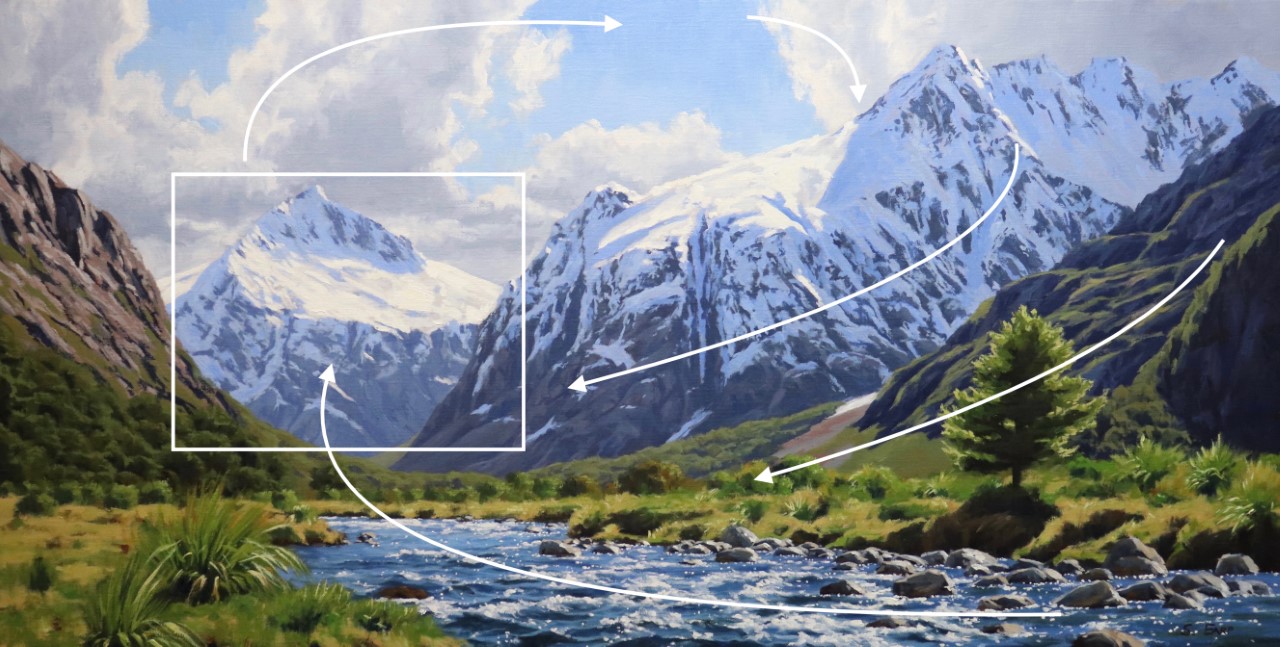
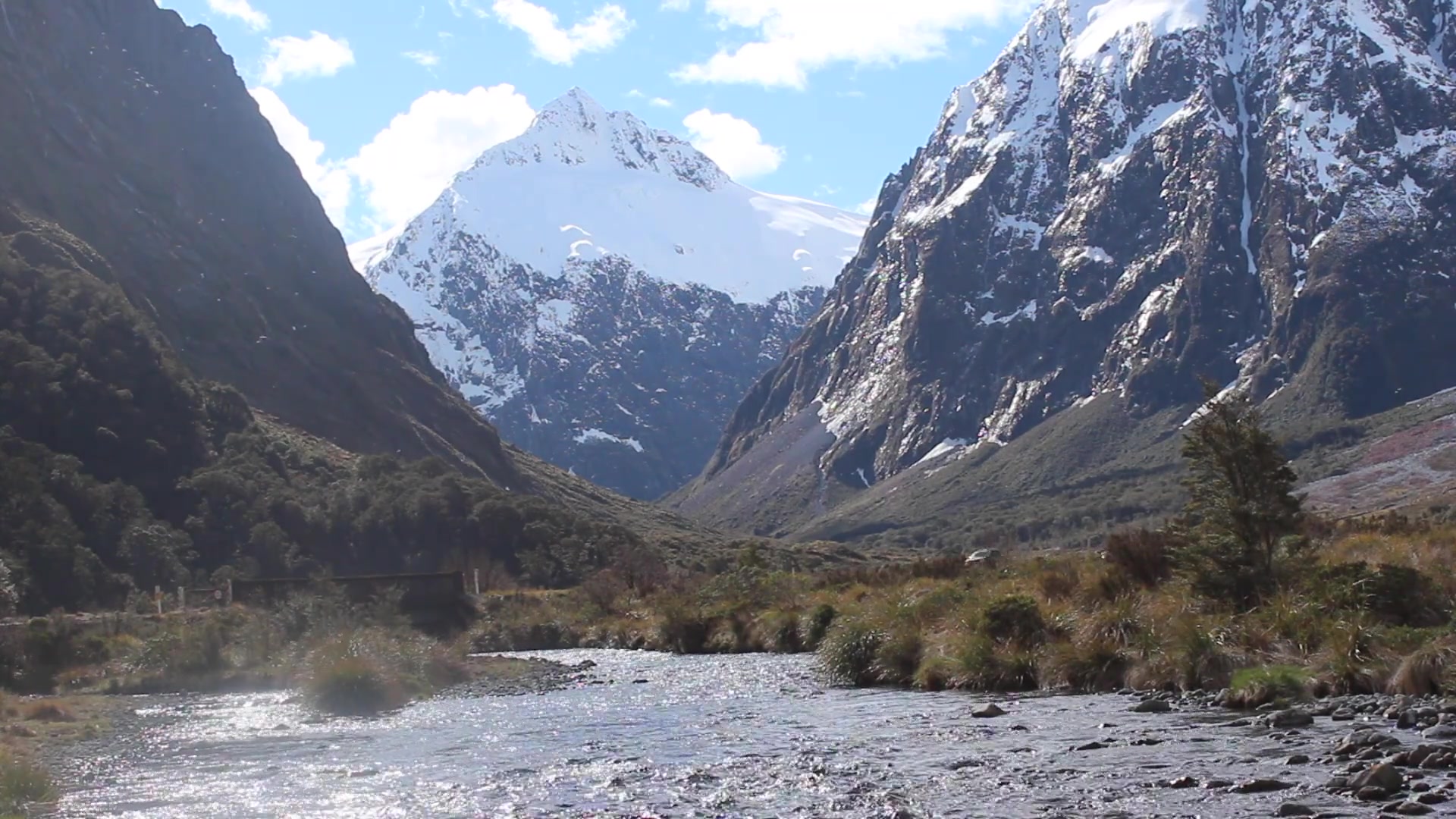
Welcome to my studio, where I'm excited to guide you through painting one of my favorite New Zealand landscapes—a stunning mountain valley on a beautiful spring day. Picture the sun glistening on a cool mountain stream with snow-capped peaks in the background. In this chapter, I'll walk you through the entire process of capturing this scene, starting with footage from my photo expedition. Back in the studio, we'll dive into designing a composition, beginning with quick thumbnail sketches in my sketchbook and progressing to a detailed pencil sketch. These sketches are invaluable references when you embark on your larger painting. Before tackling the main piece, we'll create a color study, a small yet crucial painting that helps ensure your colors, values, and tonal dynamics are spot-on. I'll guide you through mixing colors and understanding color theory in a straightforward way, making it easy to apply to your own work. Whether you're just starting out or have been painting for years, this lesson offers tips to elevate your landscape painting skills and create art that truly captures the beauty of nature.
This guide accompanies the full video lesson. The lesson includes the complete narrated video, the printable PDF chapter, and personalised critique support.
Use a limited palette to maintain harmony and cohesion in your painting. This approach helps you understand color mixing better and keeps your painting consistent.
Select Titanium White
Add Titanium White to your palette. This intense, opaque white offers exceptional covering power, making it ideal for areas where you need to cover underlying layers.
Add Burnt Sienna
Include Burnt Sienna, a dark orange earth color, to your palette. It's excellent for desaturating blues and useful for painting rocks, clouds, shadows, and earth tones.
Include Yellow Oxide
Use Yellow Oxide to soften and warm up greens. It's great for painting straw-colored grass and creating low chroma greens for distant hills. Yellow Ochre can be used as an alternative.
Add Cadmium Yellow
Incorporate Cadmium Yellow, an opaque, light-value yellow, to create rich greens when mixed with Ultramarine Blue. It's a beautiful yellow for landscape painting.
Use Cadmium Orange
Add Cadmium Orange to your palette. This powerful, opaque color is ideal for making greens look more natural and combines well with Cadmium Yellow.
Select Quinacridone Crimson
Choose Quinacridone Crimson for violet tints in clouds and shadows. Remember, it's a violet with red undertones. Alizarin Crimson can be used as an alternative.
Add Ultramarine Blue
Include Ultramarine Blue, a bright, reddish blue, for its versatility. It's a great color to use throughout your painting for various effects.
Incorporate Phthalo Green
Add Phthalo Green, a powerful emerald green, to increase the saturation of your green mixes. Use it sparingly to avoid overpowering your mixtures.
Pro tipUse Phthalo Green sparingly to prevent it from overpowering your color mixtures.
Embark on your mountain valley painting journey by thoughtfully planning your composition. Nature is your muse, but not your master—use your artistic license to rearrange elements for a more compelling design. Begin with quick sketches to explore different compositions and establish a solid foundation for your painting. This preparatory work ensures that your painting will capture the essence of the scene while maintaining artistic integrity.
As you progress, focus on the interplay of light and shadow. Use a variety of pencils to sketch and define your values, and create a small color study to test your palette choices. This step is crucial for ensuring that your colors and values are effective in conveying the mood and depth of your scene. Pay attention to the harmonious use of colors, employing a limited palette to maintain cohesion and using complementary colors to enhance vibrancy.
Finally, bring your painting to life by carefully layering colors and textures. Use larger brushes to establish the foundation and smaller ones for detail work. Remember to prepare your canvas properly and use the color wheel to guide your color mixing. As you block in shadows and refine details, keep the atmospheric perspective in mind to create a sense of depth and realism. With these techniques, your mountain valley painting will be a testament to your growing skills and artistic vision.
Points to remember
Use a sketchbook to experiment with different compositions before starting your painting.
Use a 4H pencil for light marks and a 4B pencil for dark shadows to effectively plan your composition.
Create a small color study to test your painting's colors and values before committing to a larger piece.
Avoid placing the focal point in the center to maintain a dynamic composition.
Use Phthalo Green sparingly to prevent it from overpowering your color mixtures.
Begin with larger brushes to establish the painting's foundation, then use smaller brushes for detail work.
To desaturate a color, mix it with its complementary opposite on the color wheel.
Convert your reference photo to black and white to easily identify and match dark values.