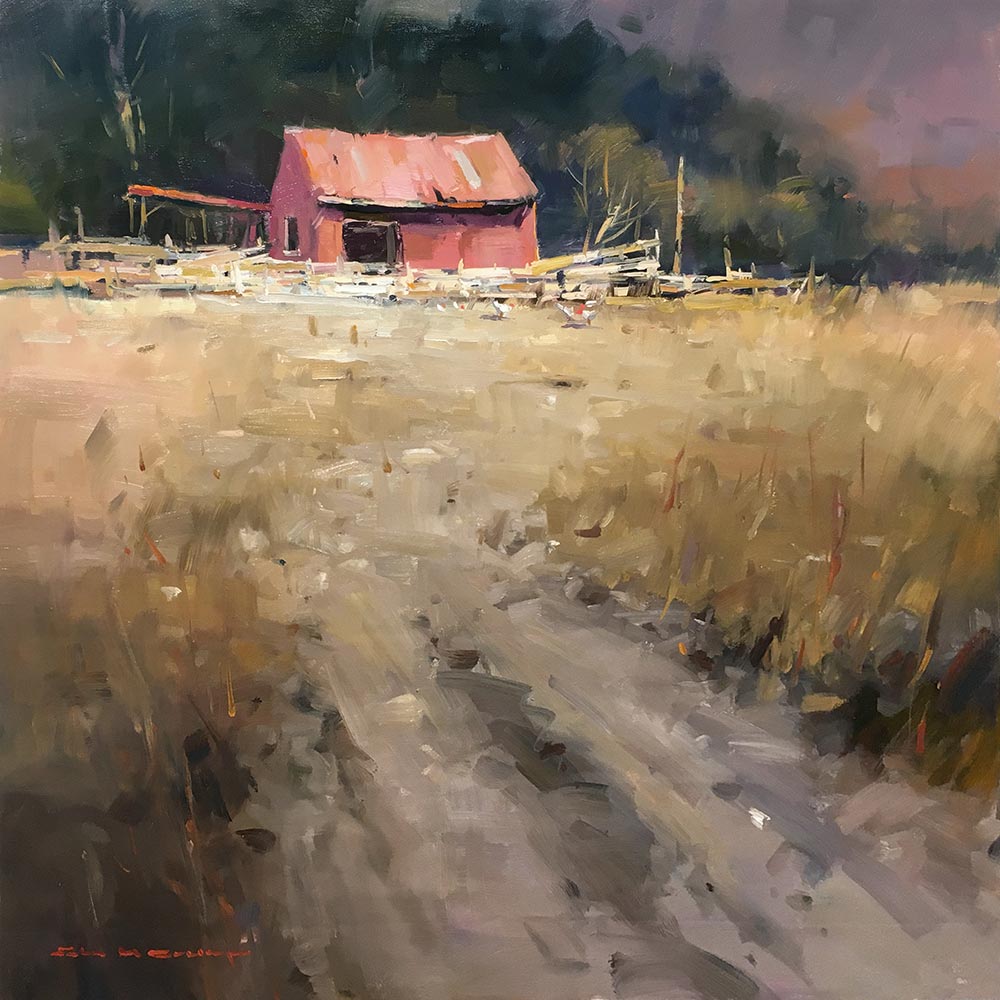
In this chapter, we delve into the vibrant world of color mixing, a fundamental aspect of expressive brushwork. As we explore the palette, I'll guide you through the nuances of mixing colors, a topic many of you have inquired about. We'll start by discussing the importance of using a medium to adjust the consistency of your paints, ensuring they remain pliable and easy to work with. This is particularly crucial when working with thick whites, as a touch of medium can transform them into a more workable, slushy state. You'll learn about the specific colors I favor, such as the versatile Windsor Blue Red shade, which serves as a beautiful neutral for creating darks. We'll also explore the richness of Venetian Red and the vibrancy of Cadmium Lemon and Cadmium Yellow Pale, each offering unique qualities to your palette. As we mix these colors, you'll discover how to achieve the perfect greens and blues that often captivate viewers. This lesson is designed to enhance your understanding of color dynamics, empowering you to create paintings that are generous and luxurious in their expression. By the end of this chapter, you'll have a deeper appreciation for the purity and strength of your colors, setting the stage for your own expressive brushwork journey.
This guide accompanies the full video lesson. The lesson includes the complete narrated video, the printable PDF chapter, and personalised critique support.
Recognize that every painting needs a focal point to guide the viewer's eye. This is essential for creating a compelling composition.
Use the Rule of Thirds
Divide your canvas into thirds both horizontally and vertically. Place your focal point where these lines intersect to create a balanced and engaging composition.
Allow Flexibility in Focal Point Placement
While rules like the rule of thirds are helpful, don't feel constrained by them. Let the focal point naturally emerge and speak to you as you develop your painting.
Pro tipPlace your focal point at the intersection of the thirds for a balanced composition.
In this lesson, you explored the art of creating expressive brushwork by focusing on composition, focal points, and dynamic elements. Begin your painting journey by identifying a focal point that naturally draws the viewer's eye. Use the rule of thirds as a guide, but allow your intuition to lead you as your painting develops. Avoid centered horizons and symmetrical patterns to maintain a dynamic and engaging composition.
As you build your painting, consider how elements like mountains, clouds, and shadows can guide the viewer's eye through the scene. Use contrast between light and dark areas to highlight your focal point and create a visual path. Incorporate diagonal lines and varied heights to add depth and interest, while avoiding repetitive patterns that can make your painting feel static.
Finally, focus on the details that bring your painting to life. Use expressive brushstrokes to suggest movement and texture, and soften edges to create a cohesive composition. Experiment with color application and mixing greys to achieve the desired tones. Remember, the goal is to create a painting that feels natural, spontaneous, and full of life.
Points to remember
Place your focal point at the intersection of the thirds for a balanced composition.
Avoid placing the horizon line in the center to prevent the painting from being divided into two equal halves.
Use varied heights for mountains and hills to naturally guide the viewer's eye through the painting.
A strong contrast between light and dark areas can effectively highlight your painting's focal point.
Use diagonal lines to make your painting more dynamic and engaging.
Avoid repetitive patterns by varying the size and shape of elements like rocks and clouds to maintain interest and rhythm.
Get as much colour on your painting as soon as you can to establish a strong foundation.
Use a brush to soften edges near the painting's edge for a more engaging composition.