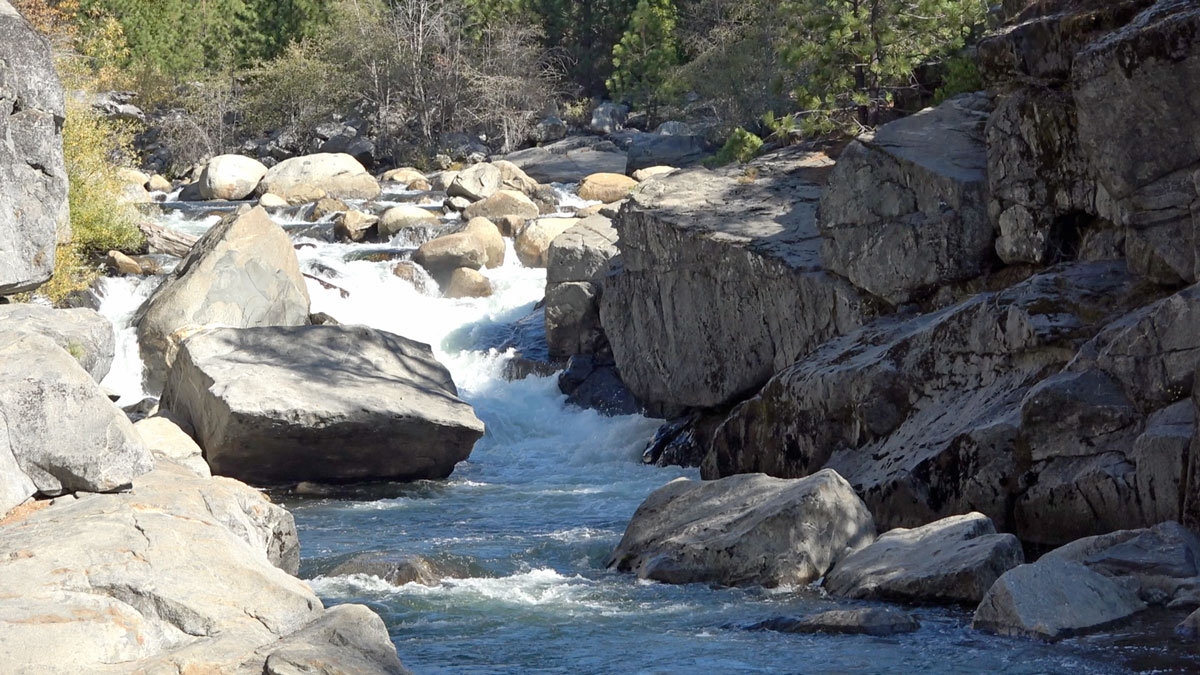
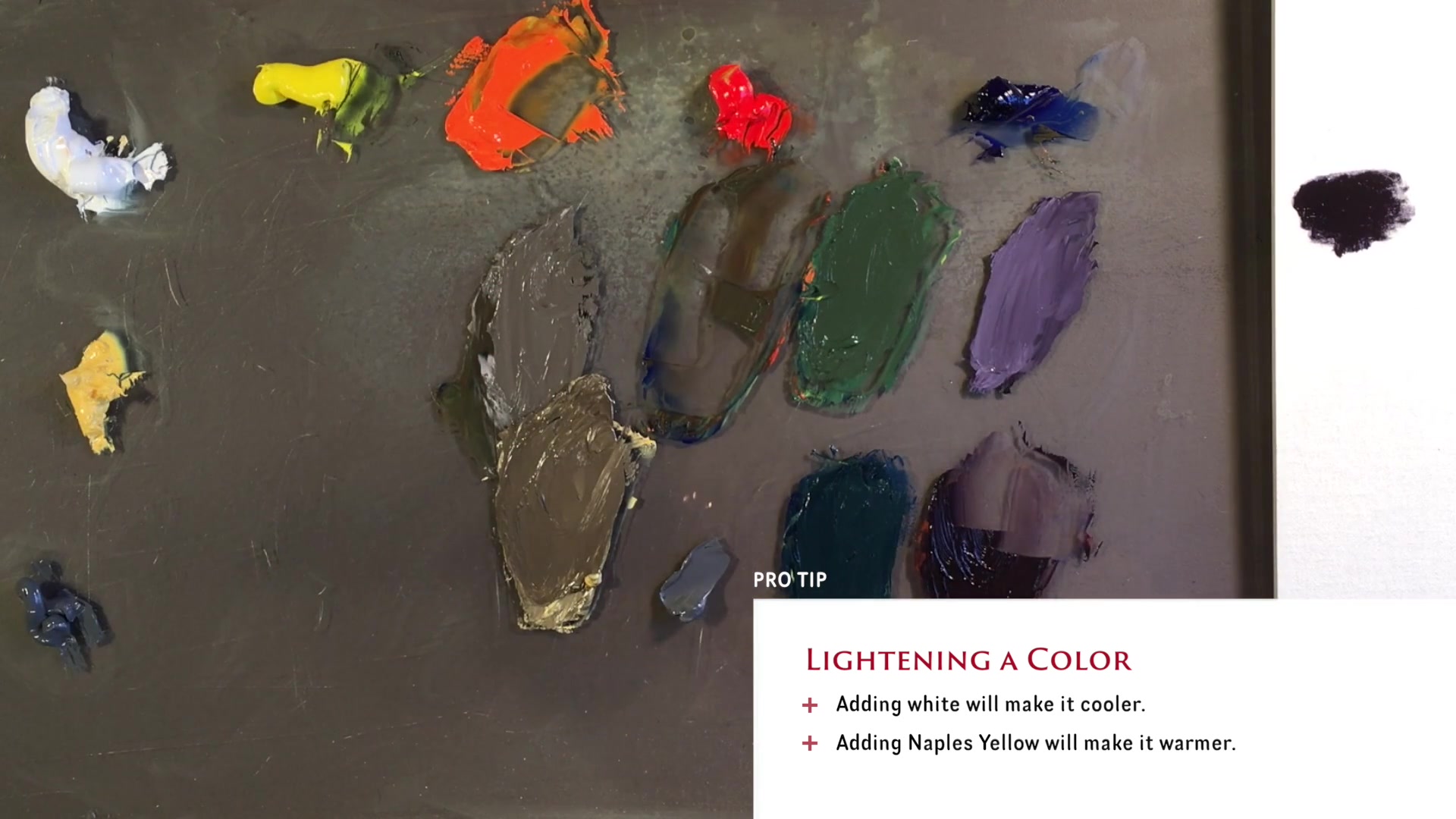
In this chapter, we'll begin in the studio, where I can guide you through the colors I use and how I achieve the vibrant mixes that bring life to outdoor scenes. I've prepared my palette with a limited selection of five colors plus white, which I'll explain in detail. Before diving into mixing, let's clarify some essential terms: 'value' refers to a color's lightness or darkness, akin to where it falls on a grayscale; 'hue' is the name of the color on the color wheel, such as yellow or yellow-green; 'saturation' describes a color's intensity or purity; and 'temperature' indicates a color's warmth or coolness, with warm tones leaning towards yellow and orange, and cool tones towards blue. In the studio, I use a glass palette with a neutral gray surface for optimal mixing, but outdoors, I prefer the practicality of a wooden palette. Using a limited palette is advantageous, especially for plein air painting, as it minimizes the weight of your gear while still allowing for a vast range of color mixes. I'll share the specific colors I carry and how to mix them effectively, starting with titanium white for its opacity and affordability, and moving through a selection of Rembrandt colors that offer flexibility and depth. Let's explore how mastering these elements can enhance your painting experience and help you capture the light beautifully in any scene.
This guide accompanies the full video lesson. The lesson includes the complete narrated video, the printable PDF chapter, and personalised critique support.
Embark on your painting journey by carefully selecting your palette colors. Start with the primary colors—yellow, red, and blue—along with titanium white for versatility. Enhance your palette with cheater colors like Naples Yellow Deep and Cold Gray to subtly adjust warmth and saturation. As you mix your darkest darks and secondary colors, remember to keep your palette organized and clean for vibrant results.
As you progress, explore the nuances of color mixing by adjusting temperature and value. Use complementary colors to tone down overly vibrant hues and experiment with a limited palette to discover new color combinations. This practice not only simplifies your process but also enhances your understanding of color harmony. When painting outdoors, ensure you have the right tools and setup, including a toned canvas and a stable umbrella, to create a conducive painting environment.
Finally, capture the essence of your chosen scene by sketching thumbnails and making detailed observations. Use these sketches to refine your composition and focus on the elements that captivate you most. By transferring your design thoughtfully onto the canvas, you ensure that your painting reflects the unique beauty of the scene. Remember, each step in this journey is an opportunity to deepen your skills and express your artistic vision.
Points to remember
Always carry your primary colors and titanium white for a versatile palette.
Use Naples Yellow Deep to add warmth and lightness without altering saturation.
Clean your palette knife between mixes to keep colors vibrant.
Use the complement color to tone down overly vibrant greens.
Experiment with a limited palette to discover new color combinations.
Tone your canvas with acrylic paint to prevent wiping down to white.
Secure your umbrella to prevent your easel from tipping over.
Use thumbnails to explore different compositions before painting.