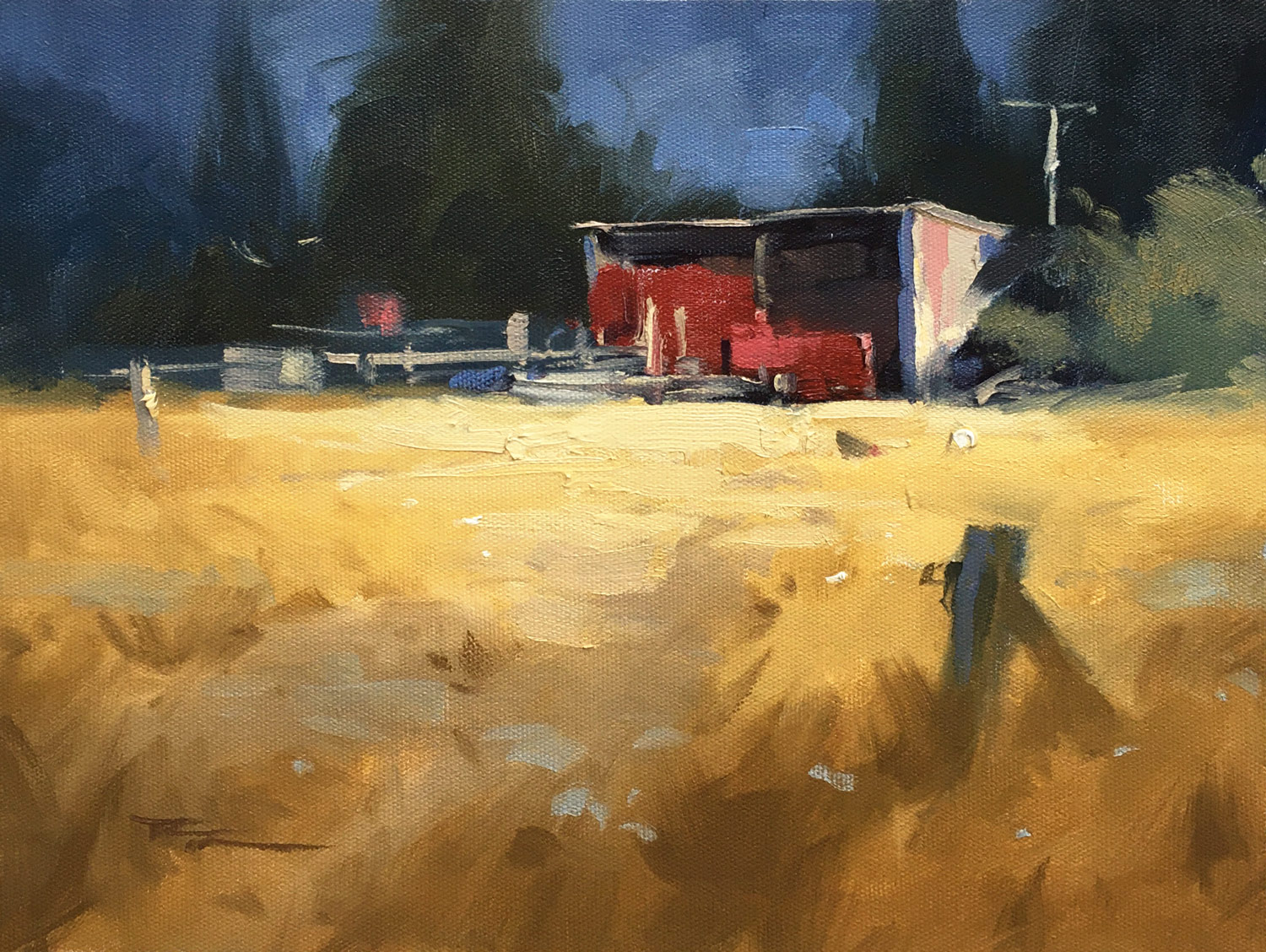
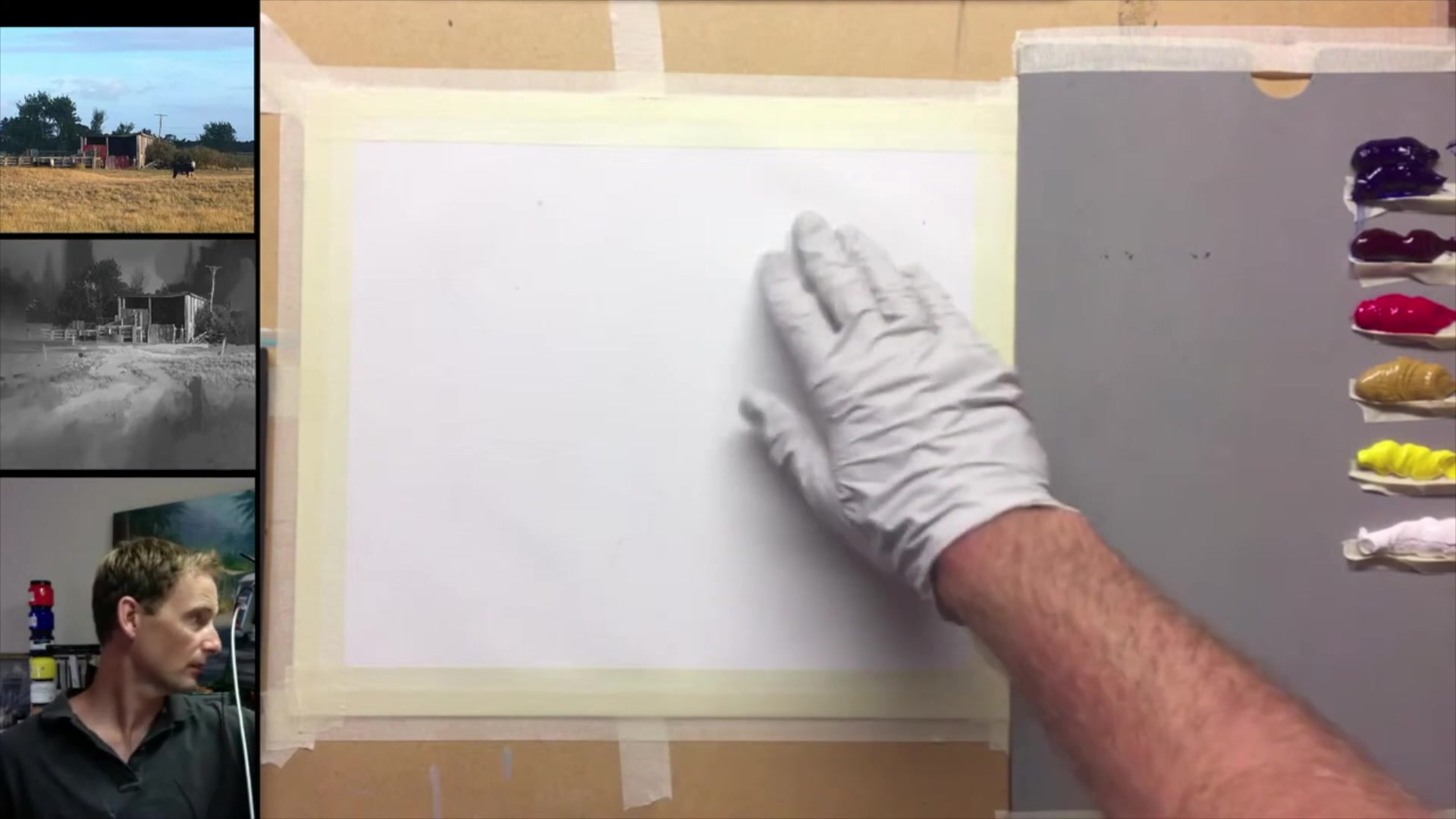
As we embark on this painting journey together, we'll dive into capturing the charm of a rustic farm shed. This scene is a delightful subject, offering a wonderful blend of textures and colors that make it both challenging and rewarding to paint. In this chapter, I'll guide you step by step through the process, sharing the keys to achieving a fresh, painterly look without sacrificing realism. We'll explore the use of flat, long-bristle brushes, which are perfect for covering large areas and creating gestural marks. These brushes hold more paint, allowing for smooth application, while smaller brushes like a small dagger will help us tackle the intricate details. I love how these tools enable us to express the character of the scene with fluidity and precision. This lesson is a pre-recorded livestream, complete with student questions and answers, making it an engaging and interactive experience. So, grab your favorite beverage and a cookie, and let's enjoy the experience of a live workshop together!
This guide accompanies the full video lesson. The lesson includes the complete narrated video, the printable PDF chapter, and personalised critique support.
Choose a range of flat, long-bristle brushes for your painting. The longer bristles hold more paint, allowing you to cover larger areas without frequent trips to the palette. They also enable more gestural and calligraphic marks.
Use Small Brushes for Detail
For detailed work, use smaller brushes such as a small dagger. These are ideal for intricate areas in your painting, especially when working on a smaller canvas.
Consider Brush Flexibility
Opt for long-bristle brushes as they bend better and lay paint smoothly on the canvas. Short-bristle brushes can act like a rake, which is less effective for smooth paint application.
Pro tipLong-bristle brushes are excellent for creating gestural and calligraphic marks.
Embark on your painting journey by selecting the right tools and materials. Choose long-bristle brushes for their ability to hold more paint and create expressive marks, and use smaller brushes for intricate details. Set up your palette with a range of colors and add walnut oil for smooth application. Begin by sketching the rustic farm shed directly onto the canvas, using a dark background to make the lighter parts stand out.
Compose your painting thoughtfully, using the rule of thirds to position key elements like the shed. Introduce a path to guide the viewer's eye and create a visual journey. As you block in the major shapes, maintain a balance between dark and light areas, keeping initial layers thin to avoid interference with subsequent colors. Embrace the freedom of color choice, especially when working from grayscale sketches, to capture the essence of the scene.
As you progress, focus on creating soft edges and natural transitions between colors. Use walnut oil to thin your paint for smoother application and to maintain a wet-on-wet style, especially with acrylics. Trust the process, knowing that the initial rough stages will evolve into a cohesive and vibrant painting. Pay attention to foreground details and shadows, ensuring that colors remain vibrant and harmonious. Avoid muddy colors by mixing similar hues together and keeping your palette organized.
Points to remember
Use long-bristle brushes for gestural marks and smooth paint application.
Position key elements using the rule of thirds for a balanced composition.
Use a dark background to enhance contrast and focus on the main subject.
Apply paths to guide the viewer's eye towards the center of interest.
Use a weak color for sketching to prevent interference with subsequent layers.
Keep initial dark paint layers thin to prevent them from affecting later colors.
Use walnut oil to thin paint for smoother application and blending.
Start with a more gray and slightly darker base to allow for vibrant highlights later.