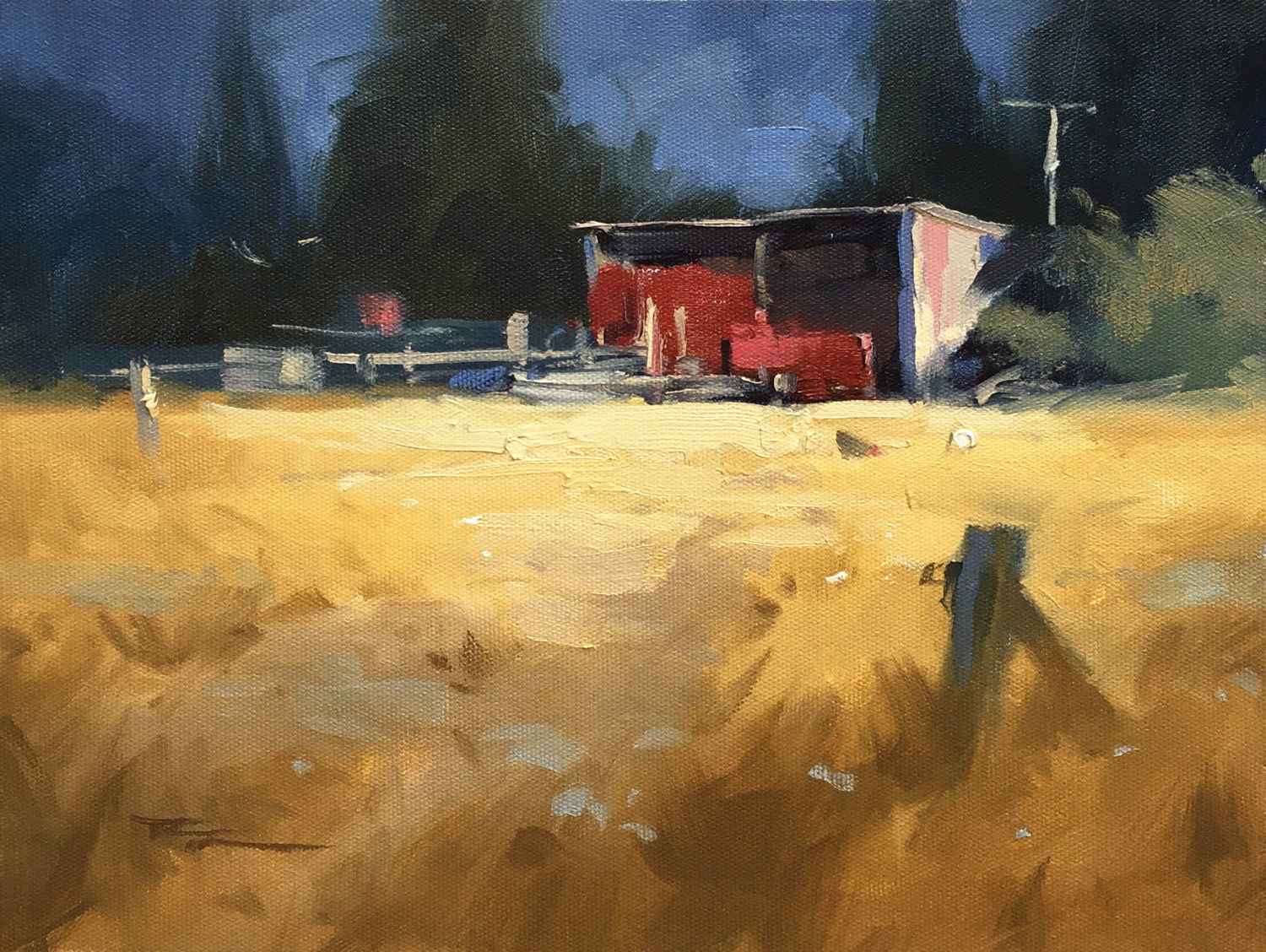
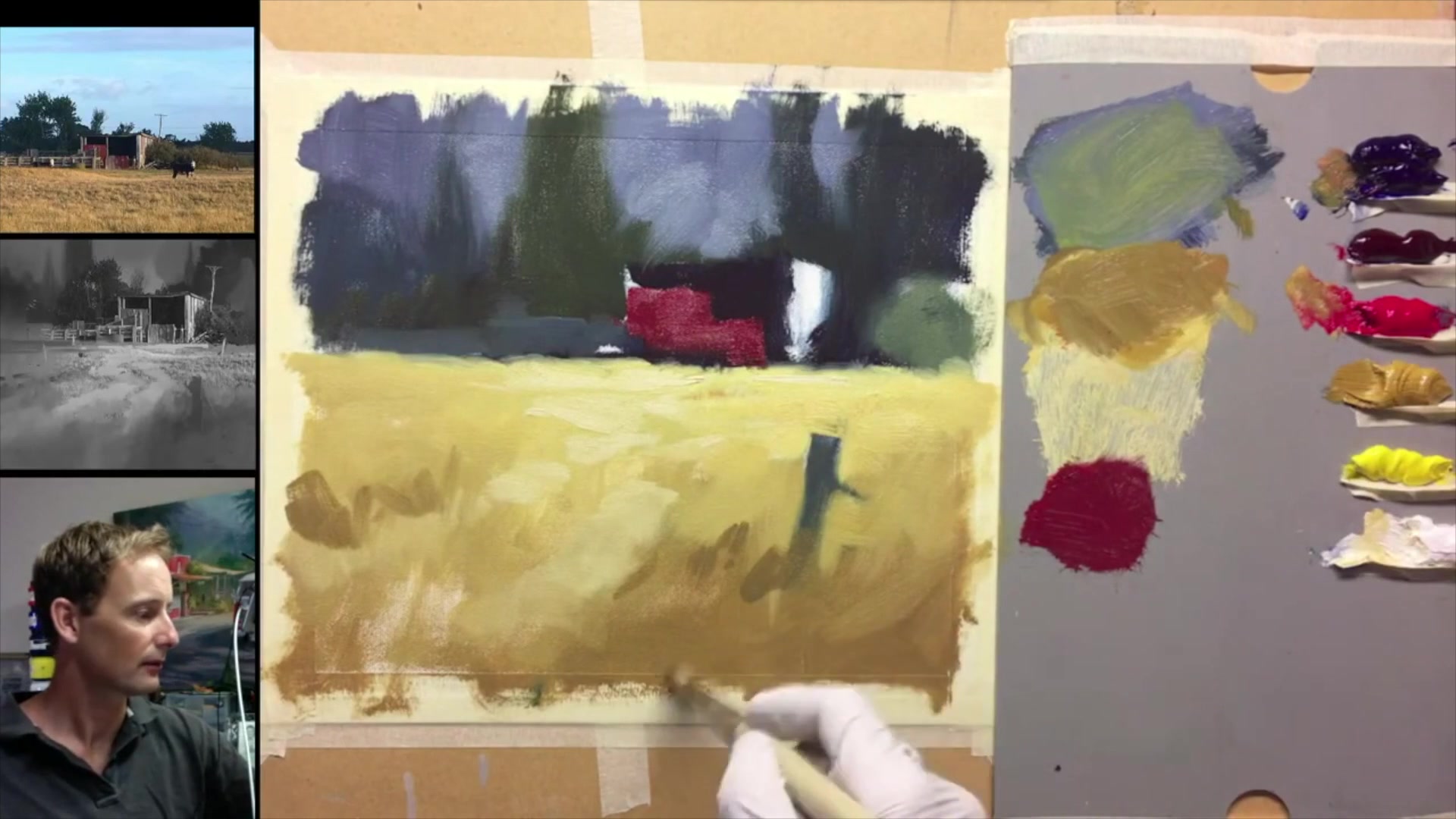
In this chapter, we'll embark on an artistic journey to capture the charm of a rustic farm shed, a subject that offers a delightful blend of simplicity and complexity. As we paint, you'll discover the secrets to achieving a fresh, painterly look while maintaining a sense of realism. This scene is particularly rewarding because it invites us to explore texture, light, and shadow in a way that brings the shed to life on canvas. We'll start by selecting a range of long flat brushes, which are perfect for covering large areas with ease, thanks to their ability to hold more paint. For those intricate details that add character to our painting, small dagger brushes will be our tools of choice. These brushes allow for expressive, gestural strokes that can transform a simple scene into a vibrant depiction. As you paint along with me, you'll have the opportunity to pause, replay, and truly immerse yourself in the experience, just like a live workshop. So, grab your favorite beverage, perhaps a cookie, and let's enjoy this creative process together.
This guide accompanies the full video lesson. The lesson includes the complete narrated video, the printable PDF chapter, and personalised critique support.
Scoop up the paint onto the brush tip by moving the brush upwards into the paint. This technique helps you control the amount of paint on the brush, especially when the paint is thicker.
Consider Grass Shadows
Visualize the shape of the grass and identify the shadow side of each clump. Determine if the grass is tall enough to cast a shadow across the road, and plan your brushstrokes accordingly.
Create Smaller Shapes
Break down the grass area into smaller shapes and clumps. This approach ensures that your marks are intentional and reflect the light and shadow accurately.
Pro tipScoop paint onto your brush tip by moving upwards to control paint application.
Embark on your painting journey by selecting the right tools and materials. Choose long flat brushes for broad strokes and small dagger brushes for intricate details. Set up your palette with a range of colors and use walnut oil to enhance the flow of your paints. Begin your composition by sketching directly onto the canvas, positioning your main subject using the rule of thirds for balance.
As you progress, focus on blocking in dark areas to establish the foundation of your painting. Use paths to guide the viewer's eye and create a visual journey. Pay attention to color choices, ensuring your sketching colors do not interfere with the final layers. Whether using acrylics or oils, keep your paints workable and blendable to achieve soft edges and natural transitions.
Trust the process as you add layers and details, knowing that the initial stages may not look perfect. Embrace the rough beginnings as part of the creative journey. Use light and shadow effectively to enhance realism, and be mindful of color mixing to avoid muddy tones. With patience and practice, your rustic farm shed painting will come to life with depth and vibrancy.
Points to remember
Use long bristle brushes for larger areas and expressive strokes.
Position key elements using the rule of thirds for balance.
Use a dark background to enhance contrast and draw attention.
Choose a weak sketching color that won't interfere with final layers.
Keep your darks thin to prevent them from affecting top layers.
Paint soft areas larger than needed, then refine for a natural look.
Avoid making trees the same size and spacing for a natural appearance.
Separate warm and cool colors on your palette to prevent muddy mixes.