When most people think of an artist, they imagine someone painting outdoors in the sunlight, standing at an easel. This romantic image wasn't truly possible until the 1840s when paint became available in tubes and the French box easel was invented, making it easier for artists to travel with their gear and paint outside. In this chapter, we delve into the life and techniques of Joaquín Sorolla, a master of capturing light and life on canvas. Born in Valencia, Spain, Sorolla faced early tragedy with the loss of his parents, yet his passion for art shone through from a young age. By age 15, he was already excelling at the fine arts academy, and his talent caught the eye of patrons who supported his education. Sorolla's work is celebrated for its vibrant color and dynamic compositions, and in this lesson, I will guide you through his alla prima style, revealing how you can infuse your own paintings with more color, passion, and life. By standing on the shoulders of giants like Sorolla, we can reach artistic heights we never thought possible.
This guide accompanies the full video lesson. The lesson includes the complete narrated video, the printable PDF chapter, and personalised critique support.
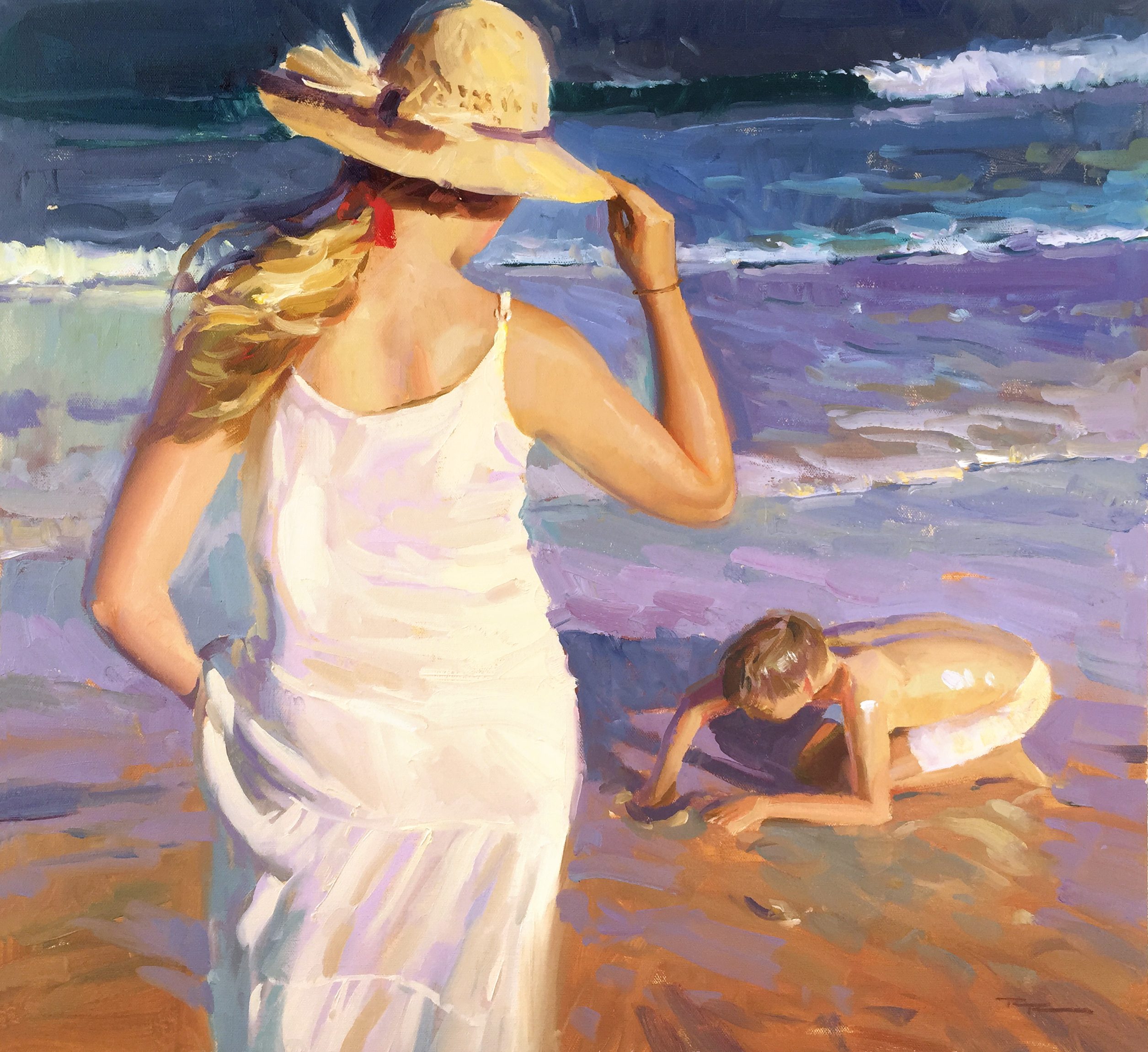
"Home Time" 23 x 21" Oil on Canvas by Richard Robinson.
Step 16Painting Figures and Color Contrast
Block in the White Dress
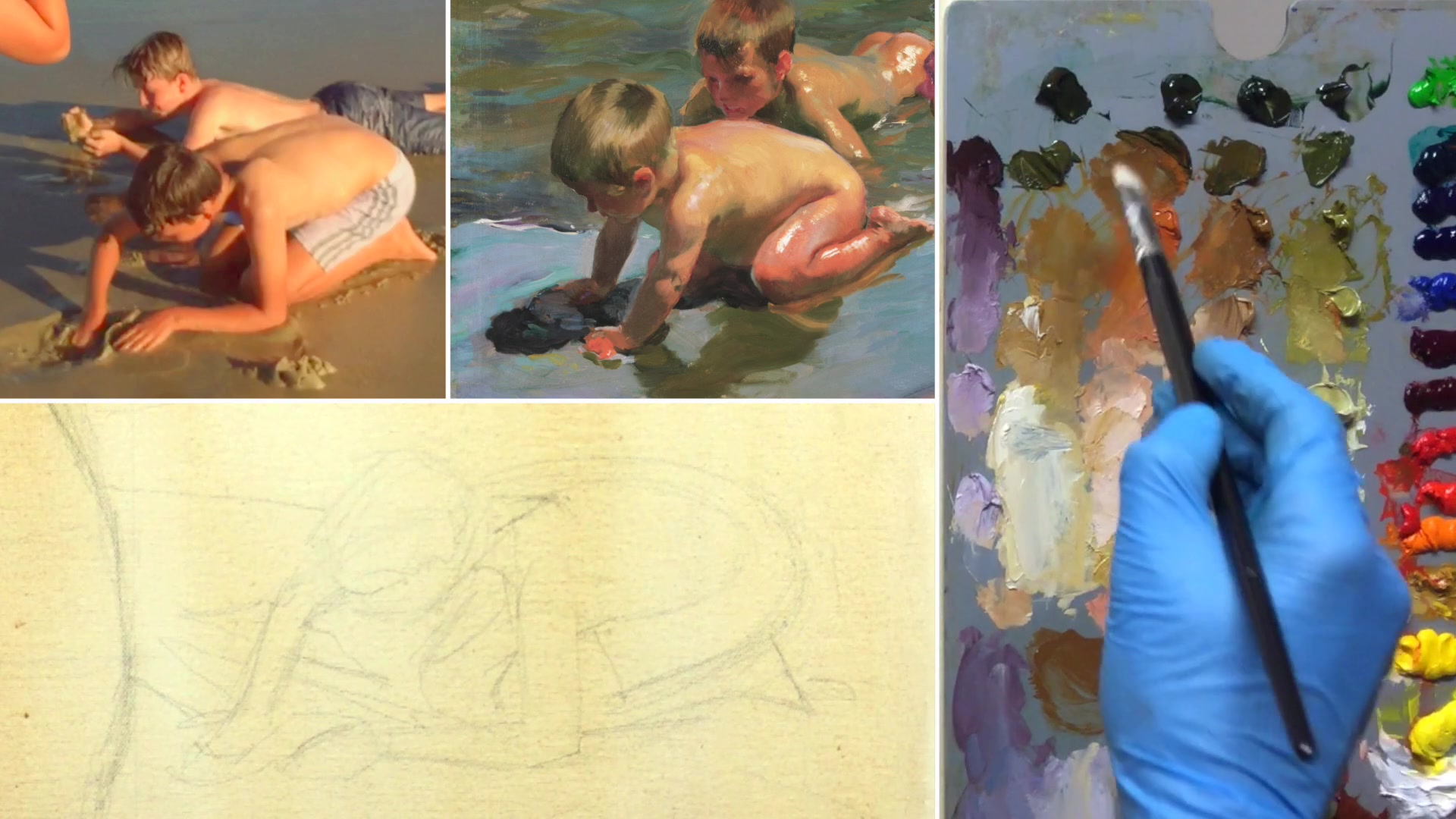
Start with a big brush and add a little Gamsol. Use your shadow color to broadly block in the big shapes and colors of the dress. Focus on capturing the overall form before making fine adjustments.
Adjust Halftones
Once the big shapes are in place, begin to adjust the halftones. This step involves refining the mid-tones to enhance the depth and dimension of the dress.
Scumble Grey Violet for Wet Skin Effect
Scumble a little grey violet over the back areas to mimic the appearance of wet skin. This color reflects the sky and adds a realistic touch to the painting.
Incorporate Color Contrast
Look for opportunities to introduce complementary colors for exciting contrasts. These contrasts can enhance the vibrancy and interest of the painting.
Pro tipFocus on blocking in big shapes and colors before making fine adjustments.
Embark on your painting journey by drawing inspiration from the life and work of Joaquin Sorolla. Begin by filling your sketchbooks with drawings, much like Sorolla did in his early years, to hone your skills and develop a keen eye for detail. As you progress, immerse yourself in nature, capturing its true essence and allowing it to guide your artistic expression. Sorolla's dedication to painting from life, even under challenging conditions, serves as a testament to the endurance and passion required to create authentic art.
As you delve into Sorolla's techniques, study his use of light, color, and brushwork to capture the vibrancy of life. By copying his paintings, you can gain insight into his approach to composition and color, which will enrich your own style. When preparing your canvas, consider the importance of background tone and the strategic use of color temperature to create dynamic contrasts between light and shadow. These elements are crucial in achieving the lively and dynamic quality characteristic of Sorolla's work.
Throughout your painting process, focus on the interplay of colors and the balance of warm and cool tones. Use tools like long brushes to maintain a good perspective, and employ techniques such as squinting to simplify your subject into major color blocks. As you refine your work, pay attention to the subtleties of shadows and highlights, using a dry brush to soften edges while preserving texture. By incorporating these techniques and maintaining a commitment to capturing the essence of your subject, you can create paintings that resonate with the energy and emotion found in Sorolla's masterpieces.
Points to remember
Fill your sketchbooks with drawings to develop your skills.
Let nature be your guide for inspiration and authenticity.
Study Sorolla's use of light and color to capture life's essence.
Focus on negative spaces to ensure accuracy in your drawing.
Apply an umber wash before sketching to set a warm background tone.
Pre-mix colors to speed up your painting process and focus on brushwork.
Use contrasting colors to enhance light and shadow dynamics.
Squint at your subject to simplify it into big blocks of color.