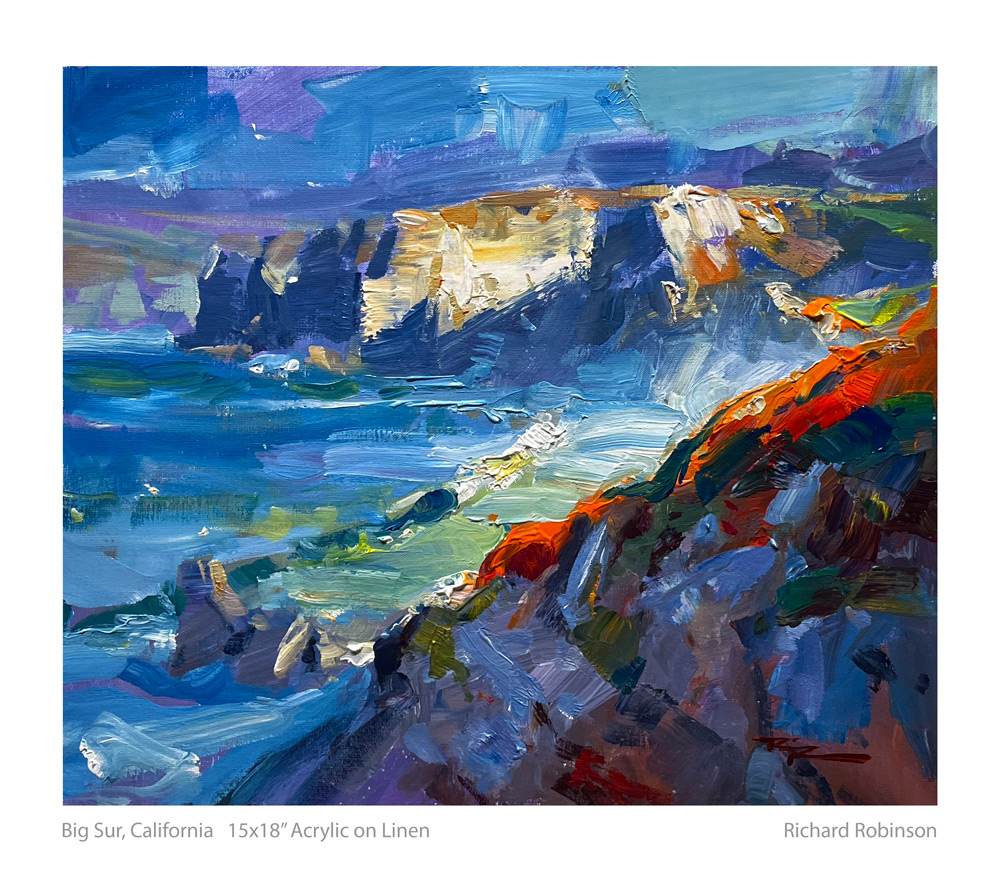
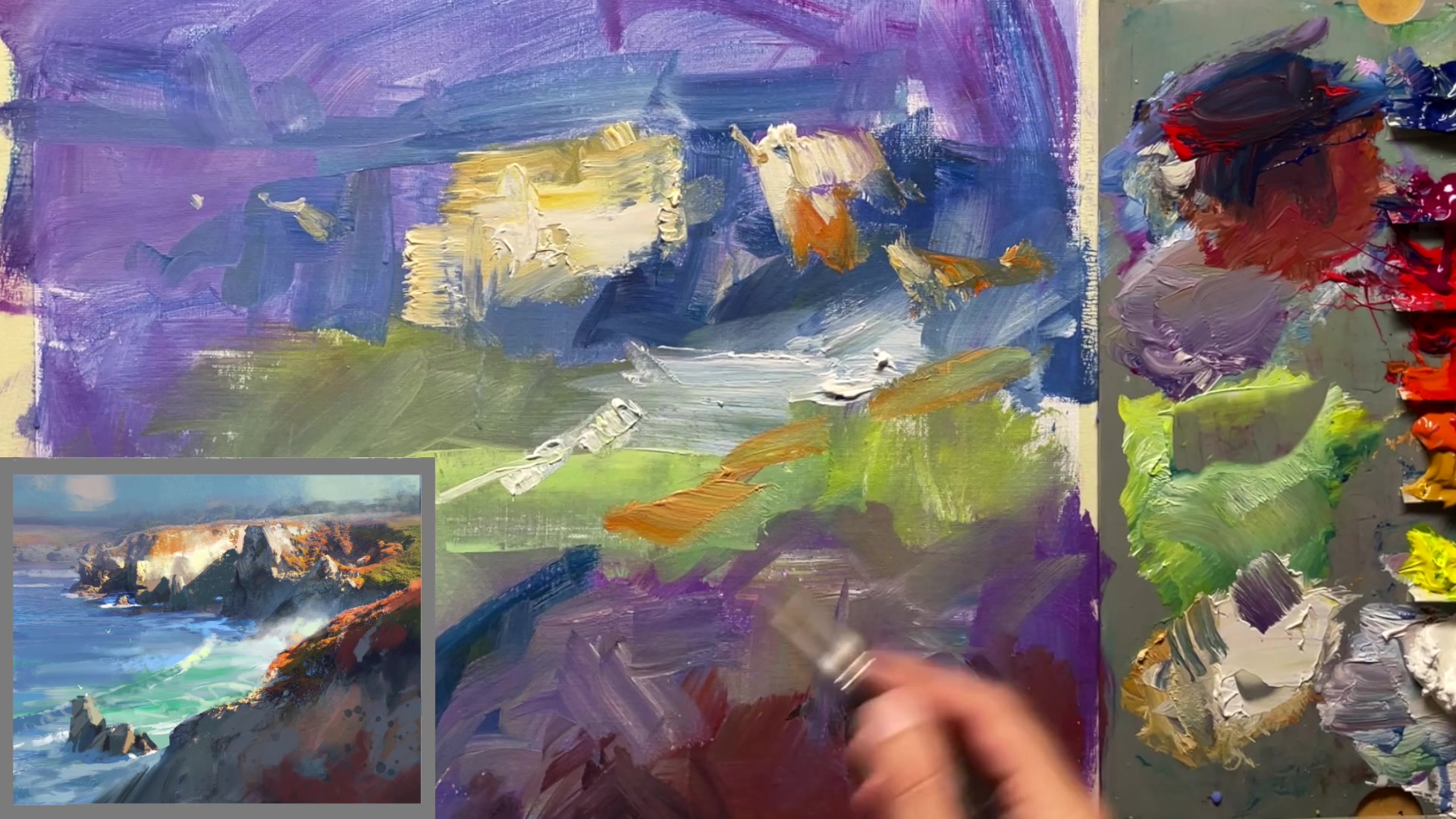
I've got an exciting journey lined up for us, starting right here with a linen canvas taped out on the board, measuring 18 by 15 inches. We're diving into the world of acrylics, specifically Italia Interactive acrylics, and I've laid out my range of flat synthetic brushes, along with a trusty flat palette knife. A bucket of water and a cap full of gloss medium varnish are ready to assist us. We'll kick things off by dipping a big brush into the gloss medium varnish and grabbing some phthalo. In this lesson, we'll explore the expressive brushwork of Van Gogh, with his short, flowing strokes, and the vibrant color palette of Monet's Venice, focusing on those high key mauve and blue tones. We'll start by selecting a photo of flowers from a local garden and altering the colors to be lighter and more saturated. Then, we'll paint over the photo, using Van Gogh's directional brushwork and Monet's color contrasts to create a 'Frankenstyle' that blends these influences into something uniquely yours. This is about finding your style by merging the old with the new, and I'm thrilled to guide you through it.
This guide accompanies the full video lesson. The lesson includes the complete narrated video, the printable PDF chapter, and personalised critique support.
Embark on your painting journey by blending the influences of masters like Van Gogh and Monet, creating a unique 'Frankenstyle' that captures expressive brushwork and vibrant color contrasts. Begin with a digital exploration and translate it onto your canvas, using flowing, directional strokes and a balanced color palette to set the stage for your artistic expression.
As you progress, focus on building your painting with dynamic techniques such as under-mixing on the canvas, using larger brushes for bold strokes, and incorporating texture with palette knives. These methods will help you establish a strong foundation and add depth and interest to your work. Remember to keep your brushes clean and your paints wet to maintain clarity and workability throughout the process.
In the final stages, refine your composition by emphasizing big shapes, using atmospheric perspective, and strategically placing vibrant colors to highlight the center of interest. Let the paint mix naturally on the canvas to create lively textures, and use squinting techniques to maintain focus on the overall gesture and balance. By prioritizing value over color and using tools like square brushes for crisp edges, you will achieve a cohesive and dynamic painting that reflects your personal style.
Points to remember
Use directional flowing brushwork to capture Van Gogh's expressive style.
Let the mixing happen on the canvas for dynamic and textured effects.
Make decisions quickly to enhance the expressive quality of your painting.
Always clean your brush thoroughly to maintain clean colors on your canvas.
Squinting helps you see the overall composition and balance without stepping back.
Use a palette knife to create textures that brushes can't achieve.
Think of color in terms of value to enhance the main design component of your painting.
Use atmospheric colors like bluey purple to create depth in your painting.