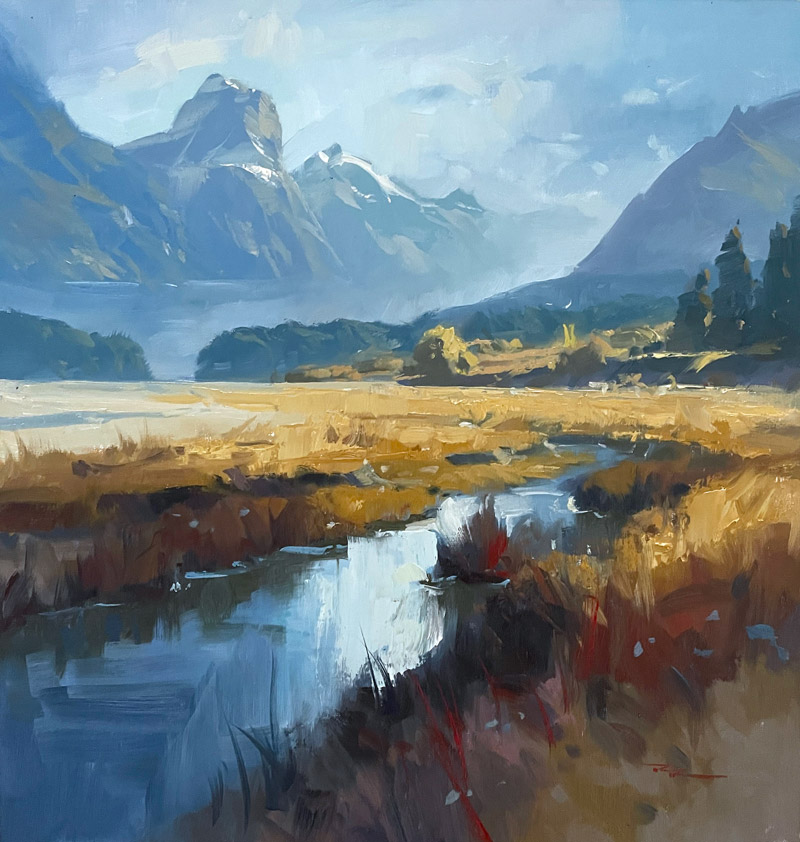
In this chapter, we embark on an artistic journey through the breathtaking Paradise Valley in New Zealand, a scene that offers a wealth of inspiration for any painter. As we explore this majestic landscape, I'll guide you through five essential techniques to master the art of painting mountains. We'll start by focusing on the unique shapes of each mountain, moving away from the common mistake of repetitive triangles, and instead, capturing their distinct character. You'll learn to exaggerate the steepness and height for dramatic effect, a technique employed by many great mountain painters. We'll delve into the subtleties of atmospheric perspective, where distant mountains blend with the sky, and I'll show you how to achieve the perfect balance of warm and cool colors to create depth. Adding mist at the mountain bases will enhance this depth, introducing a touch of mystery and romance. Our brushwork will be crucial, with flat strokes in the distance and bolder ones in the foreground to amplify scale. Finally, we'll use spotlights to highlight key areas, adding drama and interest. This lesson is suitable for oils or acrylics and designed for intermediate to advanced painters. Let's paint together, one brushstroke at a time, and unlock the expressive potential of this stunning landscape.
This guide accompanies the full video lesson. The lesson includes the complete narrated video, the printable PDF chapter, and personalised critique support.
"Paradise Valley" 19x20" Oil on Linen by Richard Robinson
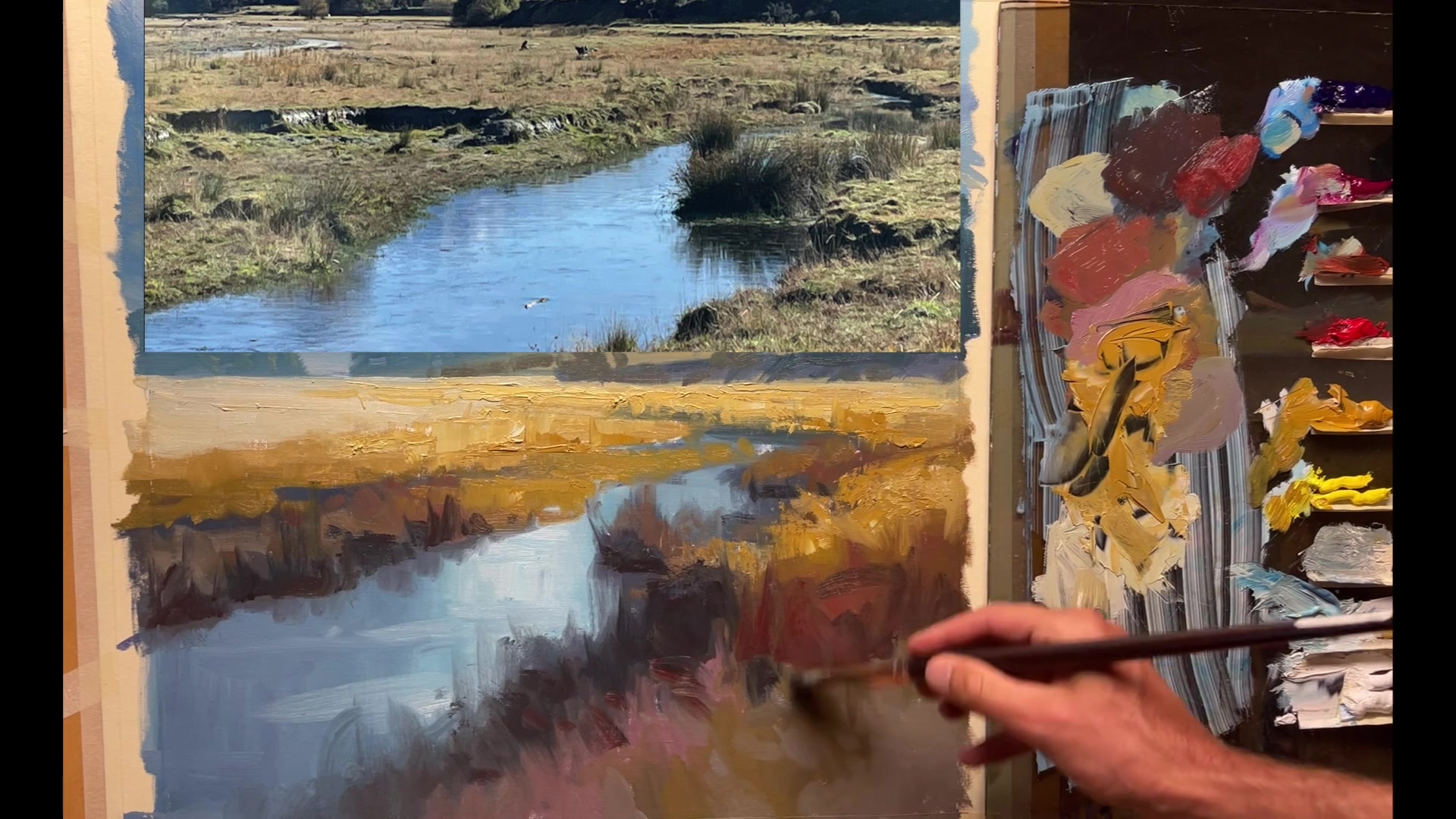
Step 31Reflections and Water Details
Enhance Color with Purple
Add a touch of purple to your palette to create a punchier color effect. This will help in capturing the vibrancy of the scene.
Mix Dark Grey-Green for Reflections
Mix a dark grey-green color to represent the reflections in the water. This color should incorporate some of the sky's reflection, so ensure it has a hint of blue or grey.
Apply Paint with Vertical and Horizontal Strokes
Use a fair amount of paint to work into the reflection area properly. Apply the paint using horizontal and vertical strokes to mimic the water's surface.
Follow the Form of Reflections
When painting reflections, follow the form of the objects being reflected. Remember to paint them upside down to accurately depict their mirrored appearance.
Pro tipUse horizontal and vertical strokes to effectively capture the water's reflective surface.
Embark on your painting journey by carefully mixing a neutral gray, setting the foundation for your Paradise Valley masterpiece. Choose your canvas and painting medium wisely, as these decisions will influence the texture and technique of your work. Whether you opt for oils or acrylics, remember to maintain the workability of your paints and embrace the unique qualities each medium offers.
As you progress, focus on the composition and the dynamic flow of shapes and angles. Use your brushes to sketch and block in the major elements, ensuring variety and avoiding repetitive patterns. Pay attention to atmospheric perspective and color variety to create depth and interest in your landscape. Allow the mist and light effects to enhance the mood and distance within your painting.
In the final stages, refine your work with highlights and details that bring the scene to life. Use careful brushwork to add texture and dimension, and apply color adjustments to emphasize the natural beauty of the mountains and sky. Remember, the key to a successful painting lies in the balance between detail and simplicity, allowing the viewer's imagination to fill in the gaps.
Points to remember
Start with small amounts of color to mix a neutral gray.
Choose a smooth canvas for visible brushstrokes.
Use a stay-wet palette for acrylics to keep paint workable.
Pre-mix major colors for consistency on large canvases.
Ensure variety in shapes and angles to avoid repetition.
Keep initial paint layers thin for easy adjustments.
Leave some areas unblended for a painterly texture.
Use a clean brush for adding green tints to maintain clean color.