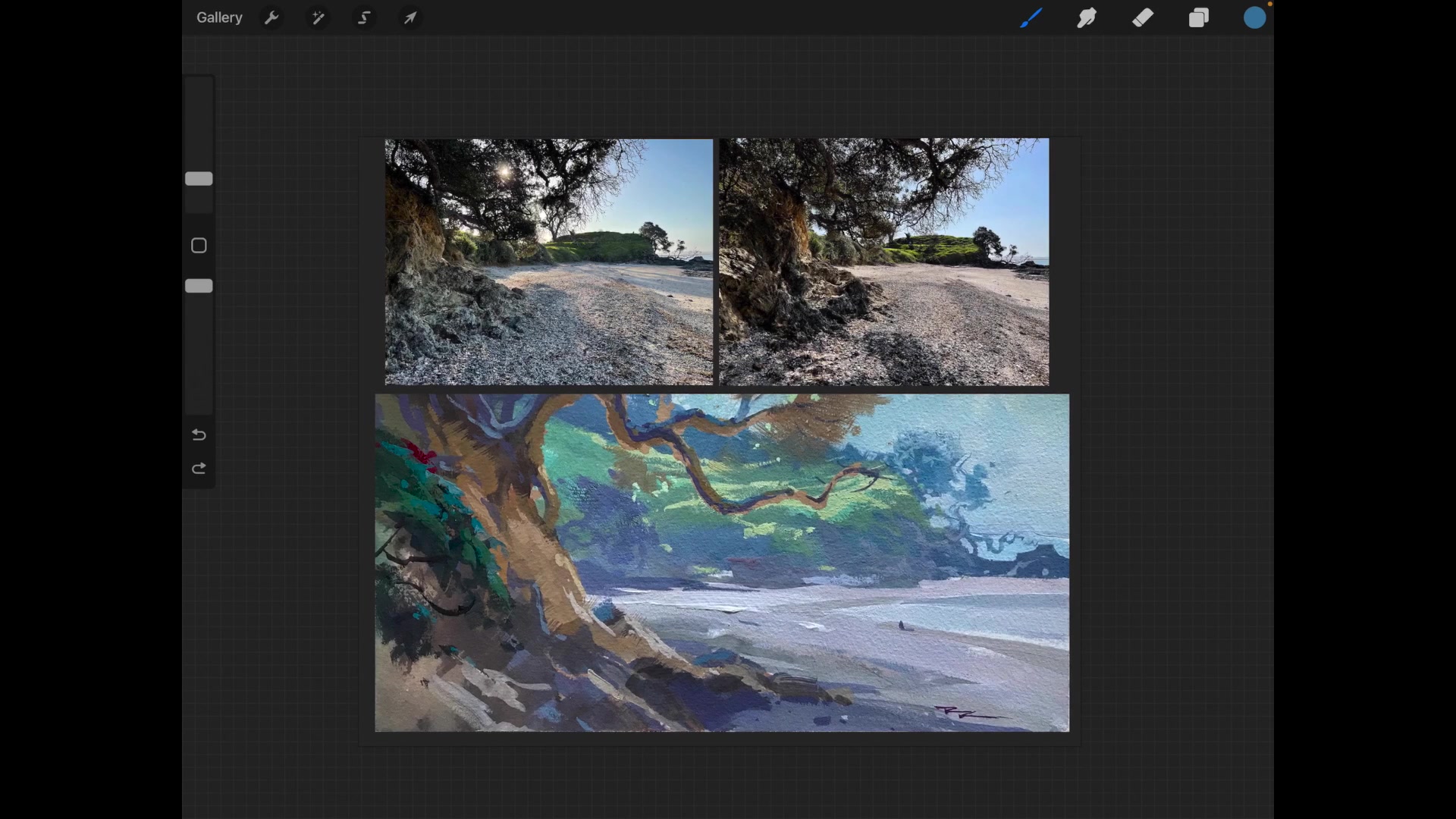
As we embark on this painting journey at Shelly Beach, you'll find yourself immersed in a process that combines the timeless charm of plein air painting with the innovative tools of digital and AI technology. We'll start by capturing the essence of the scene outdoors using gouache on a watercolor pad, a trusty companion I discovered years ago in France. This thick, 100% cotton paper is perfect for outdoor work, as it's pre-stretched and tensioned, ensuring your painting surface remains stable and warp-free. The scene itself offers a rewarding subject, with its interplay of warm light and cool shadows, inviting us to explore a simple yet expressive design. You'll learn to visualize the overall composition, focusing on the warm light filtering through where the tree meets the background hill, and using diagonal lines to draw the viewer's eye into the depth of the painting. This chapter will guide you through each step, from traditional techniques to modern digital enhancements, allowing you to choose which elements to incorporate into your own artistic practice. Let's embrace curiosity and open new doors together, as we paint our way through this beautiful landscape.
This guide accompanies the full video lesson. The lesson includes the complete narrated video, the printable PDF chapter, and personalised critique support.
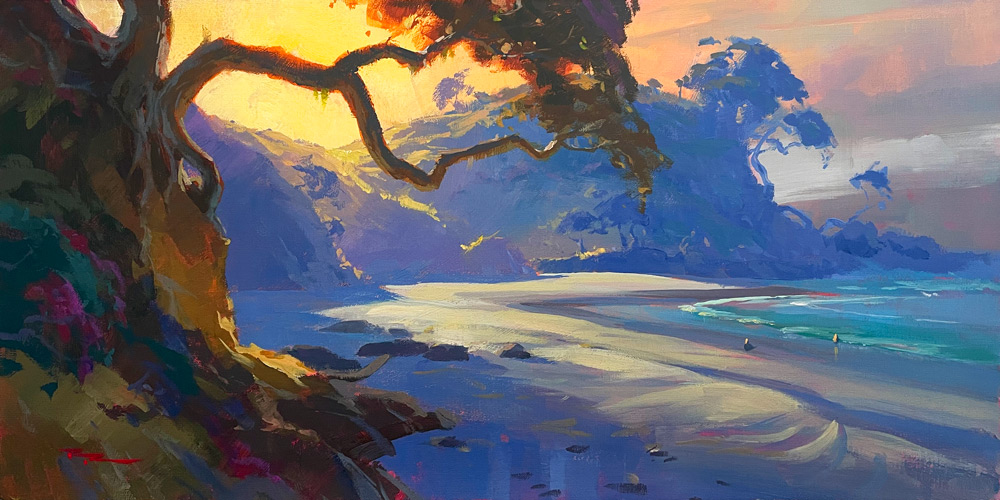
"Shelly Beach" 12x24" Acrylic on Linen by Richard Robinson
Step 3Composition Adjustments
Enhance Contrast with the Tree Trunk
Position the tree trunk against a lighter background to create high contrast and sharper edges. This draws the viewer's eye to the tree and rock, your center of interest. Adjusting the curve of the trunk adds variety and makes the shape more engaging.
Introduce Dynamic Lighting
Utilize the space under the tree to incorporate dynamic lighting shapes. Consider removing or repositioning the small tree to emphasize the lighting effect. Simplify the background to give the branch a neutral stage, enhancing the lighting variety with light on one side and shadow on the other.
Balance Light and Shadow
Think about lighting on both large and small scales in your painting. Create variety by having shadow in the foreground moving into light at the center of interest. Apply this concept to major subjects, ensuring each has a balance of light and shadow.
Refine Edge Shapes
Straighten edges that appear too rounded to add power and interest. Pay attention to the beautiful shapes of the tree roots and foliage, ensuring they don't unintentionally overlap into other areas like hills.
Adjust Trunk and Hill Relationship
Decide whether the trunk should exit and re-enter the canvas or remain more contained. Avoid creating shapes that mimic the hill's contour, as this can appear unnatural. Adjust the hill's shape if necessary to improve the composition.
Pro tipSimplify the background to allow the tree's branches and foliage to stand out without competing for attention.
Embark on your painting journey by visualizing the overall composition of your scene. Begin with a simple and expressive design that captures the essence of Shelly Beach. Focus on creating a dynamic contrast between the warm foreground rocks and the cool background, using swishy diagonal lines to guide the viewer's eye and enhance depth. Simplify the background to allow the warm light and tree to stand out, setting the stage for a captivating focal point.
As you progress, pay close attention to the interplay of light and shadow. Analyze your photo references to decide which lighting elements to emphasize, adjusting values to reflect atmospheric perspective. Position the tree trunk against a lighter background for high contrast, and use dynamic lighting shapes to highlight your center of interest. Simplify the background further to ensure the tree's branches and foliage are the stars of the show.
Finally, bring your painting to life with vibrant colors and textures. Prepare your canvas with a warm base coat and sketch your composition lightly. Use bold, painterly strokes to paint the sky, headland, and beach, ensuring smooth transitions and soft edges. Capture the essence of the beach with textured brushwork and subtle reflections in the water. Let your creativity flow as you experiment with different models and perspectives, and embrace the organic development of your painting.
Points to remember
Contrast the warmth of the rocks against the coolness of the background for a dynamic composition.
Enhance the contrast between warm and cool areas to make the focal elements stand out more strongly.
Simplify the background to allow the tree's branches and foliage to stand out without competing for attention.
Ensure shadows fan out towards the sun, as this creates a realistic depiction of light and shadow.
Always lay out more paint than you think you'll need, as it's easier to return it to a jar than squeeze it back into a tube.
Sketch lightly with a pencil to prevent graphite from showing through the paint.
Use a lot of paint and keep it wet with a spray bottle for smooth transitions and soft edges.
Keep your palette wet to maintain the paint's workability, especially when blending large areas.