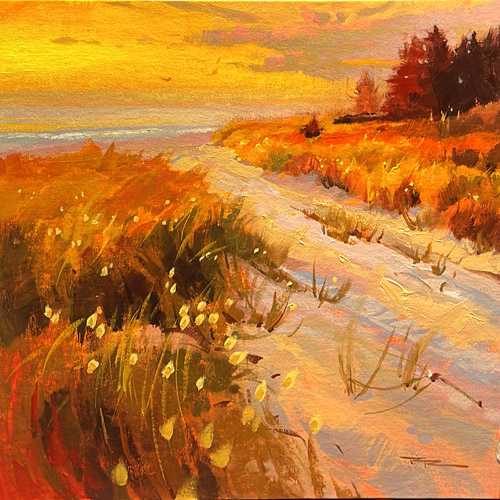
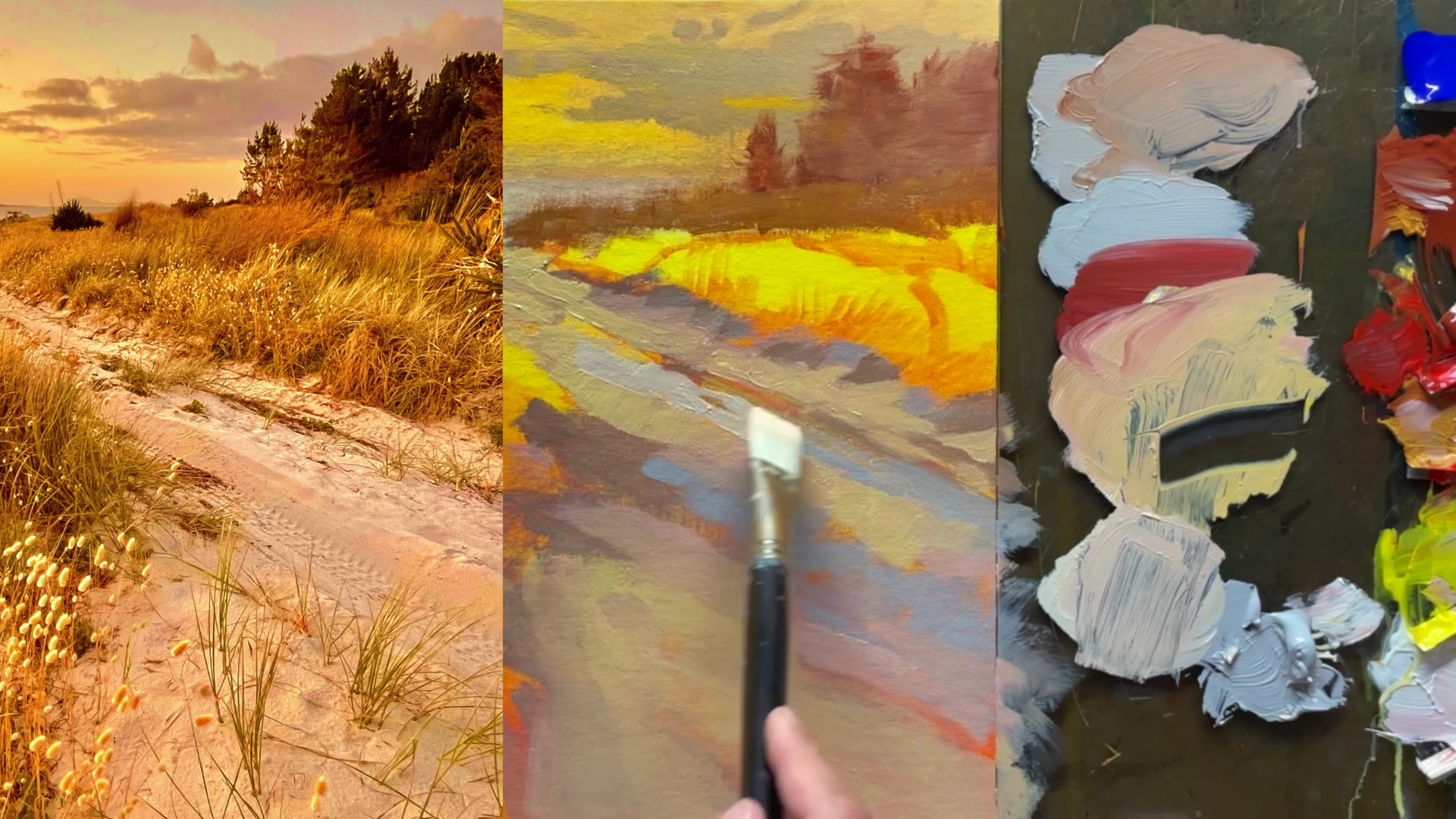
As the summer sun graces the beaches of New Zealand, I find myself exploring these serene landscapes in my camper van, capturing their beauty to share with you. One such gem is Rangiputa on the North Island, a place that inspired this lesson. Although I couldn't paint it live as the sun set, I captured stunning photos that we'll use to guide our painting journey. In this chapter, I'll show you how to transform a simple photo into a vibrant, glowing painting. We'll delve into the art of editing your photos right on your phone to enhance their warmth and color, setting the stage for a masterpiece. Whether you prefer acrylics or oils, I'll walk you through creating a radiant sky and adjusting your palette to suit the scene. Together, we'll simplify complex subjects into manageable steps, ensuring you enjoy the process without the fear of mistakes. By the end, you'll not only have a beautiful sunset beach painting but also the confidence to infuse any scene with that captivating inner glow.
This guide accompanies the full video lesson. The lesson includes the complete narrated video, the printable PDF chapter, and personalised critique support.
Rangiputa 15x15" Acrylic on Canvas by Richard Robinson
Step 9Building Grass Textures
Create Tire Tracks and Sand Texture
Observe the sharp edge of the tire rut and the dimples in the sand. Paint the flat bit on top and the wheel track inside, which should be a little darker. Look for interesting shapes and ensure some areas reflect cool light by identifying planes facing upwards.
Add Color Variation to Sand
Mix a little yellow and blue to create a greenish hue in certain areas for color variation. Add more detail with shadows, using grey and red, while maintaining mostly soft edges. Use a palette knife to apply chunky paint in the foreground, enhancing depth.
Paint the Base Layer of Grasses
Use yellow ochre to brush in the base layer of grasses. Add a touch of red and burnt sienna for the foreground patch, using big brush strokes to create texture and movement. Brush out into the sand, ensuring your brush is clean to avoid muddy colors.
Develop Grass Texture and Color
Add green by mixing yellow with a touch of blue, keeping it a warm brown-green. Use soft edges on top and vary brush strokes to build interesting texture. Retain individual clumps of grass for a more natural look, and use the side of the brush for soft indications.
Establish Major Color Movements
Consider the major movements of color, using warmer and cooler browns and greens. Focus on creating cohesive large shapes of color, then break them down into smaller shapes to maintain harmony and avoid a disjointed appearance.
Pro tipUse a palette knife to apply chunky paint in the foreground, enhancing depth and contrast with the background.
Embark on your painting journey by carefully preparing your reference photo, enhancing its warmth and saturation to guide your artistic vision. As you move to canvas preparation, select a surface that complements your desired texture. Begin with a vibrant undercoat to establish the mood and set the stage for your composition.
With your composition sketched out, focus on building the scene from the sky downward, blending colors to capture the essence of light and atmosphere. Introduce clouds and trees with thoughtful color choices, ensuring each element harmonizes with the overall warm scheme. As you progress, pay attention to the interplay of warm and cool tones, especially in the sand and grass, to create depth and interest.
In the final stages, refine textures and add highlights to bring your scene to life. Use a variety of brush techniques to maintain a natural, gestural feel, and incorporate details like grass tips and bunny tails to enhance realism. Remember to keep your edges soft and your colors vibrant, allowing your painting to evoke the serene beauty of a walk to the beach.
Points to remember
Use the 'Copy Edits' feature to maintain consistency in your painting references.
Check the base material of your canvas board for desired texture.
Use the brush in various directions to avoid creating lines.
Ensure your path fans out from a single point perspective for natural flow.
Test your color mixes on a separate surface before applying them.
Use Ultramarine Blue for a warm color scheme.
Use a palette knife to add texture and create smooth transitions.
Use a dagger brush for long, beautiful lines when highlighting grass tips.