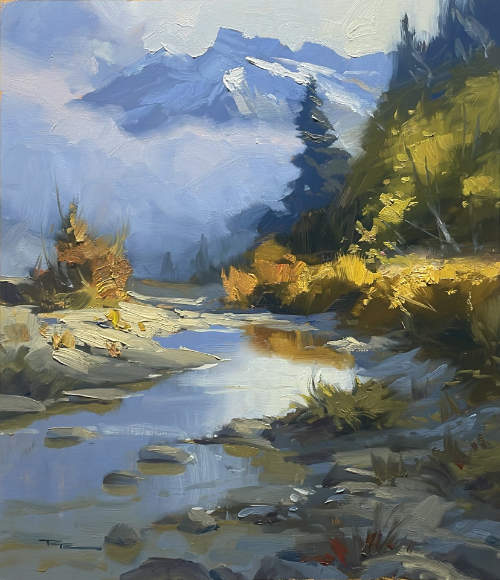
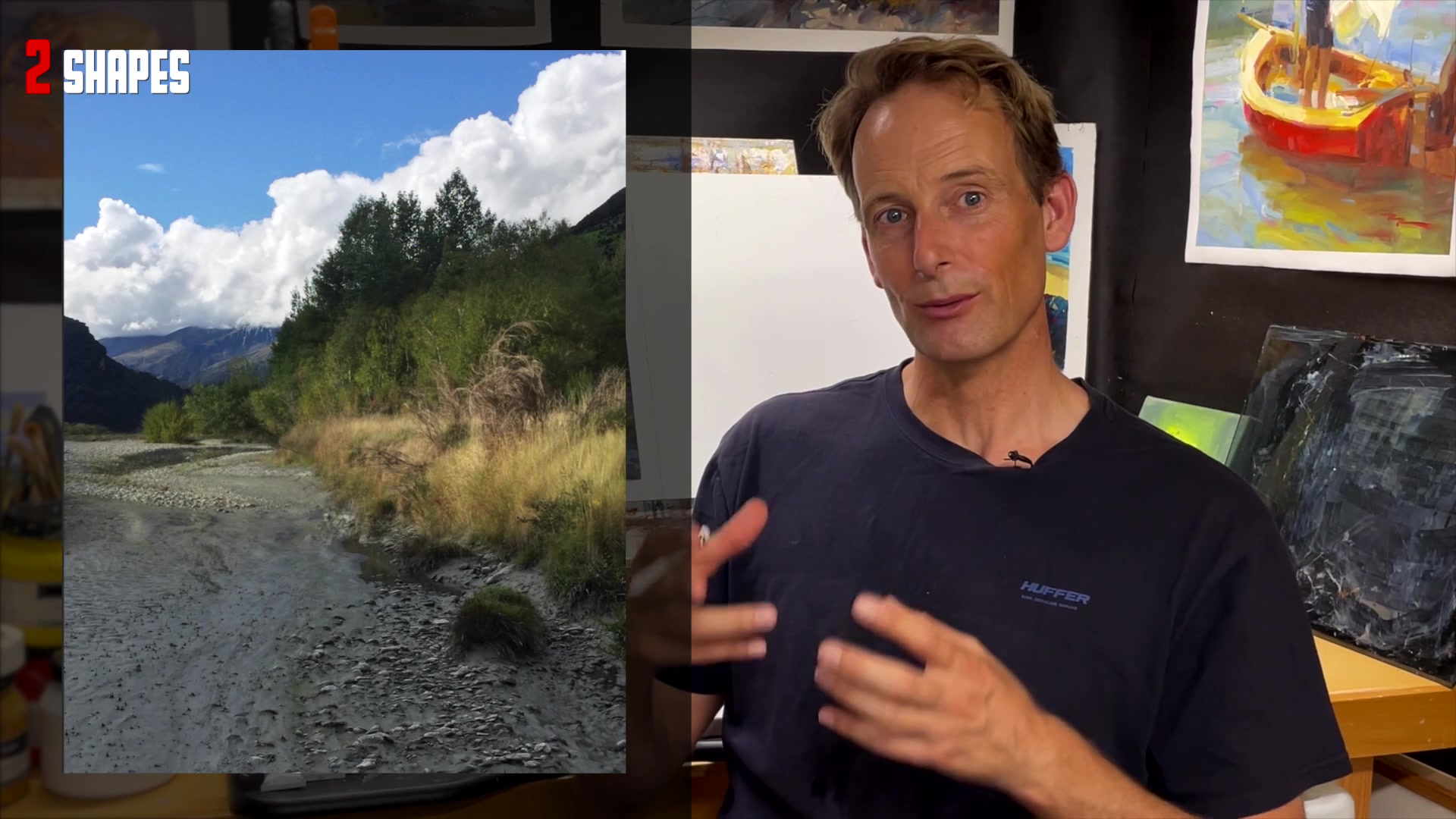
Welcome to the studio! Today, we're diving into the enchanting world of a mountain stream from New Zealand's South Island. This scene, captured from photographs I took during my plein air painting trip, offers a wonderful opportunity to explore the art of orchestrating light and shade. Whether painting from life or a photograph, our goal is to present the scene in its best light, idealizing it to capture its essence. In this chapter, we'll focus on identifying the elements you love most about the scene and using them to guide your artistic decisions. By concentrating on these key elements, you'll learn to enhance your focal point through thoughtful shape and light design, ensuring other areas remain subdued and non-competitive. This approach not only highlights the beauty of the scene but also teaches you to create paintings with depth and focus. Together, we'll navigate this process step by step, allowing you to apply these techniques to all your future works, transforming each painting into a masterpiece of light and shade.
This guide accompanies the full video lesson. The lesson includes the complete narrated video, the printable PDF chapter, and personalised critique support.
Focus on creating a variety of shapes to lead the viewer's eye through the painting. Use an S-curve to guide the eye deeper into the scene. Incorporate different shapes in light and shadow to add interest.
Simplify and Enhance
Trim unnecessary elements from the painting to emphasize the S-curve and foreground interest. Adjust the shapes to be more dynamic, such as making the grass zigzaggy or enlarging a bush to catch the light.
Add Tree and Mountain Interest
Introduce variety in tree shapes by mixing round and pointy forms. Paint the obscured mountain rising from mist to create a romantic or epic feel. Ensure each shape is slightly different to maintain viewer interest.
Consider Light and Shadow
Position the sun to enhance the scene's contrast. Light up the tops of grasses and trees while casting strong shadows on the riverbed. Use direct light for darker shadows and lighter highlights, increasing contrast and visual interest.
Pro tipEnsure each shape is slightly different to maintain viewer interest and avoid monotony.
Embark on your painting journey by identifying the key elements of your mountain stream scene that captivate you the most. Use shape and light design to enhance these focal points, ensuring they draw the viewer's eye. Subdue other areas to maintain focus and create a harmonious composition.
Capture the essence of changing light by photographing your scene over time, allowing you to select the most compelling lighting effects. Use these references to orchestrate a balanced play of light and shadow, guiding the viewer's eye through your painting with alternating areas of light and shadow.
As you build your painting, focus on creating a variety of shapes and textures to maintain interest. Use an S-curve to lead the eye deeper into the scene and incorporate dynamic shapes in both light and shadow. Prepare your canvas with a warm base tone and select versatile colors and brushes to bring your vision to life. As you refine your painting, pay attention to the interplay of sharp and soft edges, ensuring your composition remains engaging and cohesive.
Points to remember
Focus on key elements and subdue others to maintain focal points.
Use alternating shadow and light areas to guide the viewer's eye.
Ensure each shape is slightly different to maintain interest.
Use a big synthetic brush to evenly apply the base tone.
Select a variety of brush sizes for both broad strokes and detailed work.
Use gestural, big brushstrokes with soft edges for shadowed areas.
Use down strokes or side strokes to create realistic reflections in water.
Use contrast between sharp and soft edges to add variety and interest.