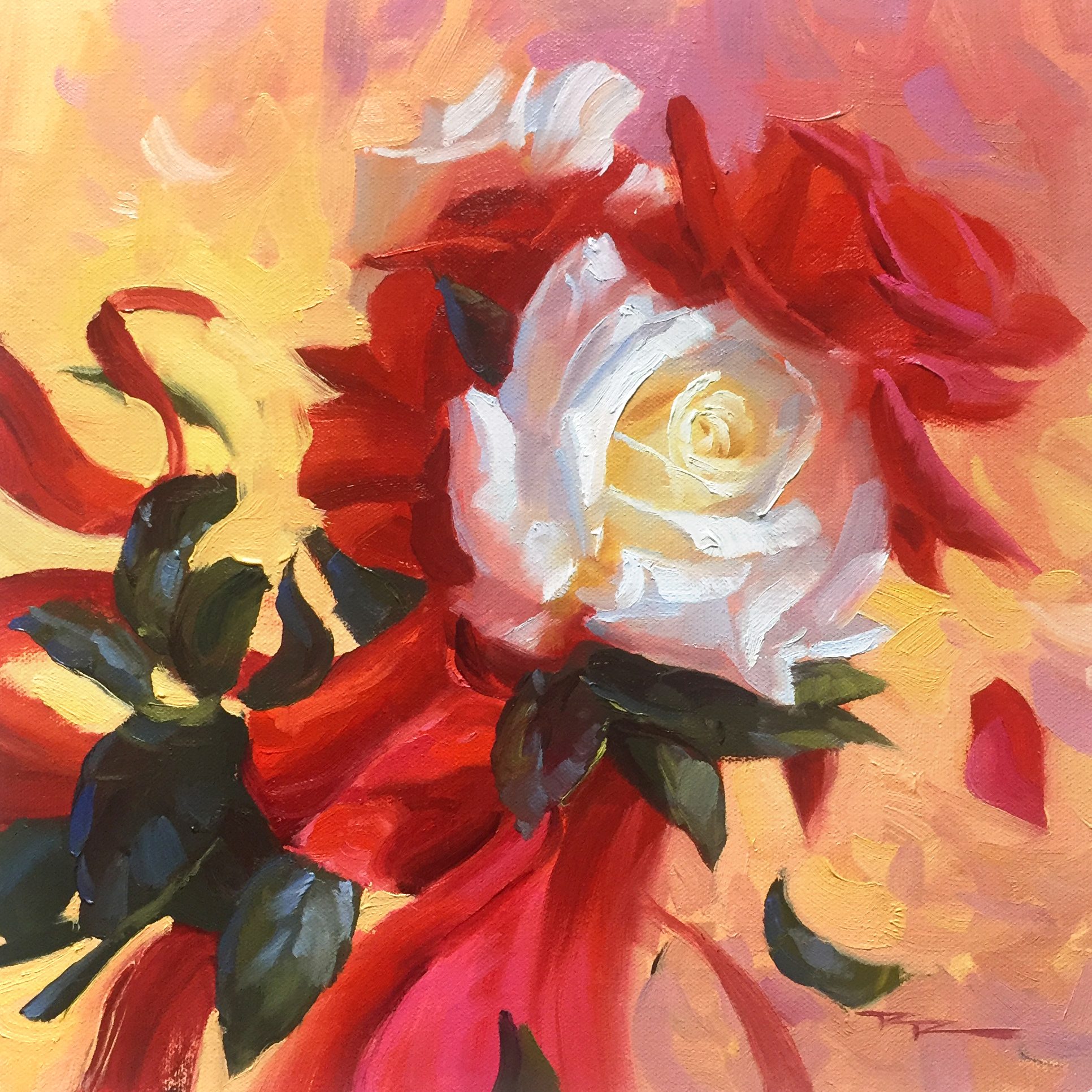
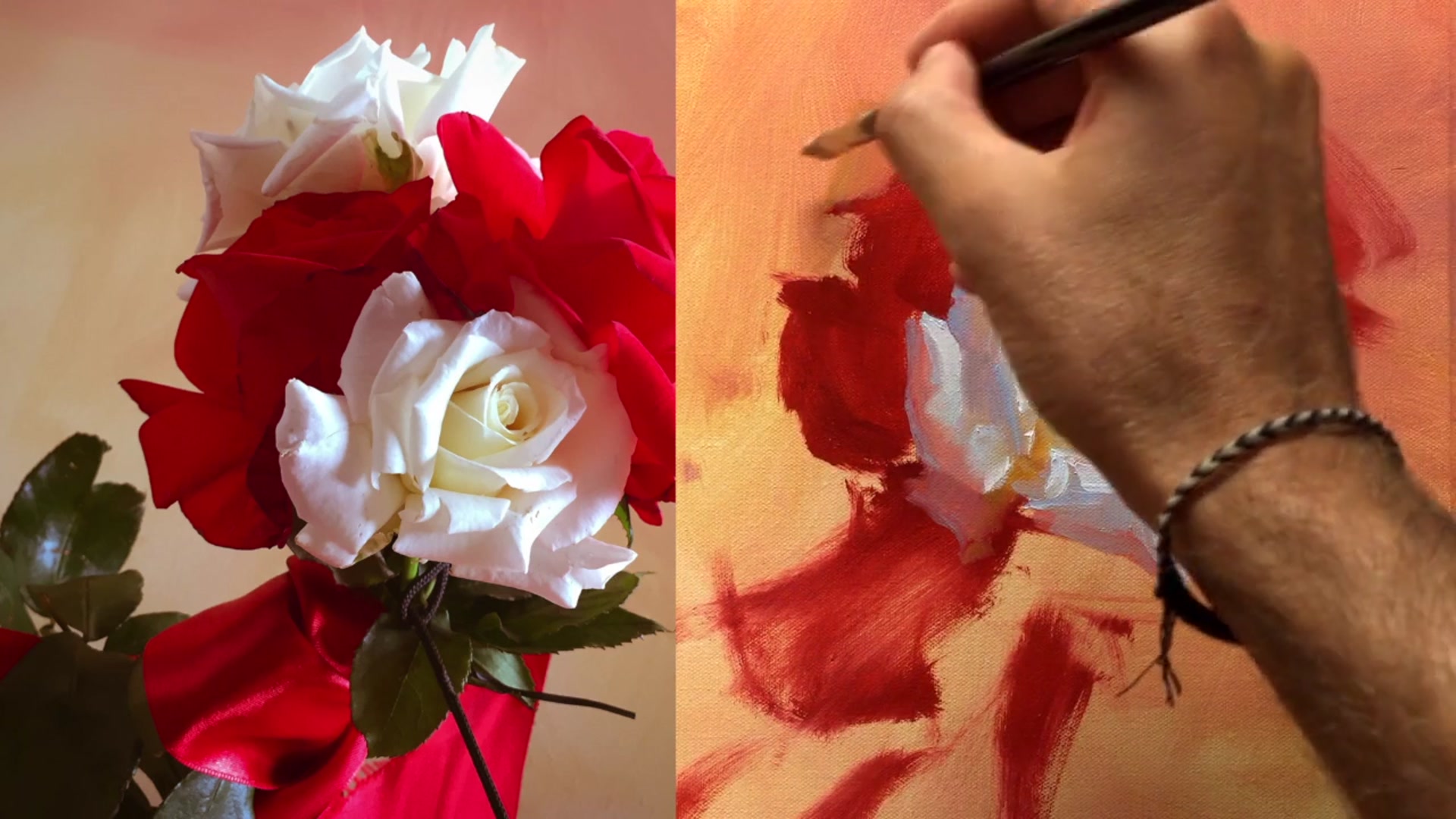
In this chapter, we embark on a delightful journey to capture the essence of a bouquet of roses, a gift from a kind neighbor, in a painting full of joy and movement. The scene I chose to paint is inspired by the whimsical idea of a bouquet tossed into the air, capturing its beauty and spontaneity. Setting up the still life took me three hours, as I experimented with traditional arrangements before deciding on a more dynamic composition. I hung the roses on strings in my front doorway, allowing them to rotate gently in the breeze against a painted backdrop, and captured this dance with my camera. From these photos, I selected the most captivating moments to guide our painting. In this lesson, you'll learn how to use broken color and lyrical brushwork to convey the delicate hue shifts in the white roses and the magic of reflected light on petals, making them appear more lifelike. Together, we'll transform this fleeting moment into a joyful, lasting work of art.
This guide accompanies the full video lesson. The lesson includes the complete narrated video, the printable PDF chapter, and personalised critique support.
"Bouquet of Roses" 11 x 11" Oil on Canvas by Richard Robinson.
Step 8Painting Red Flowers
Prepare Your Palette and Brushes
Clean your palette and brushes thoroughly to ensure no residual colors mix with the reds. This is important to maintain the purity of the red tones.
Add Dark Accents
Mix alizarin crimson with a little red to create dark accents. Apply these with soft edges, as they represent shadow areas and should blend smoothly.
Mix Highlight Colors
Combine magenta with white to create a vibrant highlight color. Magenta has a purer color and stronger tinting strength than alizarin, resulting in a more vivid and lively hue.
Use Lyrical Brushwork
Apply the paint with swishy, calligraphic strokes to mimic the natural shapes of roses. This technique adds a poetic, cohesive feel to your painting.
Pro tipUse magenta mixed with white for a stronger, purer highlight color compared to alizarin.
Embark on your painting journey by preparing your canvas with a coat of gesso, ensuring a smooth and absorbent surface for your colors. As you lay down the background, use warm tones and a touch of Gamsol to create a harmonious base. Remember to keep your palette clean to maintain the vibrancy of your hues, especially as you introduce broken colors like mauve to add depth and joy to your composition.
As you move to the main subject, focus on blocking in the dark reds and defining the large shapes of your flowers. Use a clean palette and precise brushwork to capture the essence of the bouquet, reserving the purest reds for highlights. When painting white flowers, observe the interplay of light and shadow, and simplify complex shapes by squinting to see the larger forms.
In the final stages, refine your painting by adding lights and subtle details, ensuring that your brushstrokes convey the natural elegance of roses. Use calligraphic strokes to suggest the delicate forms of petals and leaves, and adjust the edges to enhance the spatial relationships within your composition. By the end, your bouquet of roses should exude a sense of joy and vitality, capturing the beauty of nature in your unique style.
Points to remember
Always use gesso to prime your canvas for better paint adhesion.
Use less Gamsol in the mix to prevent it from affecting the layer underneath.
Create a joyful atmosphere by focusing on lively and expressive brushwork.
Keep your palette clean to avoid muddy colors and maintain vibrant hues.
Reserve the purest red for the highlights to maintain vibrancy in your painting.
Squint at your subject to simplify complex shapes into larger, manageable forms.
Use magenta mixed with white for a stronger, purer highlight color compared to alizarin.
Adjust edges to define spatial relationships, using crisp edges for foreground elements and soft edges for background elements.