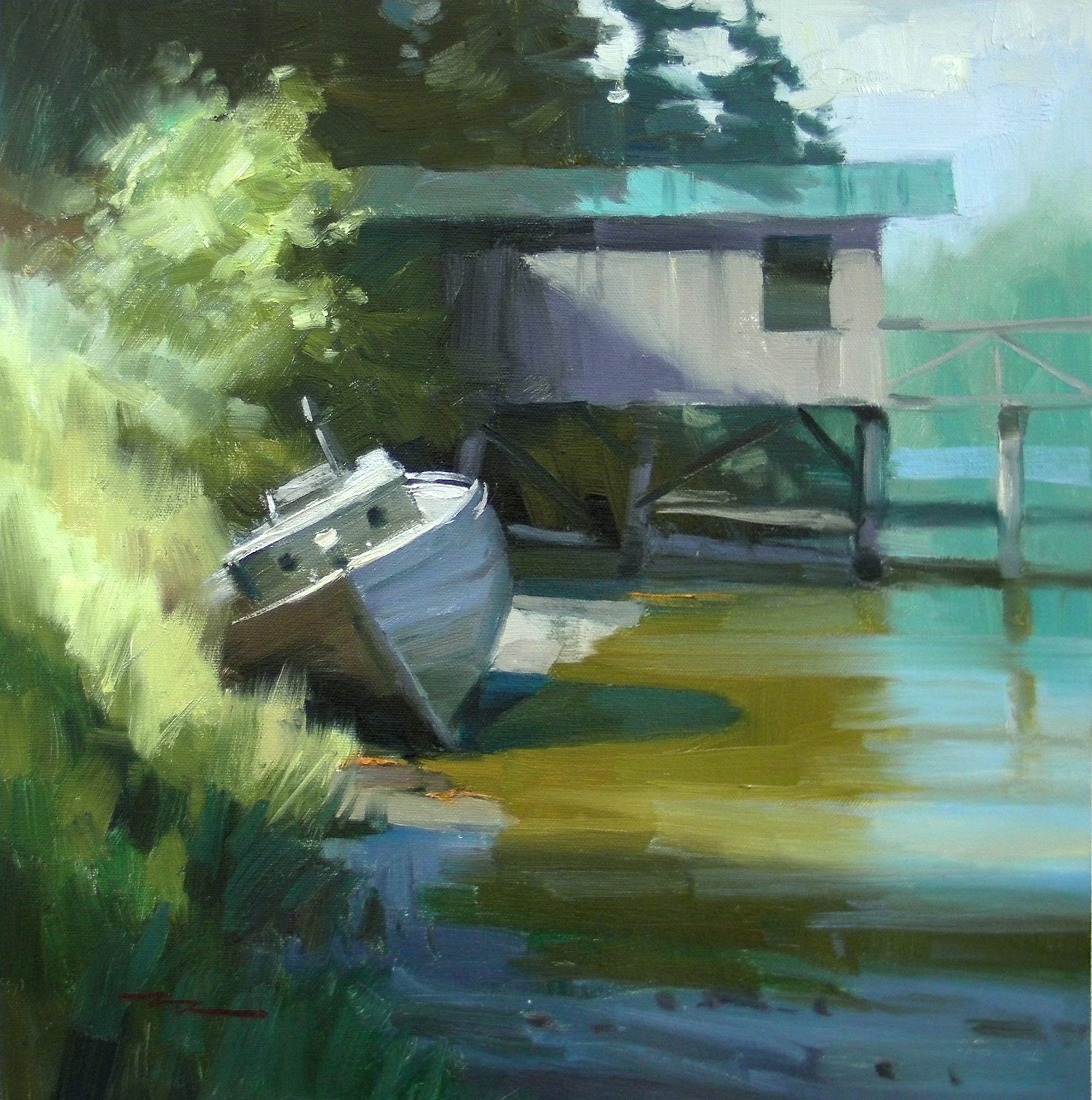
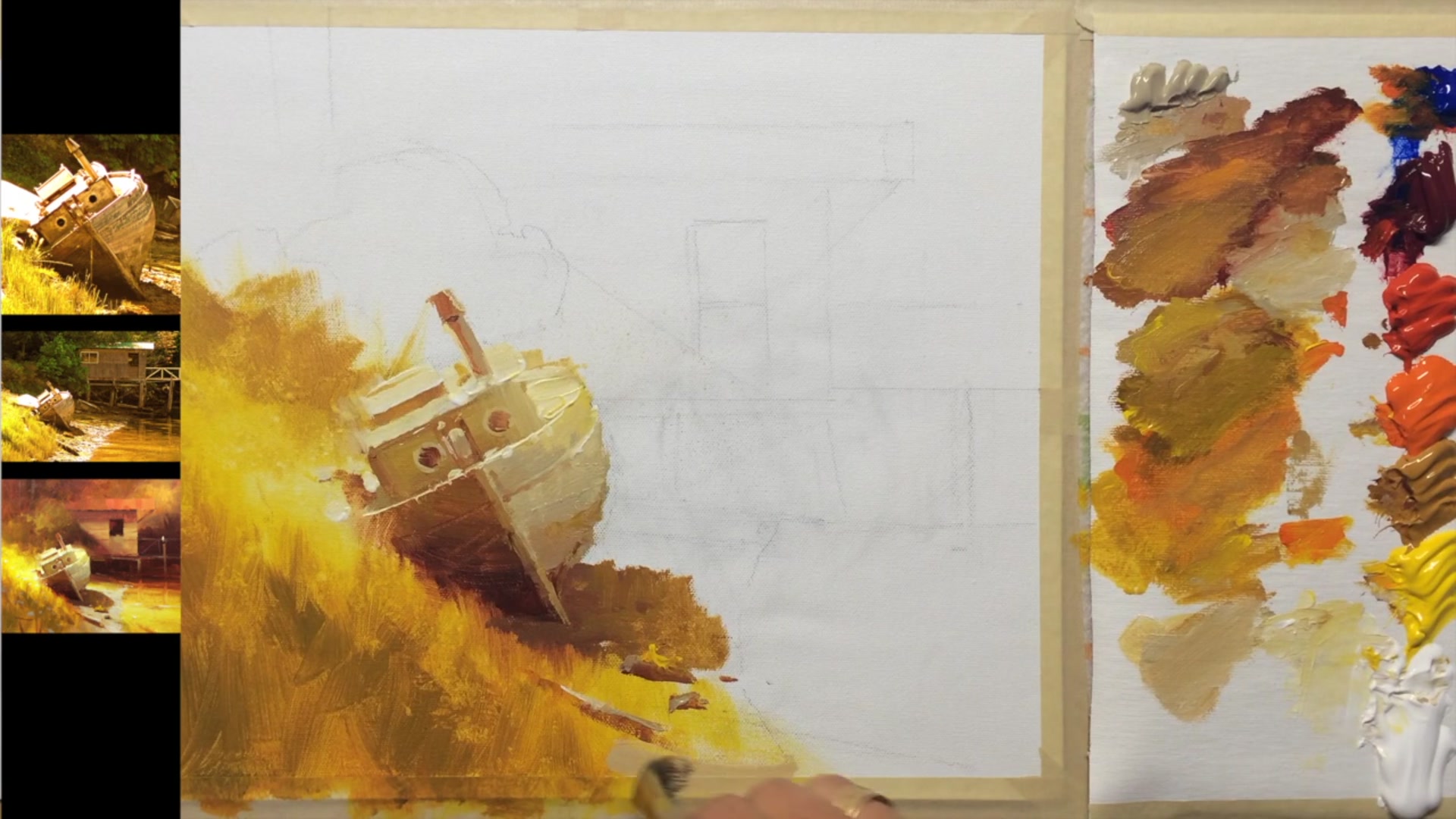
Welcome to Whiskey Slough in Pender Harbour, nestled on the stunning west coast of Canada. This charming spot, with its weathered old boat and rustic shed, offers a perfect backdrop for exploring the art of painting glowing light and vibrant color. In this chapter, I will guide you through the techniques I use to infuse a scene with warmth, rich hues, and captivating textures. You'll learn how to capture the essence of this idyllic location, transforming it into a canvas that radiates life and beauty. We'll start by adjusting the temperature of your reference image to achieve a pleasing warmth, setting the stage for a painting that truly glows. This scene is a rewarding subject, allowing us to delve into the interplay of light and color, and I'm excited to share my step-by-step process with you. Together, we'll bring this picturesque setting to life, creating a piece that captures the serene beauty of Whiskey Slough.
This guide accompanies the full video lesson. The lesson includes the complete narrated video, the printable PDF chapter, and personalised critique support.
"Whiskey Slough - Plein Air" 14x14" Oil on Canvas by Richard Robinson.
Step 12Soft transitions on the beach
Apply Base Color to the Beach
Use toning grey, white, and a little bit of yellow to broadly brush the foreground of the beach. This creates a base color that sets the stage for the light transition.
Enhance Light Areas
As the beach moves into the light, add more white and yellow to the mix. This will brighten the area and create a sense of sunlight hitting the sand.
Create Soft Transition into Shadow
To achieve a soft transition as the light beach disappears into shadow, apply the paint in stages. Start by placing some yellow, then gradually darken the mix and paint nearly up to the previous color. Repeat this process, making the color darker each time to blend smoothly into the shadow.
Pro tipGradually darken the color in stages to create a soft transition from light to shadow on the beach.
Embark on your painting journey by first adjusting the color temperature of your reference image using an editing app. This step helps you envision the warmth or coolness you want to capture on your canvas. Prepare your acrylics on a stay wet palette to keep them workable, and ensure your canvas is moist to facilitate smooth application.
Begin with the glowing foreground, establishing a vibrant base with broad strokes of yellow. As you progress, add depth and texture to the grass using a combination of colors and techniques like lifting out areas with a paper towel. Transition into painting the boat, focusing on creating glowing effects with careful color transitions and soft edges to blend it seamlessly into the landscape.
As you refine the details, pay attention to the reflective light on the boat and the surrounding environment. Use a palette knife for crisp lines and organic textures, enhancing the weathered look of the boat. Finally, complete your scene with thoughtful details like shadows, rocks, and water reflections, ensuring all elements harmonize to create a cohesive and captivating painting.
Points to remember
Use image editing apps to adjust the color temperature of your reference.
Keep your acrylic paints moist with a stay wet palette and a misting spray.
Start with the brightest areas to establish a strong base for glowing effects.
Use vertical strokes with soft edges to create natural-looking grass shadows.
Rotate your paper towel slightly after each mark to avoid creating patterns.
Ensure all verticals are parallel and tops are perpendicular for structural accuracy.
Use a warm toning grey to create cooler shadowed areas with reflective light.
Use a fine line to add small details like a rope or a seagull to enhance the composition.