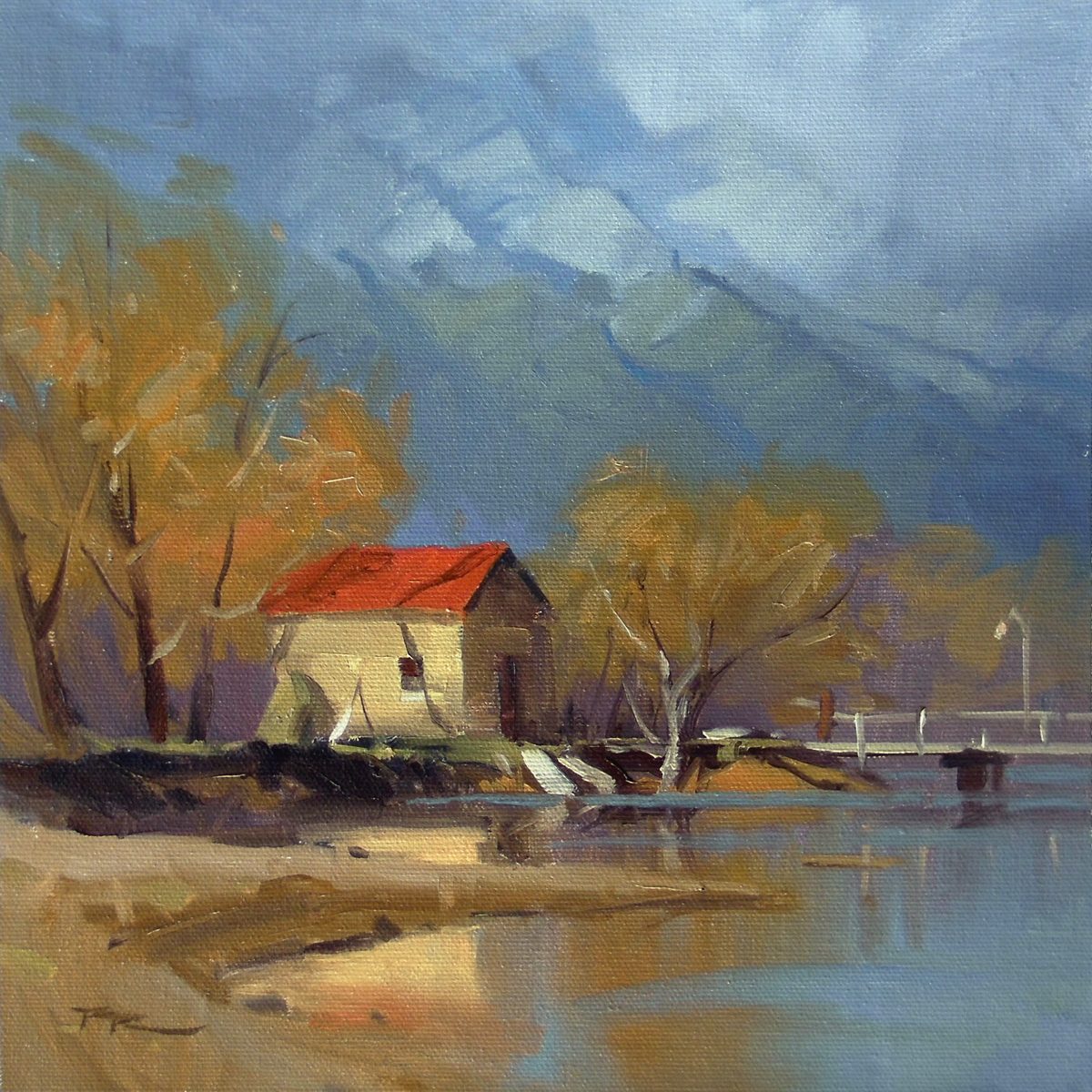
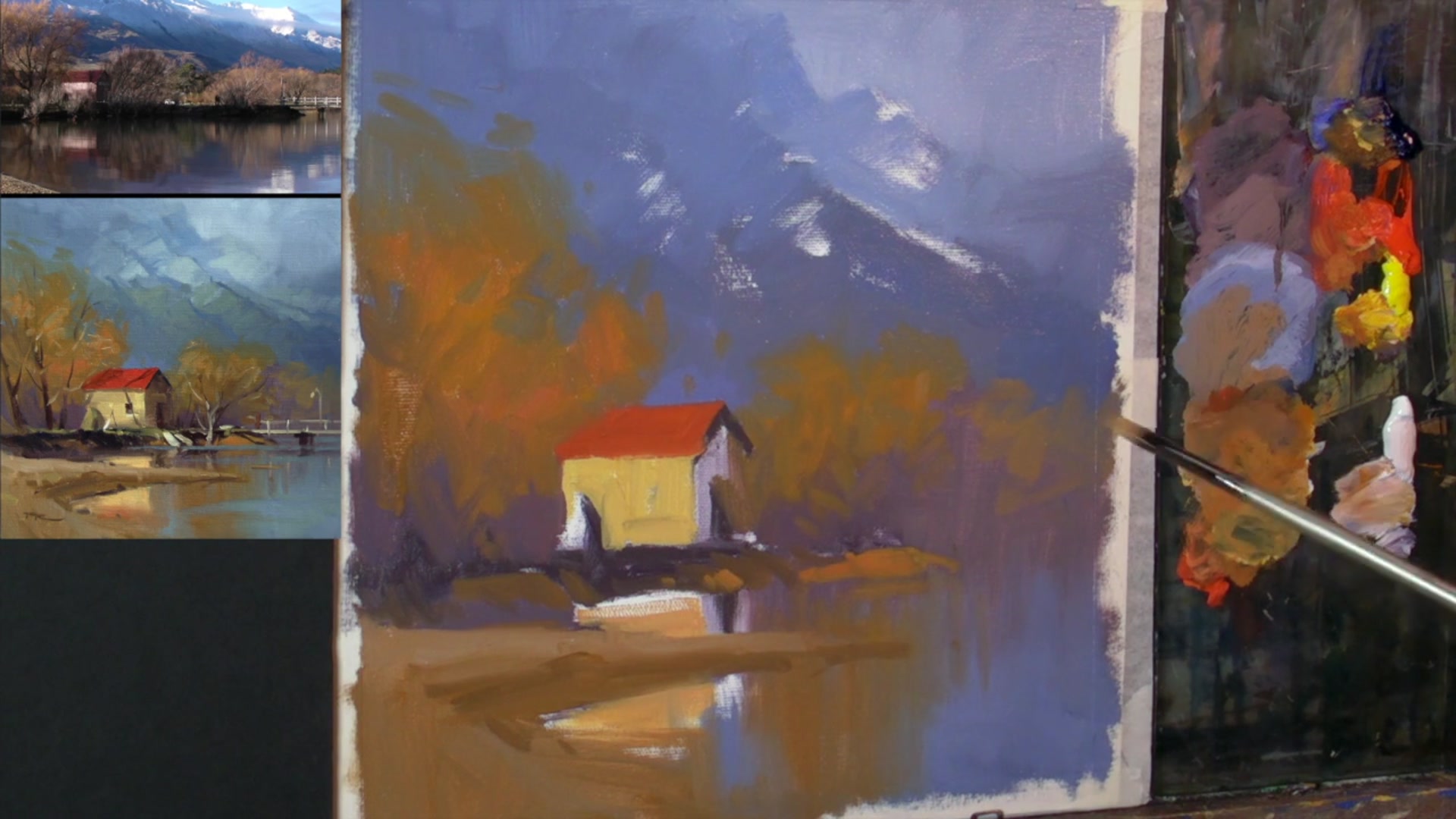
In this chapter, we're diving into the serene beauty of Glenorchy with a focus on simplicity and color mastery. I've chosen a very simple palette for this lesson, using just three primary colors—red, blue, and yellow—along with white. This limited palette is a fantastic way to deepen your understanding of color mixing and to see how most hues can be achieved with these basics. We'll be painting a charming lakeside scene, capturing the tranquil essence of the boat shed nestled in nature. I've selected a couple of bristle brushes and finer ones for detail work, and I'm using M. Graham's walnut oil as my medium, steering clear of any thinners this time. As we begin, you'll learn to create a thin wash using a mix of blue and red, which will serve as the foundation for your sketch. By placing the boat shed at the intersection of a vertical and horizontal third on your canvas, we'll adhere to the rule of thirds, enhancing the composition's balance and visual interest. This scene is not only a joy to paint but also a rewarding subject that will enrich your painting skills and appreciation for color harmony.
This guide accompanies the full video lesson. The lesson includes the complete narrated video, the printable PDF chapter, and personalised critique support.
"Glenorchy" 11 x 11" Oil on Canvas by Richard Robinson
Step 8Reflections and Detail Work
Manage Reflection Edges
Be careful with the quality of your edges in reflections. Avoid too many sharp edges, especially in the foreground where they should be blurred and soft.
Add Roof Details
Include a hint of the red roof in the reflection. Add a cast shadow from the tree onto the roof, focusing on the area closer to the tree.
Enhance Building Features
Incorporate small details like a window and a door to add interest. Darken the shadow side of the building to increase contrast and extend some dark tones to the right.
Develop Tree Depth
Add a slightly darker version of the tree color into the body of the tree. This will create more depth and interest in the foliage.
Create Natural Branches
Paint branches and trunks with loose, calligraphic strokes. Avoid tightly drawn lines to maintain the joy and spontaneity of the painting.
Pro tipUse loose, calligraphic strokes for branches to keep the painting lively and expressive.
Embark on your painting journey by establishing a strong foundation with a light sketch using a thin wash of blue and red. Position key elements like the boat shed using the rule of thirds to create a balanced composition. As you progress, focus on blocking in dark and light values, ensuring that reflections in water are slightly adjusted to maintain realism.
Introduce vibrant colors with care, tempering them with complementary tones to avoid overpowering the scene. Pay close attention to perspective and detail, ensuring lines slope towards the horizon to maintain depth. Use mid values and reflections to unify the painting, and create an atmospheric background with soft transitions between elements.
In the final stages, focus on enhancing contrast and adding texture to bring your painting to life. Use loose, expressive strokes for natural elements, and soften edges to create a cohesive look. Add final touches like figures to inject life into the scene, and use contrast strategically to guide the viewer's eye to focal points.
Points to remember
Use a thin wash for initial sketches to keep lines adjustable.
Reflections in water show lights slightly darker and darks slightly lighter.
Temper vibrant colors with a touch of blue and white.
Ensure all lines slope slightly down towards the horizon for correct perspective.
Use a simple primary palette to simplify color choices.
Use loose, calligraphic strokes for branches to keep the painting lively.
Avoid painting parallel lines at equal distances for natural variation.
Use contrast to guide the viewer's eye to focal points in your painting.