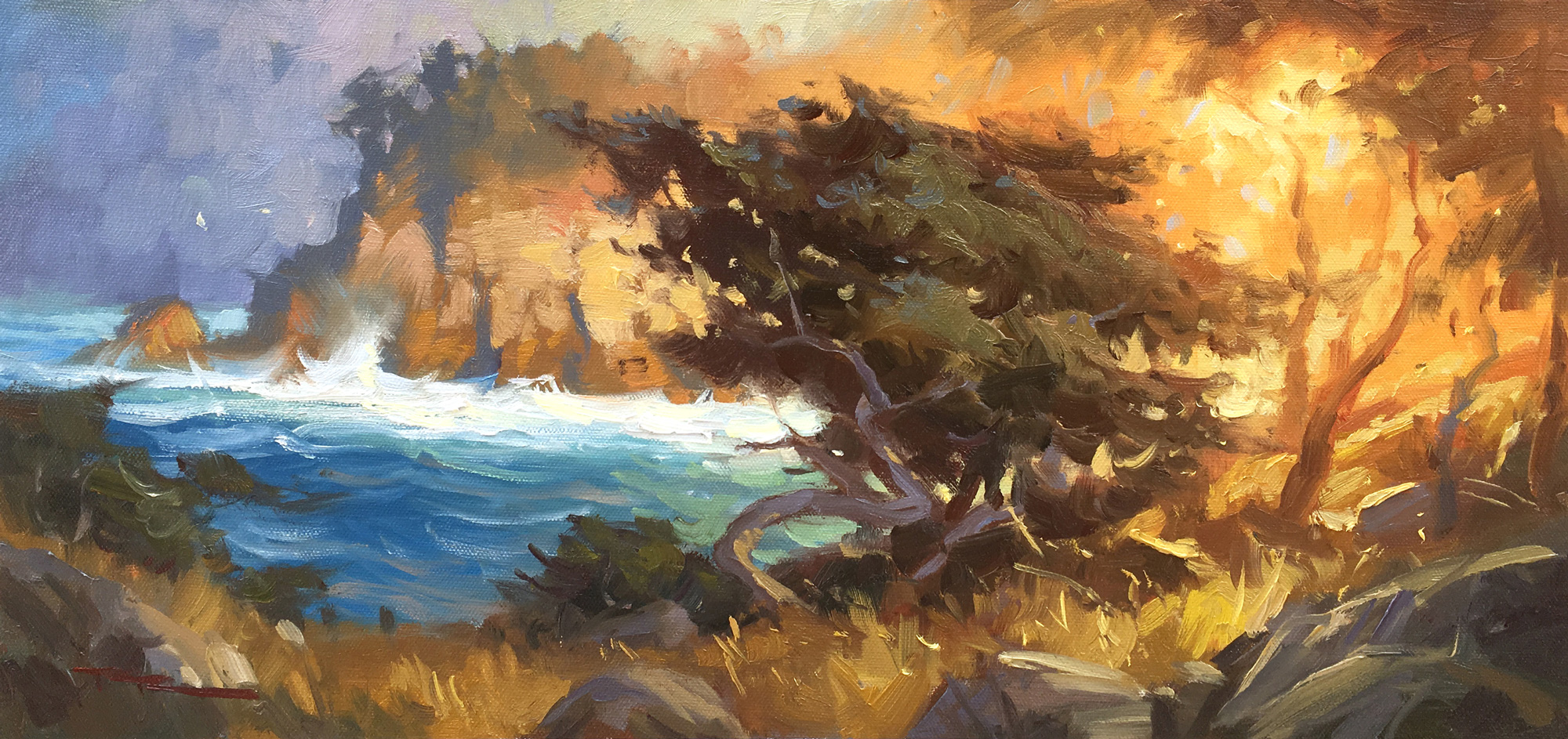
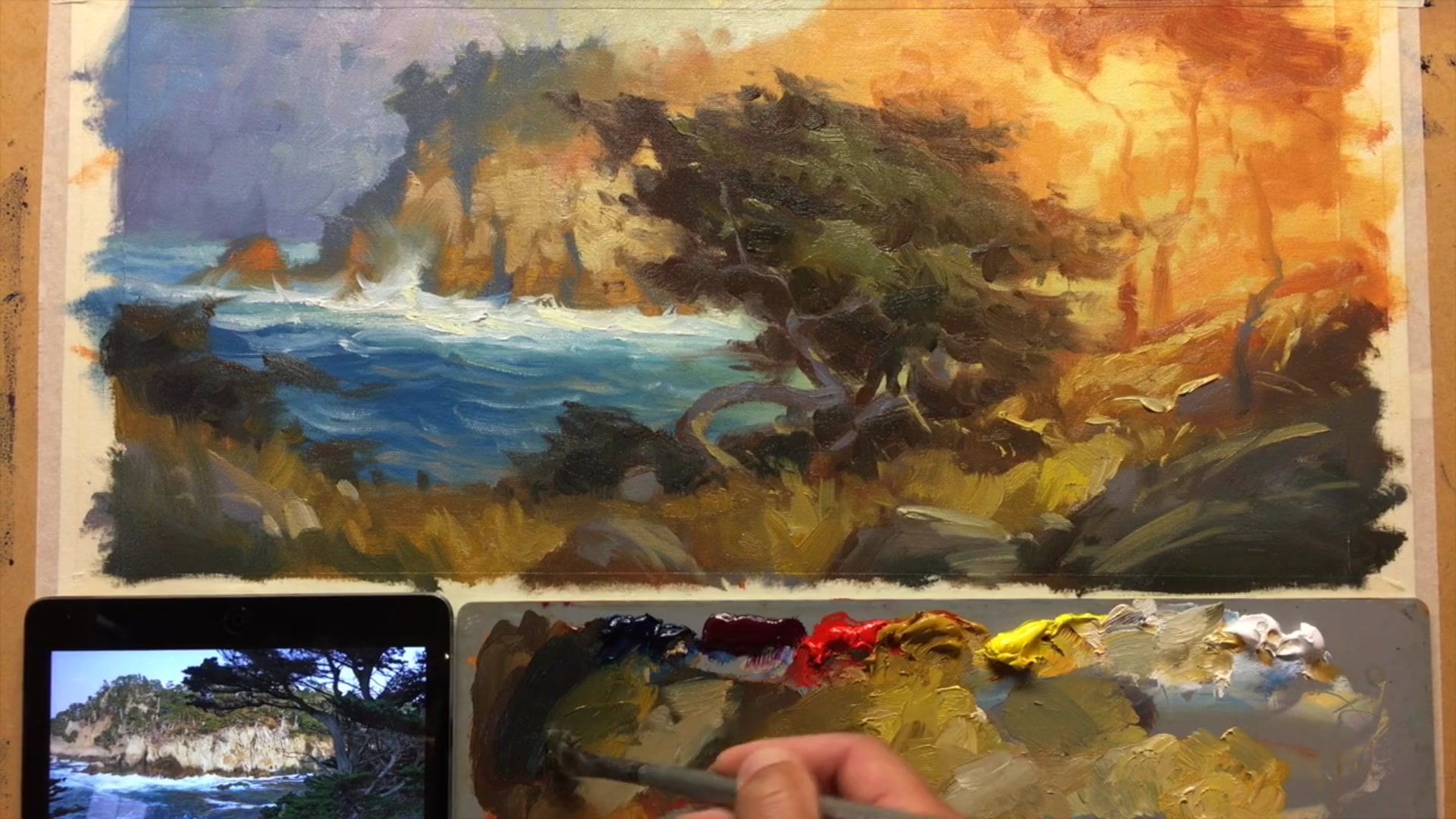
Join me on a painting adventure to one of my favorite spots, Point Lobos in California, where the beauty of nature unfolds in a breathtaking coastal scene. In this chapter, we'll explore the art of capturing the stunning impressionistic view using big brushes and the powerful technique of contre-jour lighting, or 'against the light.' This method, favored by the French and renowned galleries, creates a dramatic effect by positioning the primary light source behind the subject, resulting in striking silhouettes, glowing highlights, and atmospheric depth. As we paint, you'll learn to control values to balance high contrast, ensuring subtle variations in dark areas and avoiding harshness in the brightest spots. This approach not only enhances mood and mystery but also brings a sense of depth and warmth to your landscape. Whether you're a beginner or an advanced painter, I'll guide you step by step through this process in oils, though it's perfectly adaptable for acrylics. In just two hours, you'll have a beautiful coastal painting, or you can choose to expand your vision into a larger masterpiece. Let's pay homage to Mother Nature's generosity and bring this scene to life with glowing light and vibrant colors.
This guide accompanies the full video lesson. The lesson includes the complete narrated video, the printable PDF chapter, and personalised critique support.
"Point Lobos" 20 x 47" Oil on Canvas by Richard Robinson
Step 16Adding Final Highlights and Shimmer
Add Light and Depth
Introduce light to areas needing illumination. Add depth of color by incorporating another tree with branches, enhancing the overall composition.
Highlight and Detail
Switch to a small brush to add finishing details. Create crisp highlights in the grasses and rocks, and add small holes through the tree for texture.
Intensify Glow Area
Use a clean brush to mix pure white with a little yellow. Apply dabs of this mixture to intensify the light in the glow area, ensuring no impurities affect the color.
Create Tree Holes
With a touch of orange, poke holes in the trees to add depth. Ensure the color matches the surrounding area for a natural look.
Add Shimmer with Cool White
Mix a cool blue-white of the same value as the existing area. Apply it to create a shimmering effect, reminiscent of impressionist techniques.
Reflect Light on Trees
Use a blue-green color to reflect light from the sky onto the top of tree clumps. Consider the direction of light to enhance the impressionistic shimmer.
Pro tipKeep your brush clean when adding light into dark areas to maintain color purity.
Embark on your painting journey by thoughtfully planning your composition. Begin with a sketch using your preferred drawing tool, focusing on the main elements like a prominent tree or a striking headland. Incorporate dynamic diagonals and off-balance elements to infuse motion into your scene. Consider the play of light, especially the sun glow, to add warmth and depth, and ensure a clear distinction between foreground and background to guide the viewer's eye.
As you lay down the initial layers, use thin applications of paint to allow for adjustments and layering. Establish your background with warm tones, and gradually build up the foreground elements with careful color transitions. Use walnut oil for thicker applications, especially in areas capturing the sunlit turquoise of the ocean. Pay attention to atmospheric effects, varying shadow shapes to avoid repetition and enhance realism.
In the final stages, focus on detailing and enhancing textures. Use a combination of brushes to create realistic water effects and foam, maintaining a clean brush to prevent unwanted color mixing. Add depth with reflections and subtle color transitions, and utilize impasto techniques to emphasize focal points like the foreground tree. As you finish, ensure your glowing areas are vibrant and your distant trees add depth and contrast, completing a dynamic and atmospheric scene.
Points to remember
Use diagonals and off-balance elements to create motion in your composition.
Apply initial layers thinly for easy adjustments and layering.
Use walnut oil instead of solvent for thicker paint applications.
Avoid repetitive patterns in shadow shapes by varying their forms.
Keep your brush clean while detailing foam to prevent unwanted color mixing.
Gradually darken the color as you work outward from the center to create a glowing effect.
Vary the size and angle of your brushstrokes to create a natural look for distant trees.
Use impasto technique to create texture, making the tree the focal point of the scene.