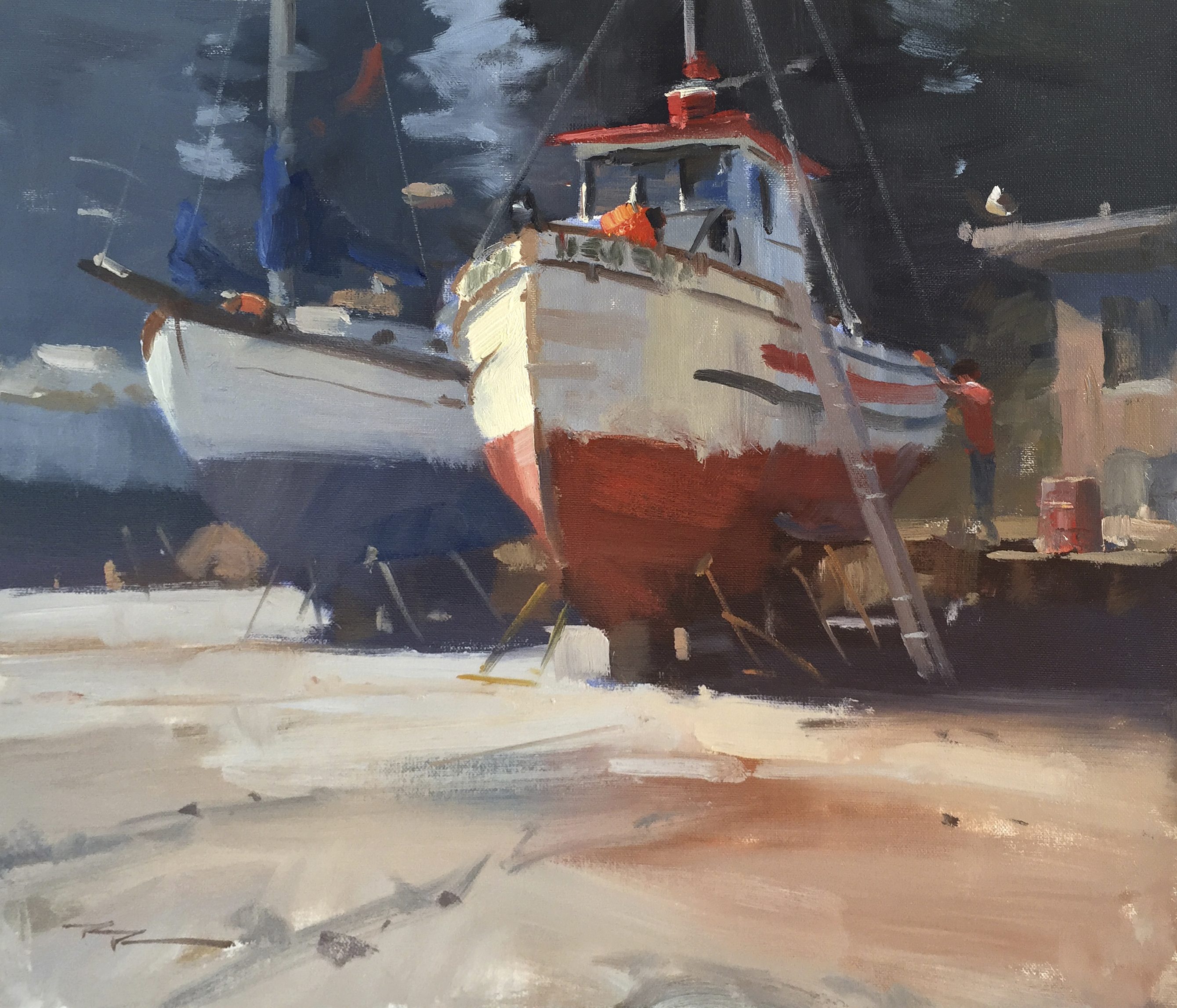
As I stand before my canvas, ready to dive into the vibrant world of painting, I am reminded of the joy that comes from capturing the essence of old boats. In this chapter, we will explore the art of painting a classic boat scene, a subject rich with character and history. With my palette of colors and trusty mediums like M. Graham's Alkyde Walnut Oil and Gamsol, we will embark on a journey to master broad gestural brushwork. You'll learn how to match colors effortlessly and paint with masses, not messes, finishing with calligraphic details that bring your painting to life. We'll start by considering the use of a grid to ensure accuracy, a technique that helps maintain correct angles and proportions. Using Rosemary & Co brushes, we'll focus on capturing the tricky shapes of boats with precision. This scene is a rewarding subject, offering a perfect blend of challenge and satisfaction, and by the end, you'll see how painting like a millionaire can make your artwork shine like a million bucks.
This guide accompanies the full video lesson. The lesson includes the complete narrated video, the printable PDF chapter, and personalised critique support.
"Sunday Repairs" 14 x 16" Oil on Canvas by Richard Robinson.
Step 1Sketching and drawing techniques
Prepare Your Drawing Surface
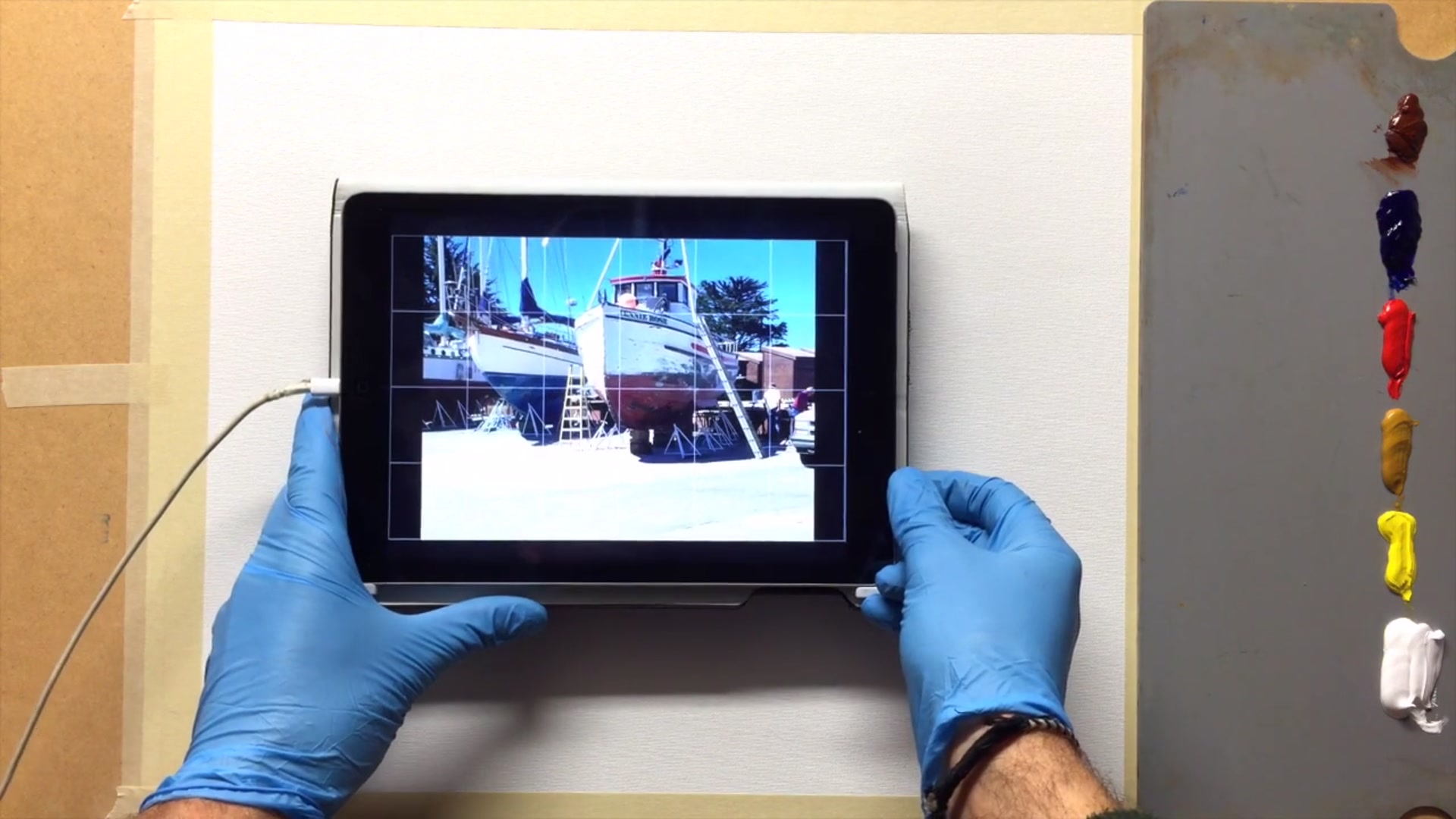
Consider gridding your drawing to help with accuracy. You can print the reference image and grid it, or use a digital device like an iPad. This technique allows you to check points against each other and maintain the correct angles.
Transfer the Grid to Canvas
If you want precision, draw the same grid onto your canvas using a pencil. Carefully fill in each square to replicate the reference image accurately.
Select Your Brushes
Use Rosemary & Co brushes, specifically two number 10 long flats for most of the painting. These bristle brushes provide a textured finish and hold a lot of paint. Use a synthetic number 6 for detail work and a script liner or rigor brush for finer lines.
Sketch the Composition
Dip your brush into Gamsol and mix with a little blue to sketch in the important points. Focus on key areas like the top of the boat's bow, ensuring you place them correctly. Take your time with tricky shapes like boats to get them right.
Use Tracing for Accuracy
For an easy method, print the reference image to the correct size, cover the back with pencil or charcoal, place it on your canvas, and trace over it. This will transfer the lines onto your canvas.
Pro tipGrid your reference image and canvas to maintain accuracy and correct angles in your drawing.
Embark on your painting journey by carefully sketching the fishing boats using a grid technique for accuracy. This foundational step ensures that your drawing is precise and ready for the layers of paint to come. As you block in the darkest darks, use broad strokes to establish the large shapes and transitions in light and shadow, setting the stage for the depth and dimension of your painting.
As you progress, focus on capturing the interplay of shadows and reflections, using a mix of colors to reflect the surrounding environment. The background should be painted with loose strokes, creating a contrast that highlights the detailed foreground. Pay attention to color checking and mixing greys, using quick glances and squinting to ensure color accuracy and harmony throughout your piece.
In the final stages, add highlights and finishing touches with dynamic, calligraphic strokes that bring your painting to life. Use thicker paint for light areas to add texture and interest, and incorporate shorthand marks to suggest details without overwhelming the composition. With these techniques, your painting of fishing boats will capture the essence of the scene with depth and vibrancy.
Points to remember
Grid your reference image and canvas for accurate drawing.
Use big, broad strokes to capture large shapes and transitions.
Add a touch of yellow ochre to reflect warm light bouncing from surroundings.
Use loose strokes in the background to contrast with detailed foreground.
Squint at your painting and reference photo to judge values and colors.
Use thicker paint for light areas to add texture and interest.
Roll the brush while applying highlights for dynamic strokes.
Use shorthand marks to suggest details from a distance.