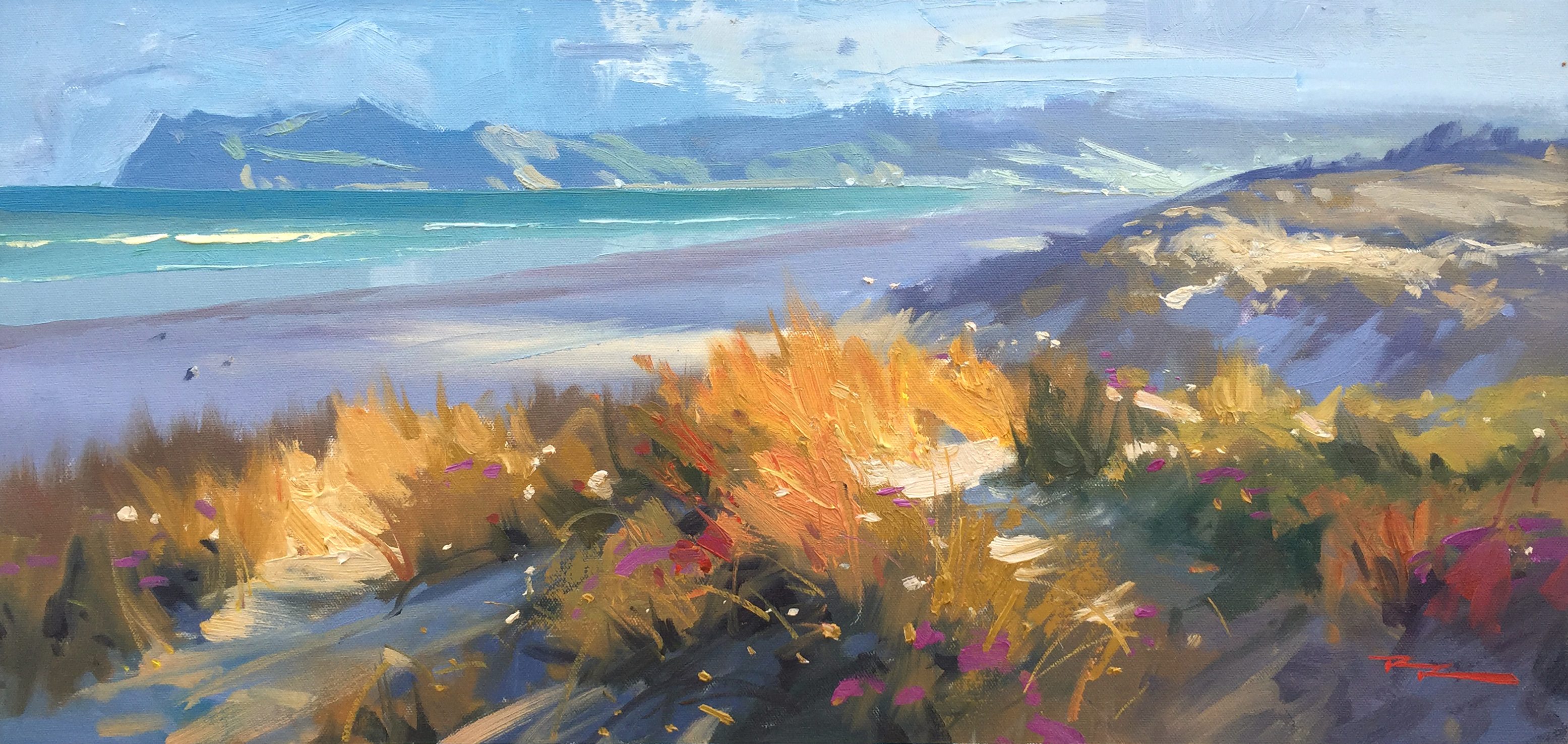
As we gather our brushes and palettes to capture the enchanting beauty of the 'Sunset Dunes,' we're stepping into a scene that offers a wealth of learning opportunities and artistic satisfaction. This chapter invites you to join me in painting a sumptuous, impressionistic beach scene, set against the backdrop of a beautiful evening at the end of summer. Together, we'll explore the art of designing with large organic shapes and the efficiency of using pre-mixed grays to speed up your painting process. You'll discover the magic of color variety within big masses and learn to harness the power of warm and cool color contrasts to make your colors more vibrant than nature itself. We'll dive into the rich textures achievable through varied brushwork, including the use of a palette knife and the technique of under-mixing paint. I'll guide you in creating dynamic compositions by balancing soft and hard edges and introduce you to the wonders of atmospheric perspective and dramatic light effects. Whether you follow along with the provided resource photos or let these techniques inspire your own creations, this scene promises to be a rewarding subject for your artistic journey.
This guide accompanies the full video lesson. The lesson includes the complete narrated video, the printable PDF chapter, and personalised critique support.
"Sunset Dunes" 11.5 x 25" Oil on Canvas by Richard Robinson.
Step 16Adding Detail to Distant Hills
Add Halftones and Lights
Mix a little more blue and red to create halftones for the distant hills. Use this mixture to add depth and variation to the landscape. This will help create a sense of distance and atmosphere.
Enhance with Light Colors
Add a lot more white and a touch of yellow ochre to your palette. Use this lighter mix to highlight areas of the hills, giving them a sunlit appearance. This contrast will enhance the overall composition.
Create Texture with Brushwork
Use the side of your brush to apply the paint, creating a more textural feel. This technique adds interest and suggests more detail in the distant hills.
Add Depth with Blue
Introduce a little more blue as you paint further into the distance. This cool tone will help push the hills back, enhancing the sense of depth in your painting.
Pro tipUse the side of the brush to create texture and suggest detail in distant hills.
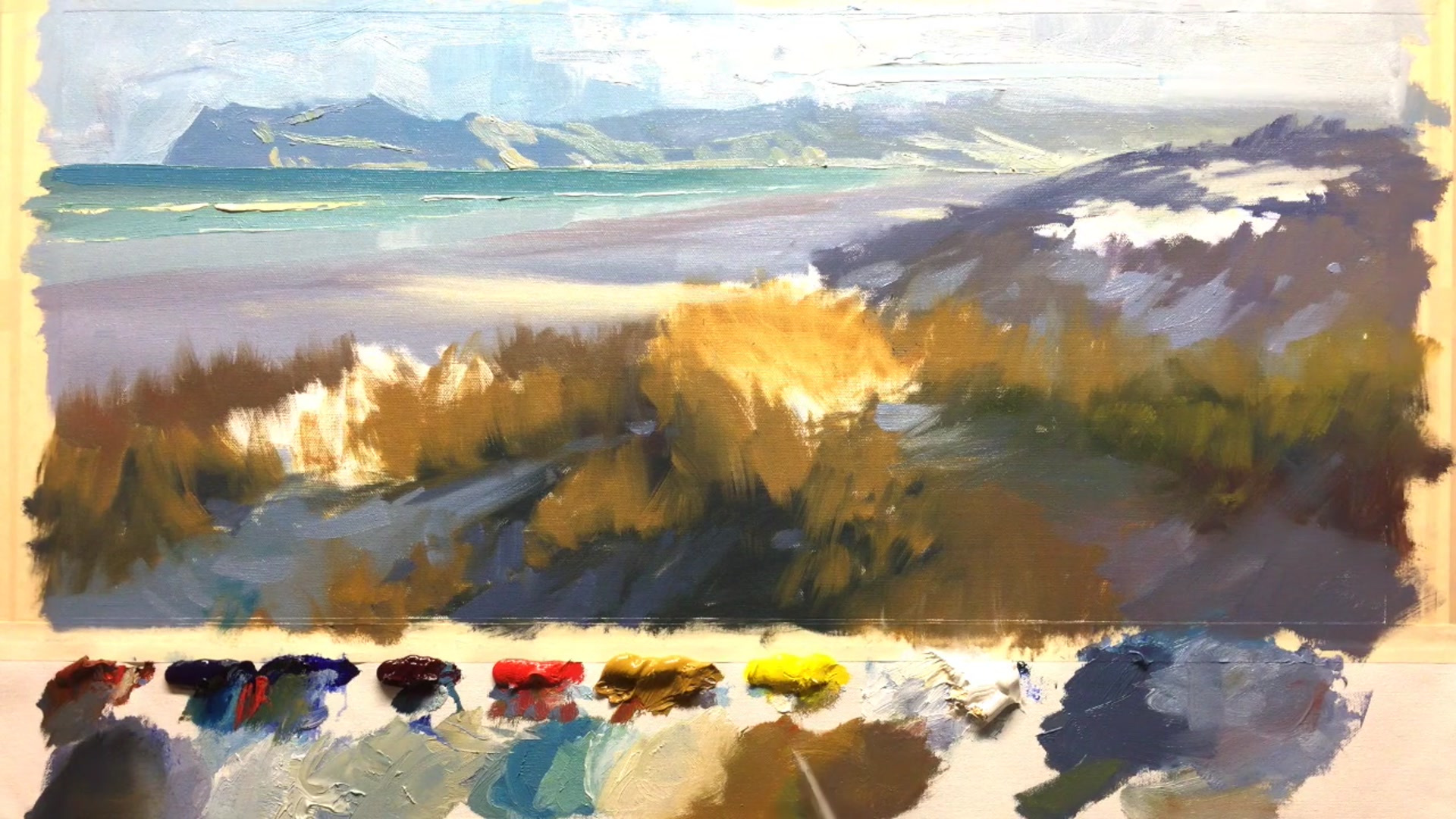
Embark on your painting journey by setting up your outdoor workspace with care. Begin by ensuring your canvas is protected from the elements with an umbrella, and manage your materials to prevent them from becoming a hazard in the wind. As you start painting, keep your canvas in the shade to maintain color accuracy and avoid glare. This preparation sets the stage for a successful painting session.
As you move into the creative process, focus on designing your composition with big shapes and varied angles to create a dynamic scene. Use a limited palette to simplify your color choices, and employ flat brushes for both broad strokes and precise lines. Pay attention to the play of light and shadow across your canvas, using cool greys and warm tones to bring depth and interest to your painting.
In the final stages, add details that bring your scene to life. Use a palette knife for crisp wave details and soft brushwork for gentle transitions in halftones and shadows. Remember to adjust your colors and shapes to reflect the natural beauty of your subject, and don't be afraid to make bold choices that reflect your personal vision. With these techniques, your painting will capture the essence of the sunset dunes, full of texture and vibrancy.
Points to remember
Always paint with your canvas in the shade to avoid unexpected darkening when viewed indoors.
Use flat brushes for both broad strokes and precise lines by utilizing their chiseled edge.
Vary angles and shapes to create a more interesting composition and avoid repetition.
Use a large palette to have ample space for mixing and experimenting with colors.
Use masking tape for a straight horizon line when painting quickly to maintain accuracy.
Strengthen the ocean color to your preference; it's your creation, so don't feel bound by nature.
Maintain the same value while changing hues to add variety and interest to your painting.
Use soft brushwork to maintain gentle transitions in halftones and shadows, saving sharp edges for later.