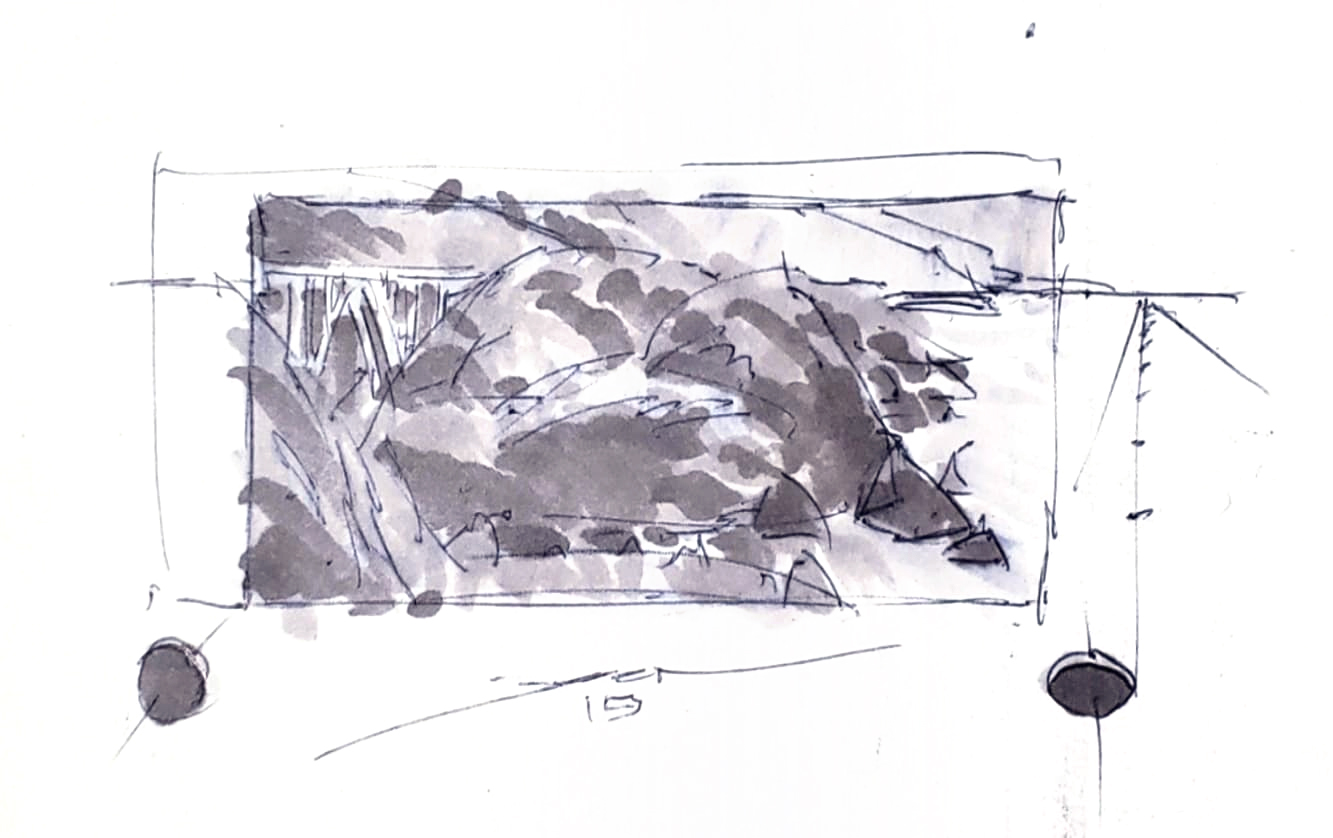
In this chapter, I invite you to join me along California's breathtaking coastline, where we'll delve into the art of painting with an efficient 'order of operations.' This approach is essential for enhancing your painting skills and maximizing the joy each piece brings. We'll explore the painterly style of master artist Joshua Been, focusing on the key elements of value, shapes, and edges to describe form, light, and viewpoint. To support your creative journey, I recommend using the Day Tripper easel, a product of my own design from Prolific Painter, known for its lightweight and sturdy build. As we work, you'll find tools like the Forever Terp Jar and a selection of rosemary ivory long flat brushes indispensable for achieving the desired effects. We'll begin with a preliminary sketch, a vital step for organizing your thoughts and planning your composition. By drawing a box that matches your canvas's aspect ratio, you'll better focus on the organization and placement of masses in your painting, setting the stage for a rewarding artistic experience.
This guide accompanies the full video lesson. The lesson includes the complete narrated video, the printable PDF chapter, and personalised critique support.
Remember, viewers won't compare your painting to the actual scene. Focus on creating a piece that evokes a response rather than replicating reality.
Use the Scene to Your Advantage
Utilize elements from the scene to enhance your painting. Don't feel bound to depict everything exactly as it is; instead, highlight the most compelling aspects.
Idealize and Invent
Feel free to idealize the scene by cleaning it up and adding your personal touch. This approach often results in more engaging and epic paintings.
Be a Storyteller
Filter the scene to present the best and most epic parts to the viewer. Your role is to tell a story through your painting, not to document the scene precisely.
Pro tipHighlight the most compelling aspects of the scene to create a more engaging painting.
Embark on your painting journey by thoughtfully organizing your composition. Begin with a preliminary sketch and a boxed frame to guide your layout. Assess the horizon and light direction using simple shapes like spheres to understand the interaction of light and shadow. This foundational work sets the stage for a cohesive and well-planned painting.
As you progress, focus on blocking in major shapes and using incremental value markers to establish depth and contrast. Start with lighter values and work your way to darker tones, ensuring that your composition remains balanced and harmonious. Use pre-sketches to refine your ideas and potentially add value to your work as sellable art.
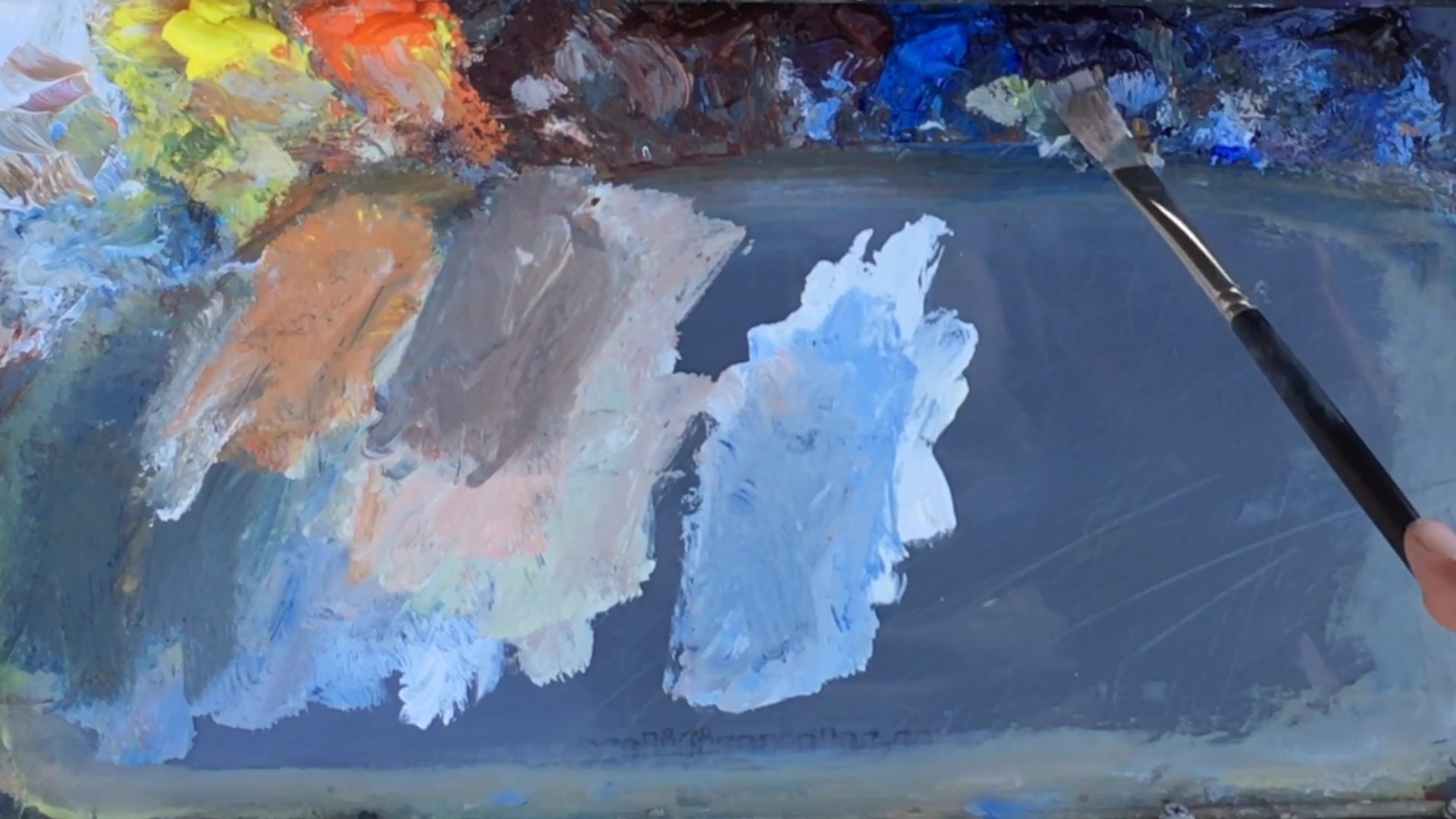
Finally, pay attention to the order of operations. Move from the background to the foreground, applying lighter values first to create natural overlaps. Use your palette wisely, mixing colors to achieve the desired hues and maintaining a harmonious relationship between them. By planning your approach and focusing on the essential elements, you can create a painting that tells a compelling story through its shapes, values, and textures.
Points to remember
Always start with a box to organize your composition.
Use spheres to visualize light direction and shadow.
Use a pre-sketch to manage space and avoid oversized elements.
Apply lighter values first to create depth and contrast.
Use pre-sketches to add value and provenance to your paintings.
Paint from back to front to create natural overlaps.
Overshoot shapes with lighter values to simplify adding darker details.
Plan your painting process to apply darker values over lighter ones.