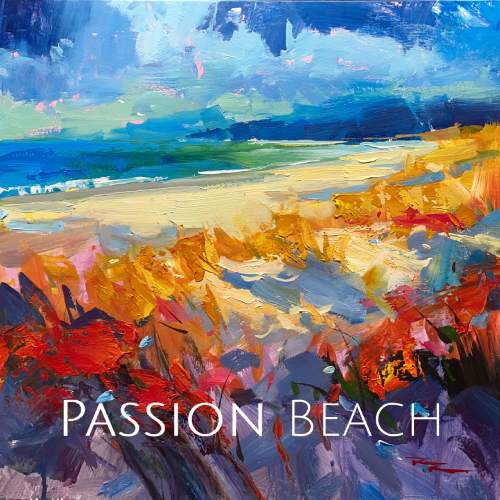
I invite you to join me on a creative journey as we capture the enchanting beauty of Ruakaka Beach at the start of summer. This chapter is all about embracing a vibrant, passionate style to bring this expressive beach scene to life. We'll delve into designing with a large light effect, where the light in the center contrasts with a soft shadowed foreground and a darkened sky, creating a dynamic and punchy composition. You'll learn how to lay down a base coat of complementary colors using acrylics, enhancing the vibrancy of your painting. I'll guide you through the art of expressive brushwork, using various tools to achieve impasto effects that add depth and texture. We'll explore the technique of under-mixing paint to create unique painterly effects, and discuss the importance of varying edges—soft against sharp—to elevate your work. With step-by-step guidance and resource photos, you'll gain the skills to either follow along or apply these techniques to your own creations. Let's dive in and discover the joy of painting with passion and expression.
This guide accompanies the full video lesson. The lesson includes the complete narrated video, the printable PDF chapter, and personalised critique support.
"Passion Beach" 15x15" Acrylic on Canvas by Richard Robinson
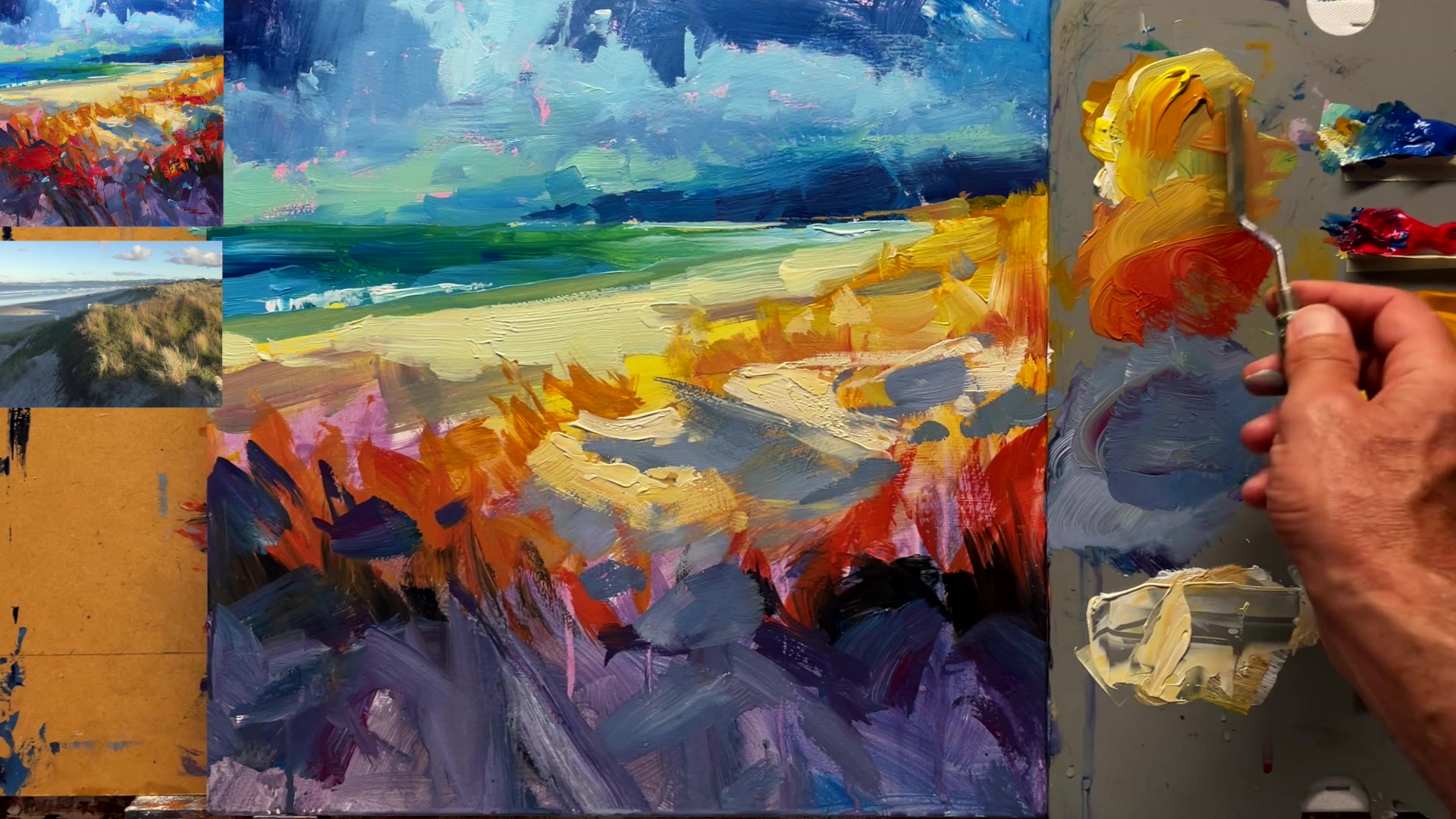
Step 13Color contrasts and random marks
Create June Grasses
Load your brush with plenty of paint, focusing on under-mixing rather than over-mixing. Allow the paint to graze off onto the canvas to form interesting shapes. Add a touch of yellow ochre and a spot of red for variation.
Add Red and Yellow Chunks
Place larger chunks of red and yellow at the bottom of the canvas. These colors will pop against the purple background, creating a vibrant contrast.
Introduce Muted Green
Use a dagger brush to mix a muted green by adding a little red, which is opposite green on the color wheel. Apply this muted green to enhance the vibrancy when placed next to red.
Incorporate Violet and Blue
Mix a lighter violet for more contrast and add it to your painting. Include pure sky reflections by adding some blue to create a harmonious effect.
Add Vibrant Pink Accents
Introduce vibrant pinks, inspired by magenta ice plants, to bring out seasonal beauty. Tone down areas with yellow ochre if needed.
Create Natural Marks
Step back from the canvas to assess your work. If any marks seem too deliberate, use your thumb, a palette knife, or a different brush to break them up, making them appear more random and natural.
Pro tipStep back from the canvas frequently to evaluate your work, and consider viewing it in a mirror for a fresh perspective.
Embark on your painting journey by arranging a vibrant palette and selecting a variety of brushes to create diverse marks. Begin with a high horizon line in your initial sketch to emphasize the foreground, and use expressive strokes to lay down the base coat. Layer colors thoughtfully, allowing undertones to shine through for a shimmering effect.
As you work with wet paint, consider the balance between letting layers dry and continuing to paint for dynamic mixing. Enhance the sky with darker tones for contrast, and let parts of the base coat peek through for added texture. Use half-mixed colors to create natural textures in clouds and waves, and maintain a clean palette to keep colors vibrant.
In the final stages, focus on adding depth and interest with varied brushstrokes and impasto techniques. Introduce color contrasts and random marks to bring your painting to life. Finish with fine details like seagulls and surf lines using a Rigor Brush, ensuring your Passion Beach scene captures the essence of a lively coastal landscape.
Points to remember
Use a variety of brushes to create diverse and interesting marks on your canvas.
Avoid rounding the beach corner; depict it as a sharp, knife-like shape.
Adjust the angle of your canvas to control paint dribbling and create different effects.
Efficient brush strokes can prevent muddiness when working with wet paint.
Use your brush in a variety of ways to achieve diverse textures and effects.
Leave colors half-mixed on the brush for natural texture.
Use a clean surface to avoid muddy colors when painting the ocean.
Step back every few minutes to view your painting from a distance, enhancing the perception of realism and gestural quality.