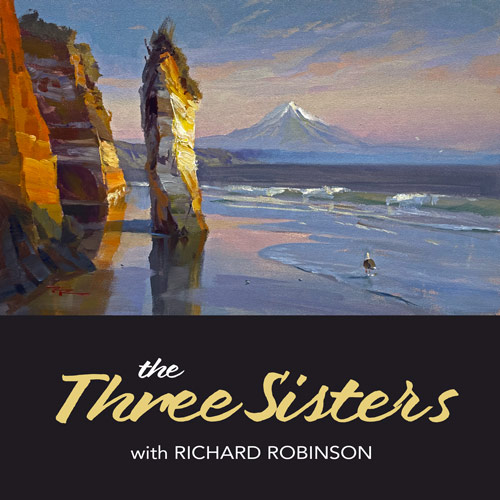
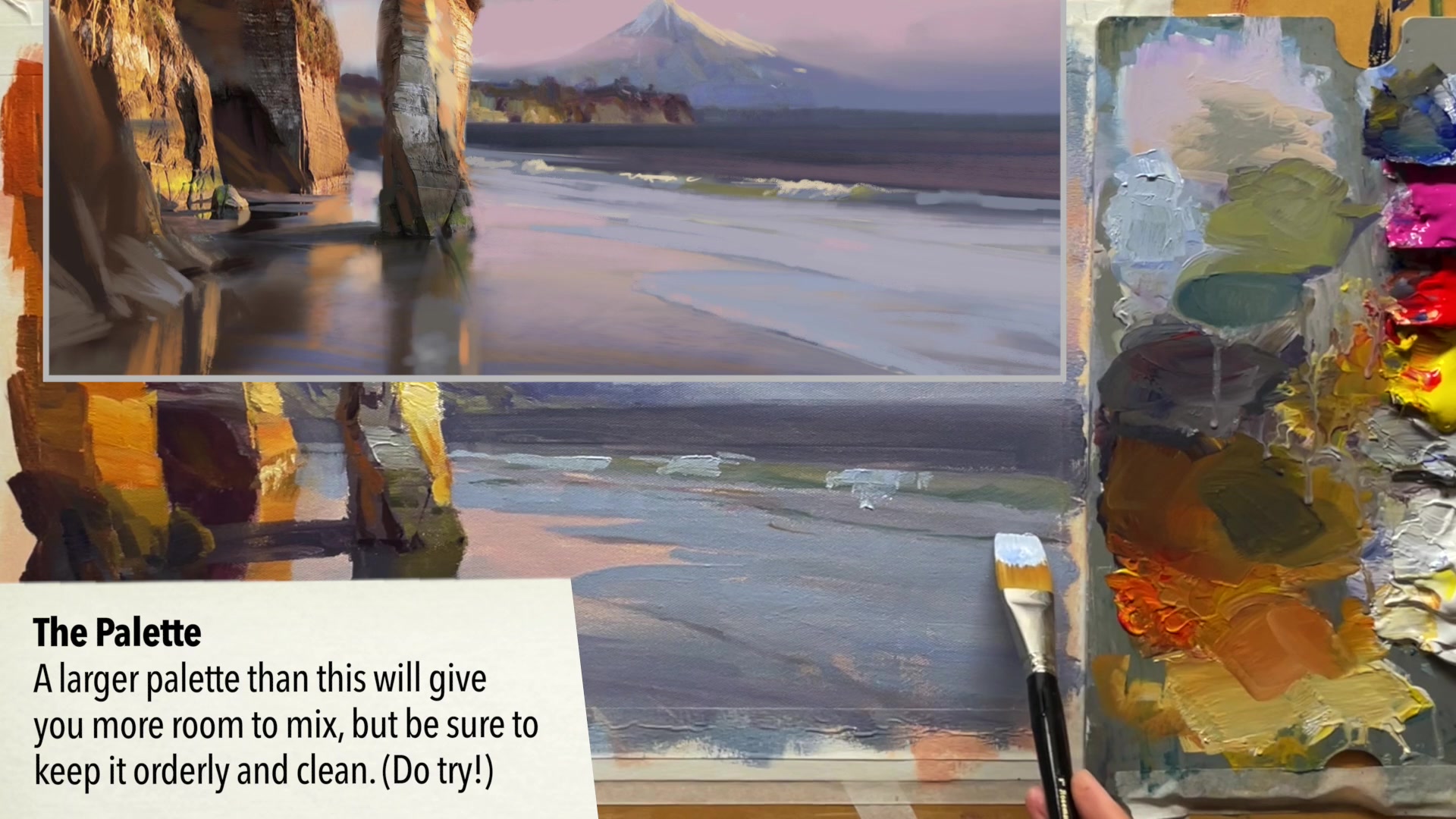
As I stood before the iconic Three Sisters in New Zealand, I was reminded of nature's ability to reward patience. Despite the grey, drizzly weather, we waited all day for the low tide to reveal this stunning scene. Just as the sun was about to set, a gap in the clouds allowed golden light to pour onto the landscape, creating a breathtaking contrast against the dark sky. This chapter invites you to capture that magical moment on canvas. Together, we'll explore the art of painting these towering cliffs and rock columns, focusing on enhancing their scale and presence. By increasing the height of the cliffs and extending them into the distance, you'll convey their grandeur and continuous nature. Including Mount Taranaki in your composition will add depth, while reflections on the beach will enrich the scene. We'll refine the composition by removing distractions, ensuring the viewer's attention remains on the primary focal point. Through this step-by-step process, you'll not only create a beautiful beach painting but also deepen your understanding of design and contrast in art. Join me in this rewarding journey, where every brushstroke brings you closer to the essence of this remarkable landscape.
This guide accompanies the full video lesson. The lesson includes the complete narrated video, the printable PDF chapter, and personalised critique support.
"The Three Sisters" 13x20" Acrylic on Canvas by Richard Robinson
Step 16Final Touches and Seagulls
Add Light Reflections
Use a brush with white and a touch of yellow to add light reflections. Apply these to the tops of the waves where the sun would catch them, creating a soft glow. Drag the reflections down vertically to enhance the effect of light on the water.
Patch Canvas Holes
Identify any areas where the canvas is showing through and patch them up with matching paint. This will ensure a more polished and complete look to your painting.
Add Seagulls
Paint a few seagulls using warm light colors, adding little red legs for detail. Position them on the wet sand or in the sky to add life and movement to your scene.
Adjust the Horizon
If the horizon line appears uneven, gently smudge it down to create a smooth, straight line. This will help maintain the balance and perspective of your painting.
Sign Your Painting
Once satisfied with your final touches, sign your painting to complete it. This personal touch marks your work as finished and uniquely yours.
Pro tipUse a brush with white and a touch of yellow to add light reflections where the sun would catch the tops of the waves.
In this lesson, you embarked on a journey to capture the majestic Three Sisters and Mount Taranaki. Begin by adjusting your composition to emphasize the towering cliffs and their reflections, setting the stage for a dramatic landscape. Prepare your canvas with a smooth base coat, allowing for seamless color transitions and a vibrant foundation. As you progress, focus on blending colors smoothly to create a warm, shimmering effect that enhances the overall atmosphere of your painting.
Utilize a variety of brushes and acrylic techniques to achieve a painterly effect, reminiscent of oil painting. Sketch your composition carefully, ensuring balance and avoiding symmetry to maintain interest. As you paint the sky and mountains, incorporate subtle variations and textures to enhance realism. Pay attention to the details, using a mix of colors and brush techniques to bring the landscape to life.
Finally, add depth and texture to the cliffs and rocks, using thicker paint and palette knives to create dynamic forms. Focus on reflections and light effects to capture the natural beauty of the scene. By carefully balancing colors and textures, you can create a captivating painting that draws the viewer into the serene landscape.
Points to remember
Increase the height of cliffs to enhance the sense of scale and presence in your painting.
Wet your brush with water and gloss medium to help the paint flow smoothly over the canvas.
Use a spray bottle to keep the canvas wet for easier blending of colors.
Use long-bristle brushes to load more paint and apply it smoothly for a painterly effect.
Use a pencil for more technical drawings, especially when accuracy is crucial.
Add bumps to the mountain shape to avoid a perfect geometric look, enhancing realism.
Use a palette knife to apply thicker paint in curved motions for added texture and form.
Avoid making reflected lights too light to preserve the shadow effect.