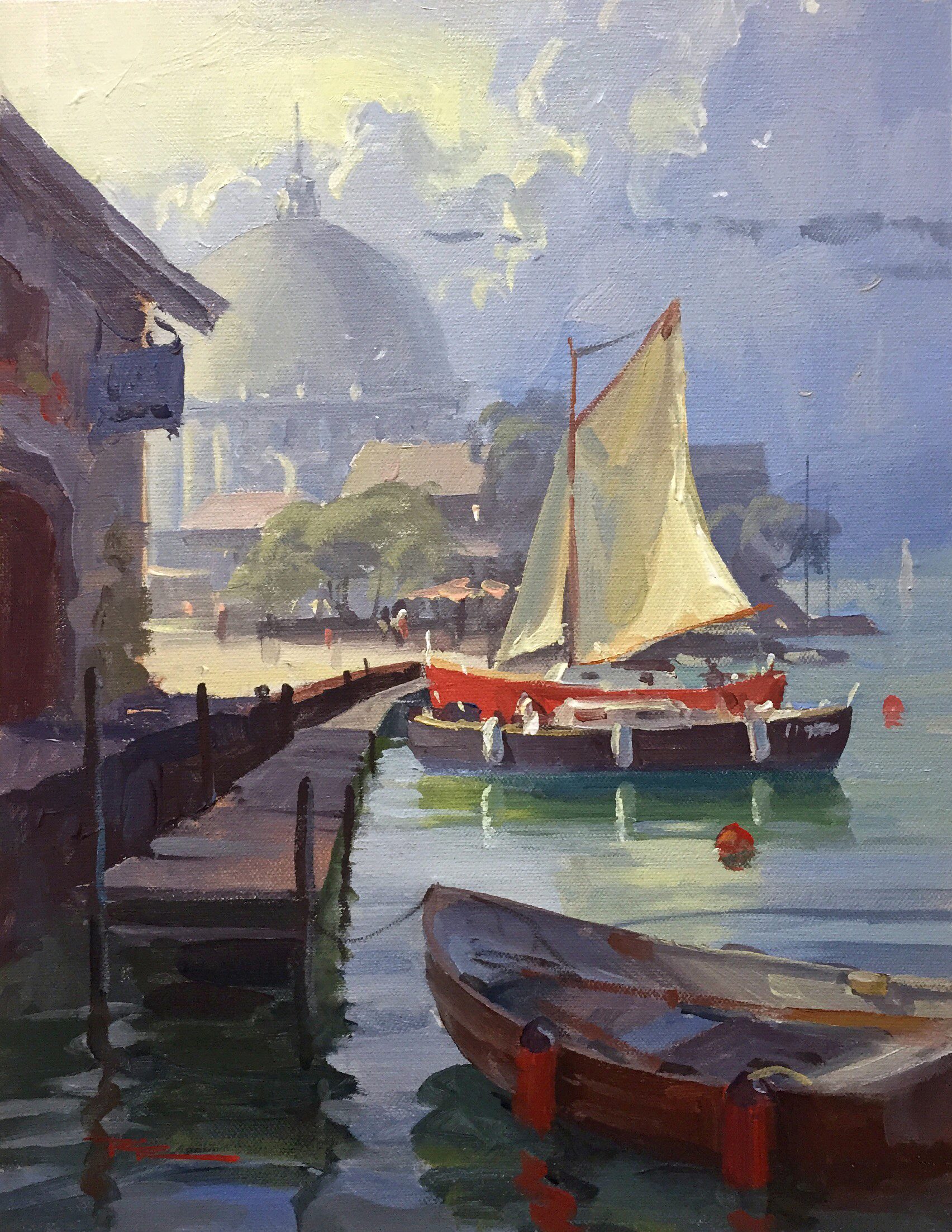
Welcome to the enchanting medieval village of Yvoire in France, a place that seems to pause in time as it closes for winter, yet during my visit, it was alive with warmth and beauty, a scene begging to be captured on canvas. In this chapter, we dive into painting this idyllic harbour scene, guiding you step by step through my acrylic techniques. You'll learn how to design with big shapes, invent warm light, create atmospheric depth, and paint reflections, all crucial skills for bringing this picturesque setting to life. We'll start with small thumbnail sketches to explore composition and balance, moving through black and white studies to grasp values and contrast, and then onto grayscale and color studies to refine tonal values and test color harmony. This process builds a solid foundation, allowing you to confidently develop your painting with accuracy and detail. I encourage you to pick up your brushes and immerse yourself in this rewarding subject, discovering new techniques and ideas to enrich your own artistic journey.
This guide accompanies the full video lesson. The lesson includes the complete narrated video, the printable PDF chapter, and personalised critique support.
"Safe Harbour" 11 x 13" Acrylic on Canvas by Richard Robinson.
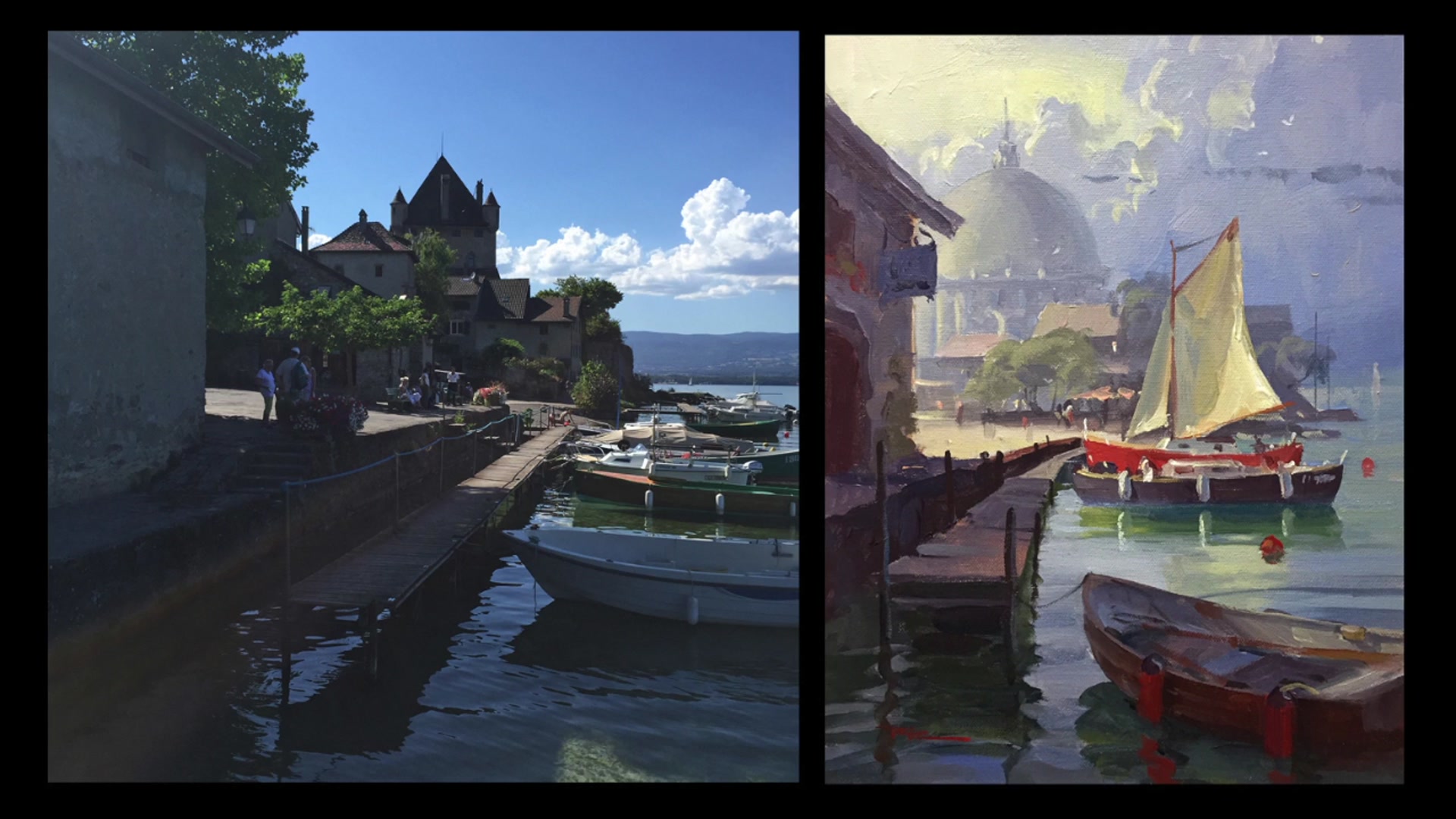
Step 2Differences Between Painting and Photograph
Embrace Differences
Recognize that differences between your painting and a reference photograph can enhance the painting's interest. Focus on capturing the essence rather than replicating every detail.
Pro tipAllow your painting to have its own character by not strictly adhering to the photograph.
Embark on your painting journey by laying a solid foundation with initial sketches and studies. Begin with thumbnail sketches to explore composition and balance, followed by black and white and grayscale studies to understand values and depth. Experiment with color studies to ensure harmony in your palette, and refine your sketches into a detailed blueprint for your painting.
As you progress, embrace the differences between your painting and reference photographs to add character and interest. Make design changes to enhance the focal point and adjust colors to create depth and vibrancy. Choose your medium wisely, and use techniques like creating a background gradient to set the scene.
In the final stages, focus on painting methodically from background to foreground, using the right brushes and techniques to bring your scene to life. Pay attention to details like reflections and highlights, ensuring each element contributes to the overall composition. With patience and practice, your painting will capture the essence of a safe harbor, inviting viewers into its tranquil beauty.
Points to remember
Use thumbnail sketches to refine composition ideas.
Allow your painting to have its own character, not just replicate a photo.
Modify elements that compete with your focal point.
Lighten the background to enhance depth and contrast.
Select the medium you are most comfortable with.
Use a clean brush to gently soften edges for variation.
Vary the brightness of highlights on the sail for depth.
Use larger brush strokes in the foreground for depth.