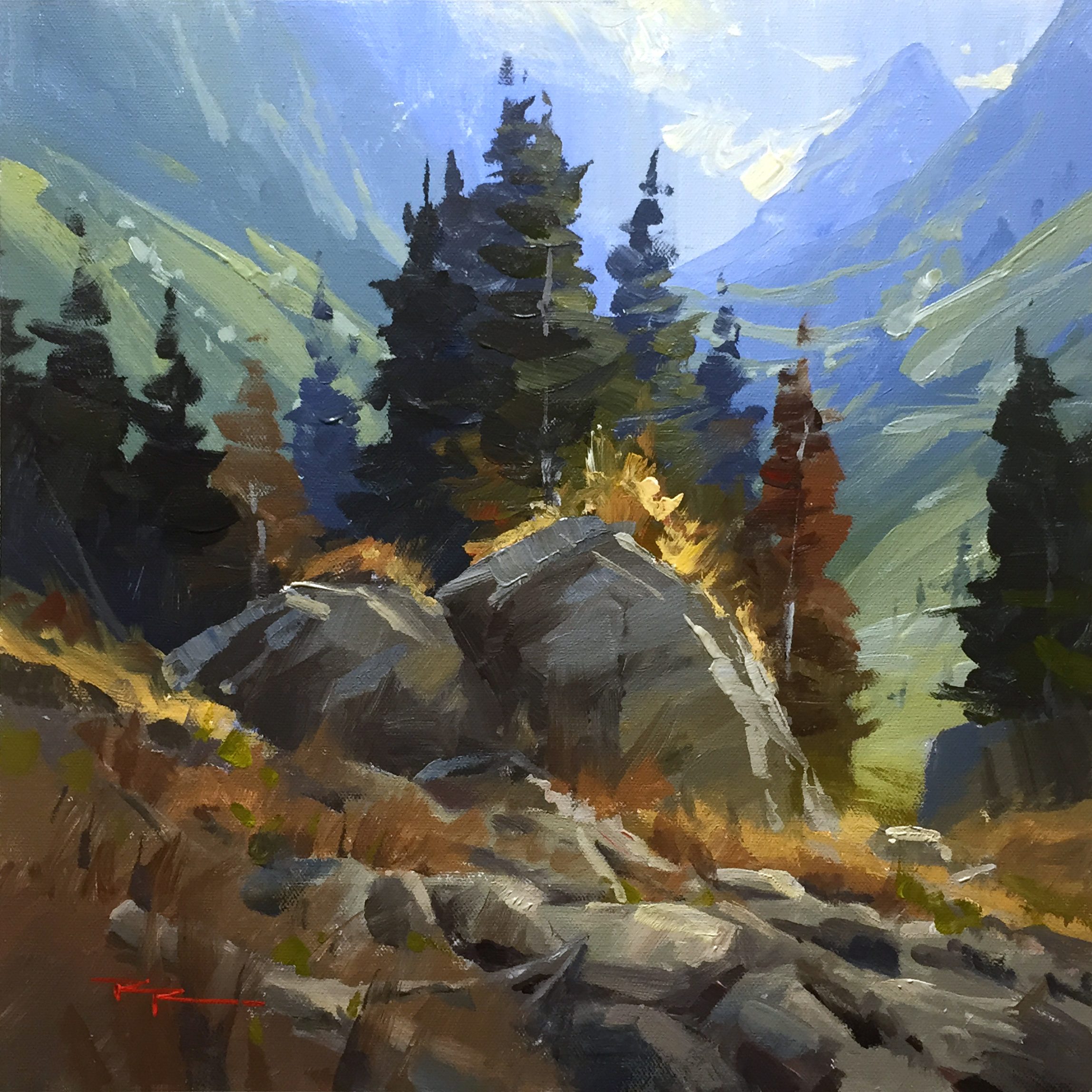
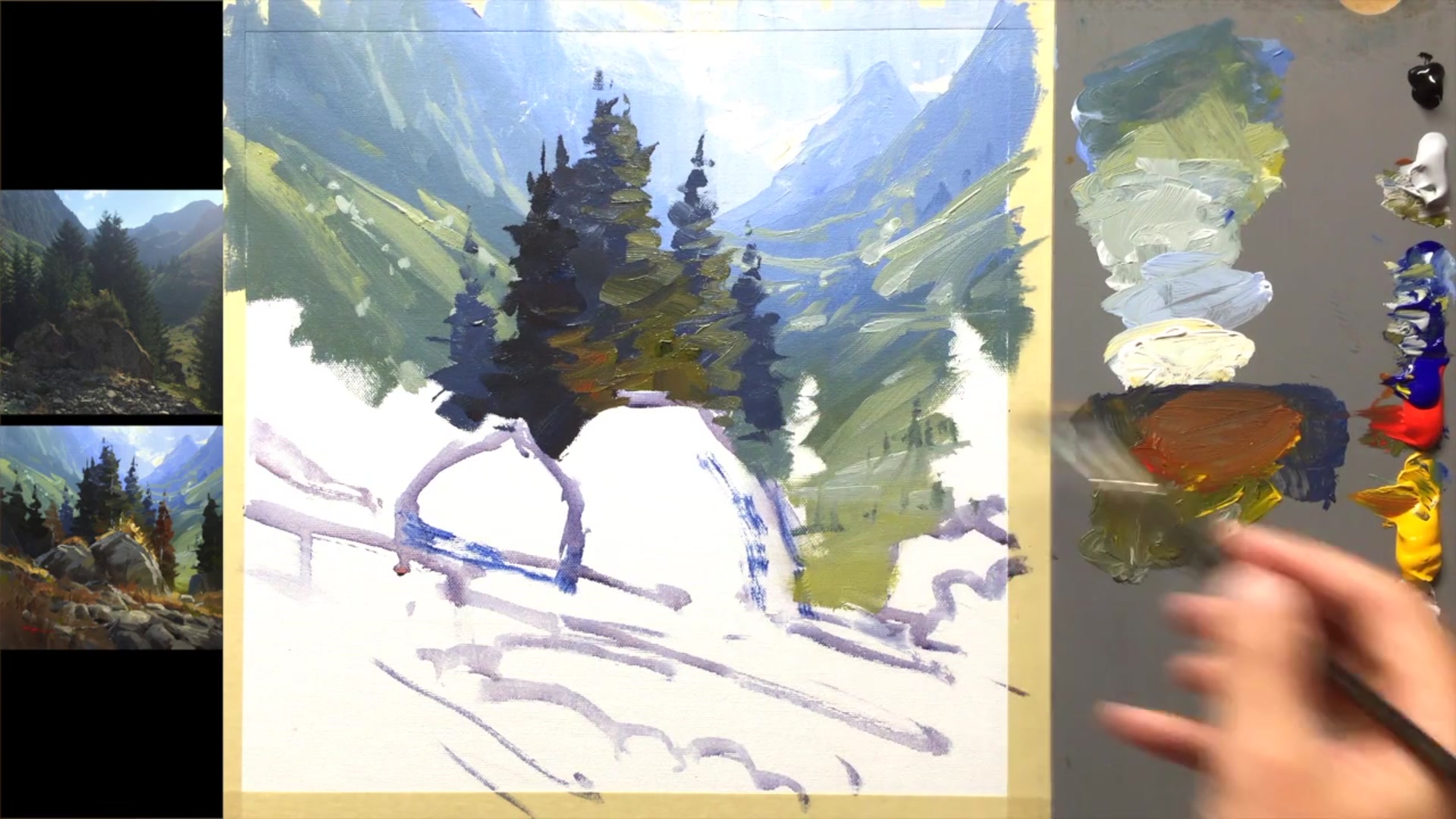
Ah, the French Alps in summer—truly magnifique! The hills resonate with the charming sound of cowbells, and one can almost imagine Heidi frolicking through the meadows. In this chapter, I invite you to join me in capturing the essence of this breathtaking alpine scene with acrylics. We'll embark on a step-by-step journey where you'll learn to paint the diffuse light effects that give the Alps their ethereal glow, and create a sense of vast atmospheric depth. Together, we'll explore dynamic brushwork techniques and the art of inventing convincing rocks, all while focusing on the beautiful rocks and dark trees as our main subject. By using the ascending valley and mountain tops as a backdrop, we’ll create a painting with remarkable depth. With just a few brushes, a glass jar of water, and straight acrylics on an acrylic-primed canvas, you'll discover how to paint quickly and efficiently. Starting with the background and layering towards the foreground, you'll manage drying times seamlessly. This scene is not only a rewarding subject due to its natural beauty but also an excellent opportunity to refine your painting skills. Enjoy the process and the joy of bringing the French Alps to life on your canvas!
This guide accompanies the full video lesson. The lesson includes the complete narrated video, the printable PDF chapter, and personalised critique support.
"The French Alps" 13 x 13" Acrylic on Canvas by Richard Robinson
Step 11Adding Color Variations to Trees
Introduce Orange Tones
Add a subtle orangish color to the tree to create interest. Mix in a bit of blue to tone down the orange, avoiding a pure orange hue. Adjust the vibrancy to your preference, but consider graying the orange slightly for a more natural look.
Apply Darker Brown for Shadows
Use a darker brown to paint the shadow side of the tree. Apply this darker tone into the lighter areas, reversing the technique used on other trees. This adds depth and contrast to the composition.
Consider Tree Family Dynamics
Think of the trees as a family, considering their size, spacing, and shape. Ensure variety in light and dark shapes, aiming for a large light shape with smaller subsidiary shapes. Avoid uniform lighting across all trees.
Add Bluish Dark Grey
Introduce a bluish dark grey to the base of the trees in the background. This adds depth and variation to the scene, enhancing the overall composition.
Incorporate Green Tones
Add a touch of green to the tree on the right for subtle variation. This helps differentiate it from other trees and adds interest to the painting.
Pro tipMix blue into orange to tone it down, creating a more natural and subtle color variation.
Embark on your painting journey by selecting a captivating scene from the French Alps, focusing on the interplay of rocks, trees, and the majestic mountains. Begin by laying down the background with a swift application of acrylics, moving from the sky to the distant mountains, and then gradually building up the mid-ground and foreground. This layered approach not only helps manage drying times but also establishes a sense of depth and perspective in your composition.
As you progress, think of the elements in your painting as a family, with trees and rocks forming cohesive groupings that guide the viewer's eye. Use a variety of brush techniques to suggest details and textures without overworking the scene. Pay attention to the play of light and shadow, adjusting colors to reflect the atmospheric perspective and the natural lighting of the landscape.
In the final stages, focus on adding highlights and refining details to bring your painting to life. Use thick paint and varied brushwork to create dynamic textures in grasses and rocks. Carefully apply highlights to accentuate the natural contours and lighting effects, ensuring a harmonious and vibrant composition. Remember, each stroke contributes to the overall mood and story of your alpine landscape.
Points to remember
Work from background to foreground to manage drying times.
Visualize elements as family groupings for a cohesive composition.
Use down strokes for a consistent sky texture.
Vary mountain lines to avoid a cloned appearance.
Use a big brush to suggest details without overworking.
Adjust light colors to become lighter and bluer as they recede.
Mix large piles of paint to extend drying time.
Use a crisp square brush for sharp, dynamic tree marks.
Mix blue into orange for natural color variation.
Use thick paint and varied techniques for dynamic grasses.
Avoid over-mixing to create natural rock textures.
Apply highlights thickly to enhance contours and reflections.