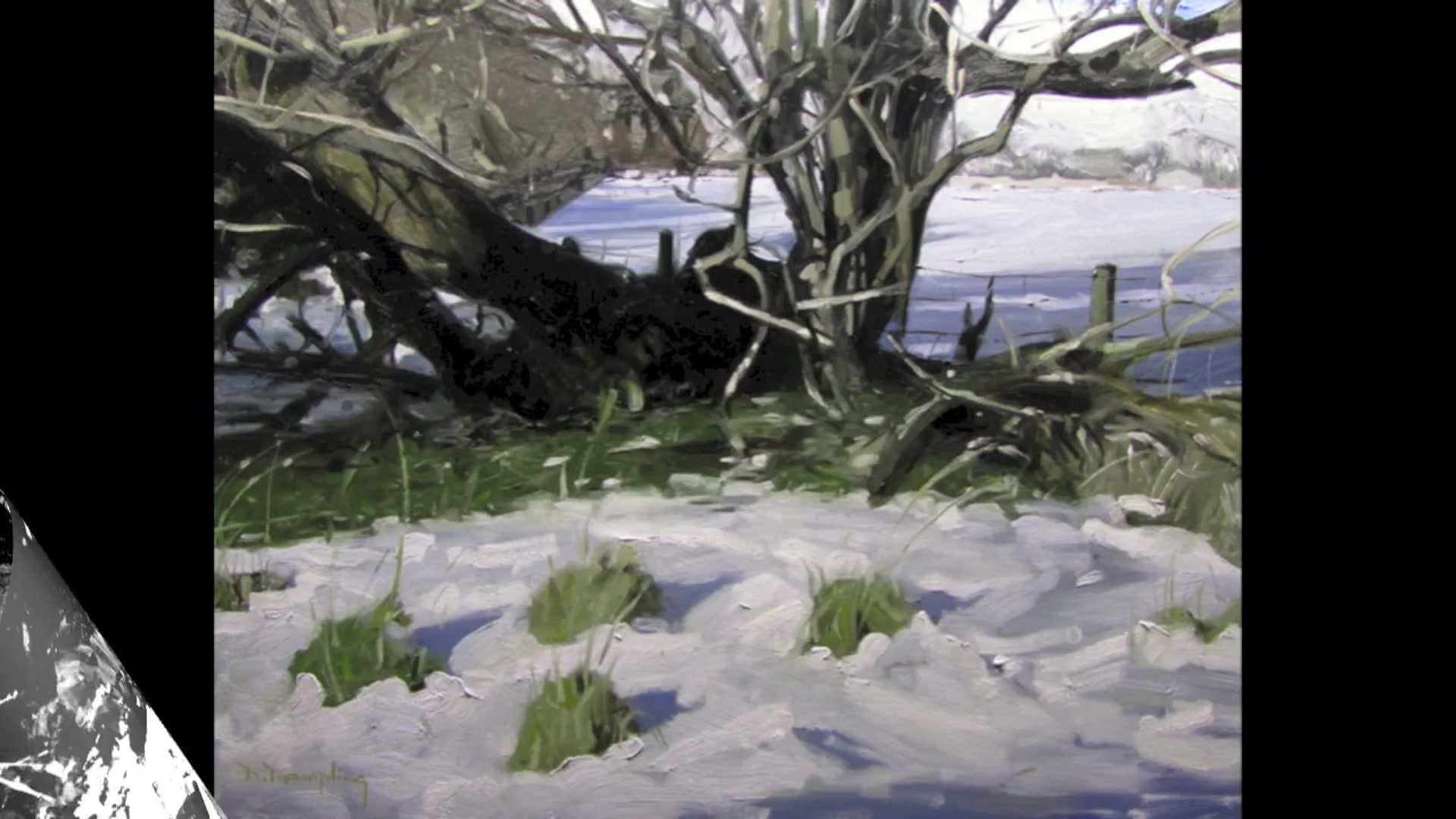
As we embark on this painting journey together, I am thrilled to introduce you to our first workshop, aptly named 'First Snow.' This lesson is inspired by a photograph I captured during one of my painting adventures in the stunning Crown Range above Queenstown, in New Zealand's South Island. This scene, with its dramatic interplay of light and shadow, offers a perfect opportunity to explore the beauty of snow-covered landscapes. In this chapter, we'll dive into the art of balancing warm and cool color variations, and the expressive brushwork that brings a painting to life. You'll learn how to simplify complex scenes by joining dark shapes, creating a strong, cohesive design that avoids clutter and maintains balance. As you paint, feel free to exercise your artistic license—move elements, alter colors, and make the scene your own. This is your chance to create a captivating piece of art that invites viewers into its serene, wintry embrace. Let's get started and enjoy the process of bringing this beautiful snow scene to life on canvas.
This guide accompanies the full video lesson. The lesson includes the complete narrated video, the printable PDF chapter, and personalised critique support.
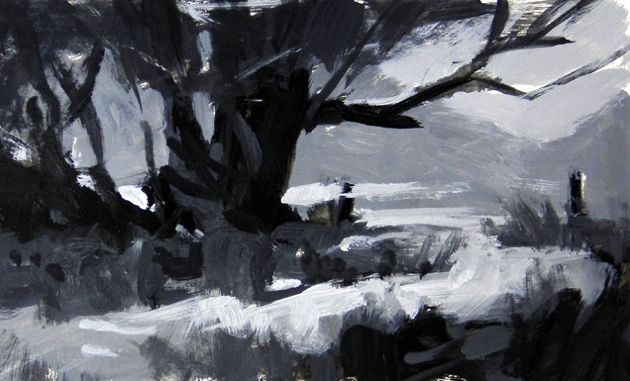
Examine various student No Tan designs to understand what makes them successful. Notice the abstract design quality and the balance in bold designs.
Identify Areas for Improvement
Observe the design with four clumps of grass in the foreground. Recognize that the regularity in size and placement can be improved for a more dynamic composition.
Pro tipLook for interesting patterns and balance in No Tan designs to enhance their visual impact.
Embark on your painting journey by focusing on a strong No Tan design. Simplify your composition by joining dark shapes and ensuring that major elements are well-placed within the frame. As you progress, maintain the integrity of your design by keeping dark shapes consistent, even as you introduce light and color.
Develop your painting with a thoughtful approach to color and texture. Use the thin to thick painting technique to add depth, and explore warm and cool color relationships to create vibrancy. Don't hesitate to start over if foundational issues arise, as a strong base is crucial for a successful painting.
As you add details, focus on creating texture and depth through gradients and varied edges. Use a palette knife to introduce randomness and avoid uniformity, ensuring your painting remains dynamic and engaging. Finally, enhance the background and add final touches to bring your scene to life, culminating in a personal signature that marks your work as complete.
Points to remember
Join dark shapes to simplify and strengthen your design.
Maintain consistency in dark shapes to preserve balance.
Use warm and cool color variations for vibrancy.
Don't be afraid to start over if the foundation is flawed.
Use a grid to accurately transfer and enlarge your drawing.
Use gradients to add depth and avoid flat areas.
Use a palette knife to add random texture and avoid uniformity.
Use minimal strokes when adding lighter values to prevent mud.