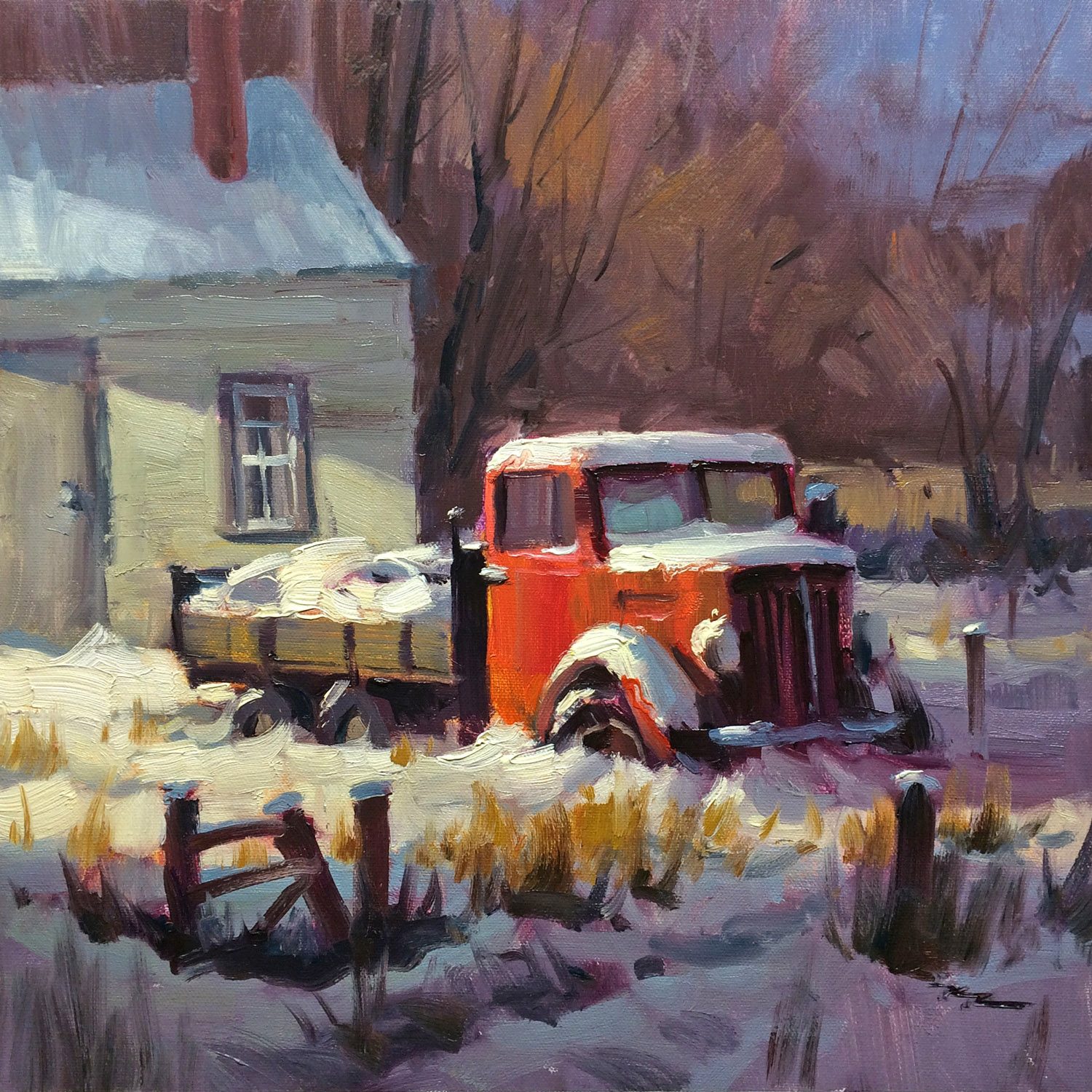
In this chapter, I invite you to join me on a creative journey to capture a classic snowy scene that simply begged to be painted. While exploring a quiet corner of Glenorchy, I stumbled upon an old Bedford truck, its weathered charm beautifully accentuated by a fresh blanket of snow. The snow transformed the scene into a visual delight, much like icing on a cake, making it irresistible to paint. Together, we'll explore how to depict snow in both sunlight and shade, creating a glowing color effect that brings the scene to life. You'll learn techniques to simplify complex details, allowing the essence of the scene to shine through. I chose a square format for this workshop to enhance the spotlight effect by subtly darkening the background and foreground, but feel free to interpret it in any format you prefer. This rewarding subject offers a wonderful opportunity to refine your skills and express your artistic vision. Let's dive in and see how this evocative scene was painted, step by step.
This guide accompanies the full video lesson. The lesson includes the complete narrated video, the printable PDF chapter, and personalised critique support.
"Snowed In" 14x14" Oil on Canvas by Richard Robinson.
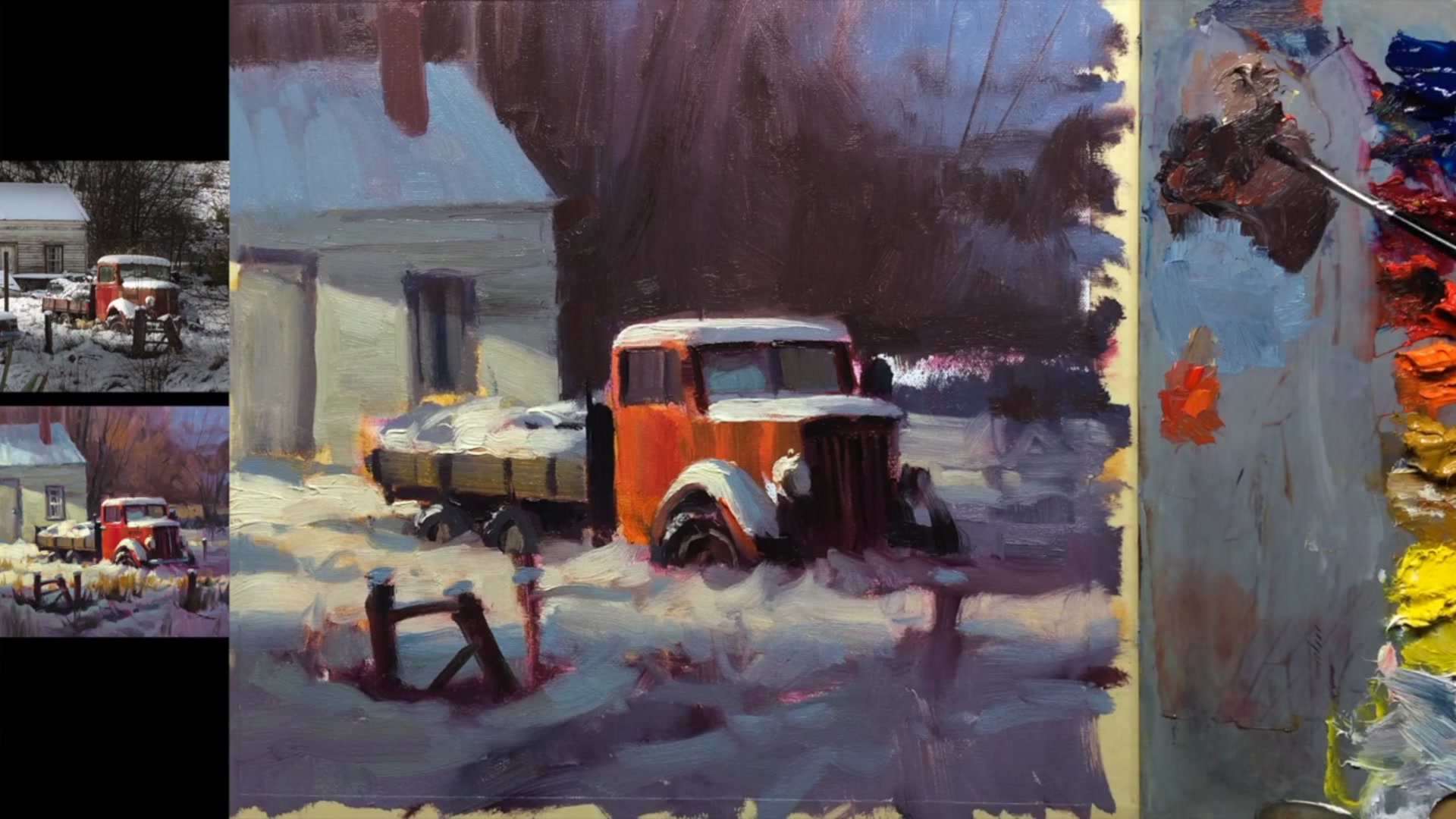
Step 16Adjusting background light and branches
Add Warmth to the Background
Use a big brush to apply a very warm grey to the background. Brush lightly to create a soft edge effect, adding warmth and light that will help define the dark side of the truck.
Experiment with Light Trunks
Mix a lighter grey and try painting some tree trunks in the background. This will help you decide if light trunks enhance the scene.
Soften the Edges
If the light trunks appear too sharp, use a soft dry brush to gently brush over them. This will soften the edges and help the branches blend into the background.
Adjust Foliage and Branches
Lighten the foliage and add a stronger color to the background. Then, paint dark branches to see if they better complement the truck.
Final Softening
If the dark branches are still too sharp, lightly whisk over them with a big soft brush. This will soften the edges and prevent them from drawing too much attention.
Pro tipUse a soft dry brush to gently soften sharp edges, helping elements blend seamlessly into the background.
As you embark on painting 'Snowed In,' begin by setting up your canvas and gathering the necessary tools and materials. Start with a thin sketch to outline the composition, focusing on the big shapes and refining them into smaller details. Use thin paint to allow for easy adjustments as you establish the scene's structure. Mix your grays thoughtfully to create a range of tones that will add depth and contrast to your painting.
Move on to establishing light and shadow, using a warm base layer to guide your subsequent applications of color. Block in the darks and background, ensuring the truck remains the focal point by contrasting it against cooler tones. As you add warmth and glow to the background, use soft edges and thin paint to maintain subtlety and depth. Focus on painting the big shapes with gestural strokes, keeping the details minimal to enhance the overall composition.
In the final stages, concentrate on the details and textures that bring your painting to life. Use broad strokes and a limited palette to maintain harmony, and remember to clean your brush frequently to keep colors vibrant. As you make final adjustments, ensure the balance between light and shadow is maintained, and use soft brushes to blend elements seamlessly into the background. With these steps, your painting will capture the serene beauty of a snowy landscape, inviting viewers into its tranquil scene.
Points to remember
Use long bristle flat brushes for broad strokes and synthetic brushes for finer details.
Sketch the composition with thin paint for easy adjustments.
Mix grays to modify colors or apply them directly on the canvas.
Use a thin mixture of yellow ochre and walnut oil to establish a warm base.
Use soft edges and thin paint to maintain subtlety in the background.
Clean your brush after each stroke to keep light colors bright.
Use a big brush to maintain gestural strokes and focus on big shapes.
Use a soft dry brush to gently soften sharp edges in the background.