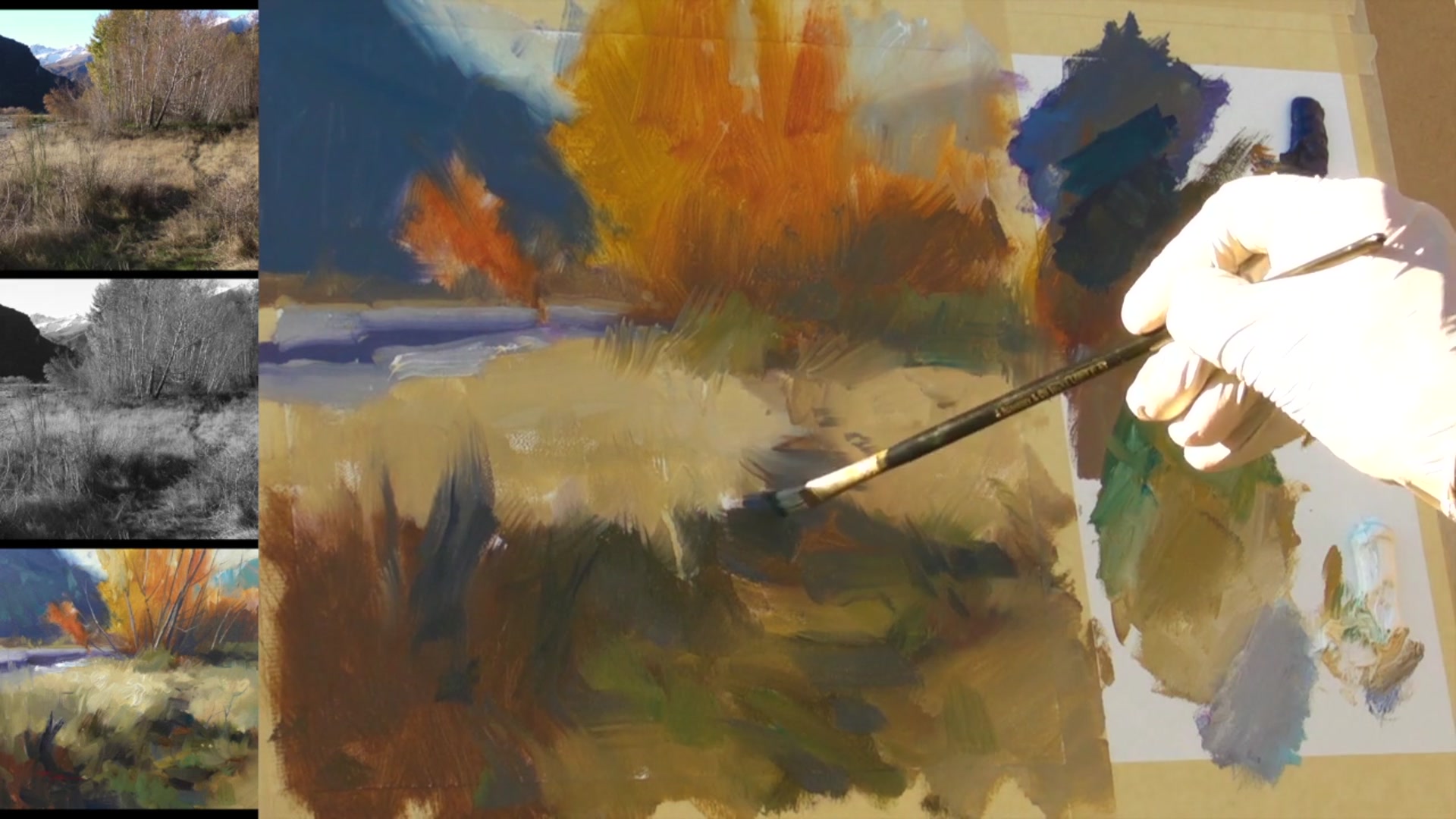
In this chapter, I invite you to join me in capturing the enchanting beauty of an autumn scene, where warm hues dance against the cool backdrop of majestic mountains. This lesson is all about embracing the vibrant colors of fall and translating them onto a 12-inch square canvas using Cobra water mixable oils from Royal Talens. With my palette of colors ready and a selection of brushes, including a synthetic flat wash brush and Rosemary & Co. bristle brushes, we'll embark on this creative journey together. I'll guide you through the process of painting en plein air, sharing my techniques and insights along the way. We'll start by sketching the large shapes of the painting, focusing on creating varied and interesting forms while planning the composition's light and dark areas. This scene is a rewarding subject, offering a rich tapestry of colors and textures to explore. Whether you follow along step by step or use the resource photo to craft something uniquely your own, I hope you'll find joy and inspiration in the process. Let's dive in and bring this autumn landscape to life on canvas.
This guide accompanies the full video lesson. The lesson includes the complete narrated video, the printable PDF chapter, and personalised critique support.
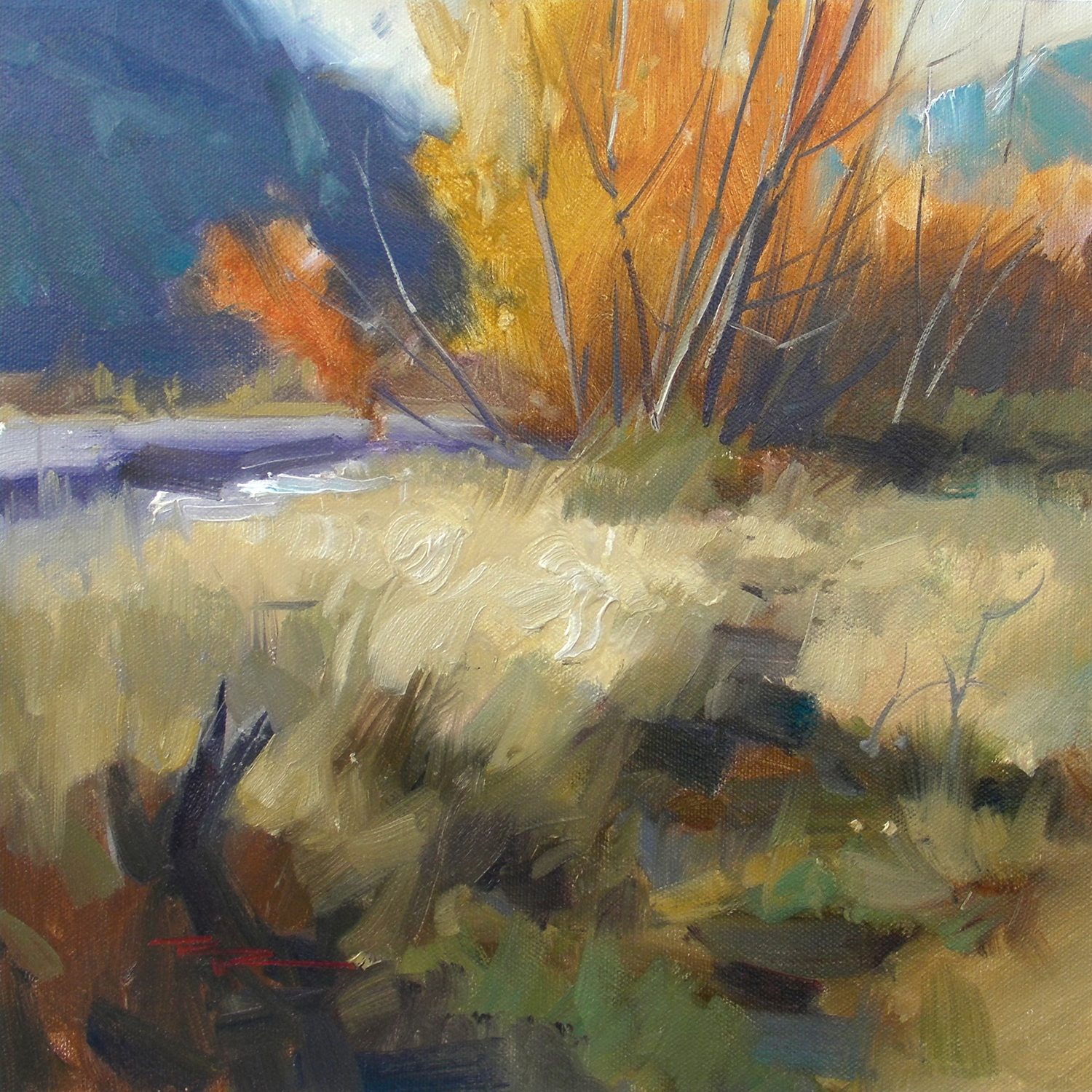
"Last to Fall" 12x12" Oil on Canvas by Richard Robinson
Step 10Tree Stump and Background Details
Add Dark Accents to Tree Stump
Apply dark accents to the tree stump in the foreground using thin paint. This helps to downplay the stump, allowing for potential adjustments or removal later.
Mix and Apply Blue-Green for Tree Tops
Mix a blue-green color that is slightly lighter than the background base. Use this to indicate the tops of some trees, adding depth and interest to the scene.
Lighten Blue-Green for Added Interest
Lighten the blue-green mix further to enhance the visual interest in the background. This subtle variation helps to create a more dynamic landscape.
Enhance Cliff Face with Rock Falls
Identify areas on the cliff face where rock falls can be added. Use these elements to break up the large dark shape and add texture and interest.
Add Stronger Blue for Sparkle
Introduce a slightly stronger blue in the corner of the painting. This will create a vibrant contrast against the orange, adding sparkle to the composition.
Pro tipUse a slightly stronger blue to create a vibrant contrast against orange, adding sparkle to your painting.
Begin your painting journey by sketching the large, interesting shapes that will form the backbone of your composition. Use a brush to plan out the dark and light areas, focusing on the autumn colors in the trees as your central element. These vibrant hues will guide the viewer's eye and set the tone for the rest of your painting.
As you progress, apply washes and layers to build depth and interest. Use a yellow ochre wash to create a vibrant base, and introduce dark greens and blue-greys to add contrast and dimension. Pay attention to the transitions and variations in color, especially in the foreground and riverbed, to maintain a dynamic and engaging scene.
In the final stages, focus on the details that bring your painting to life. Add texture to the tussock grass, refine the branches with confident strokes, and introduce highlights sparingly to enhance the composition. Remember to step back frequently to ensure your painting reads well from a distance, and make any necessary adjustments to balance light and shadow. Once satisfied, add your signature to complete your artwork.
Points to remember
Use a brush for sketching large shapes to allow for fluidity.
Focus on autumn colors as the focal point with sharp edges and detail.
Apply a thin yellow ochre wash for a vibrant color base.
Use big brush strokes for dark foreground areas to cover quickly.
Mix colors sparingly to maintain control and avoid overpowering hues.
Ensure the hill's edge is soft to create distance.
Use thick, almost white paint for a shimmering water effect.
Step back regularly to check the painting's readability from a distance.