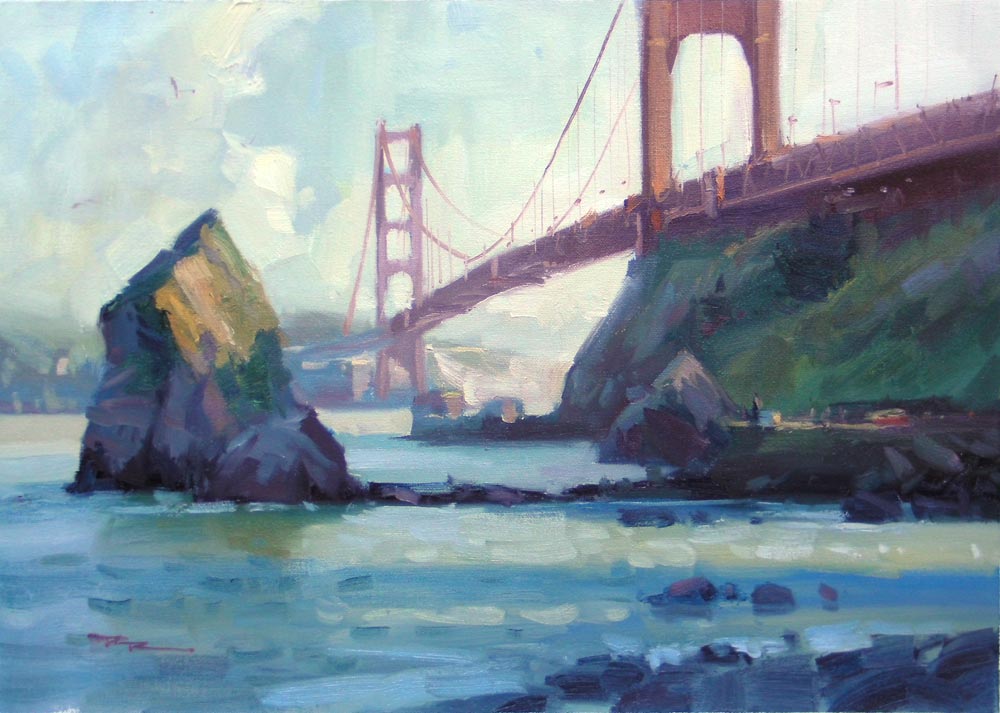
During a recent trip to San Francisco, I had the surreal experience of painting the iconic Golden Gate Bridge. It's a sight many of us have seen countless times on TV, but standing there in person, brush in hand, was truly something special. While the bridge itself is a magnificent subject, I found myself captivated by a particular rock in the scene. Its subtle colors and intriguing shapes offer a wealth of lessons for us as painters. In this chapter, we'll focus on capturing the essence of that rock, allowing it to take center stage while the bridge plays a supporting role. You'll learn how to paint convincingly solid rocks by examining their form, color, and texture. We'll start by selecting a square canvas to complement the rock's shape and integrate the bridge effectively. Through sketching and value studies, you'll gain insights into composition and balance. Approach this as a study, embracing the freedom to experiment and express yourself without the pressure of perfection. Let's explore the beauty and timelessness of rocks together.
This guide accompanies the full video lesson. The lesson includes the complete narrated video, the printable PDF chapter, and personalised critique support.
"Golden Gates" 12x16" Oil on Canvas by Richard Robinson
Step 1Designing the composition
Choose a Square Format
Select a square format for your canvas. This shape complements the rock's form and helps integrate the bridge into the composition effectively.
Plan the Composition
Bring the bridge closer to the rock in your composition. This arrangement ensures both elements are prominently featured in the painting.
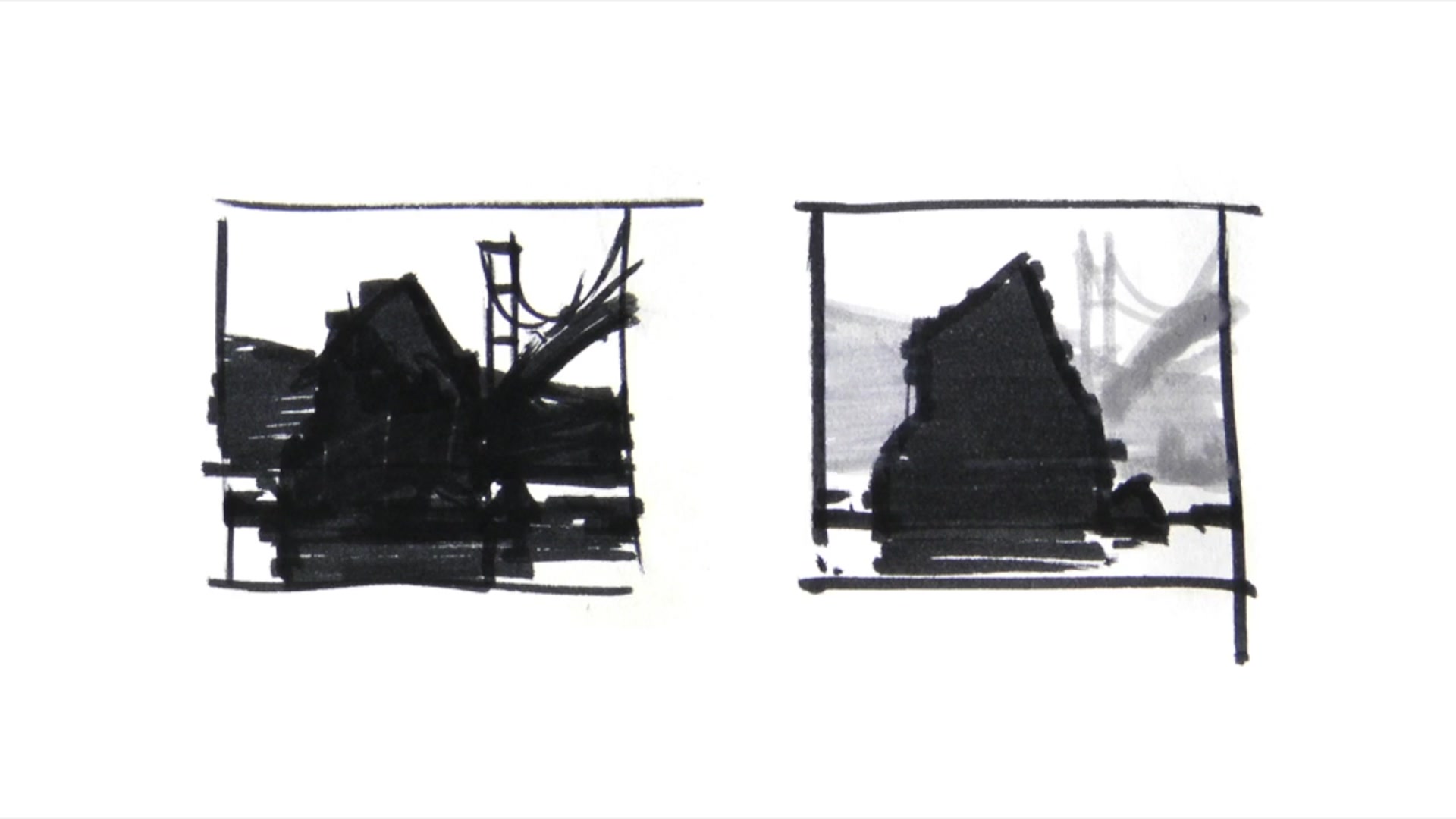
Create a Notan Design
Sketch a black and white notan design to establish the basic structure of your painting. This will help you visualize the balance of light and dark areas.
Develop a Thumbnail Sketch
Draw a small thumbnail sketch, breaking the scene into three values: foreground, mid-ground, and background. This simplifies the design and guides your value placement.
Embrace the Study Approach
Approach this painting as a study rather than a finished piece. This mindset allows you to experiment, be expressive, and take creative risks without worrying about perfection.
Pro tipUse a notan design to establish the balance of light and dark areas in your composition.
Embark on your painting journey by thoughtfully designing your composition. Choose a square format to harmonize the rock and bridge elements, and sketch a notan design to balance light and dark areas. Approach your painting as a study, allowing yourself the freedom to experiment and express creativity without the pressure of perfection.
Begin by establishing the darkest darks with a mix of ultramarine blue and cadmium red light, and layer warm grays over this base. Introduce variations in shadow grays by adjusting hues while maintaining consistent darkness. Pay attention to light reflections, especially those bouncing off surfaces like water, and gradually build up the light side with subtle transitions and vibrant greens.
As you refine your painting, maintain a consistent light pattern and avoid overly bright highlights to preserve the scene's believability. Use the edge of your brush for precise dark accents and blend colors harmoniously in the water and sky. Finally, employ a palette knife for organic textures, ensuring your colors remain pure and vibrant.
Points to remember
Use a notan design to establish the balance of light and dark areas.
Keep the dark passages thin to prevent them from standing out too much.
Maintain consistent darkness in shadow greys while varying their hue.
Pay attention to subtle changes in value caused by light reflecting off surfaces like water.
Leave small spaces for rocks when applying foliage colors to maintain a natural look.
Avoid overly bright highlights on rocks to maintain a believable light pattern.
Use the crisp edge of your brush to create fine lines without needing a smaller brush.
Clean the palette knife between strokes to keep the color pure.