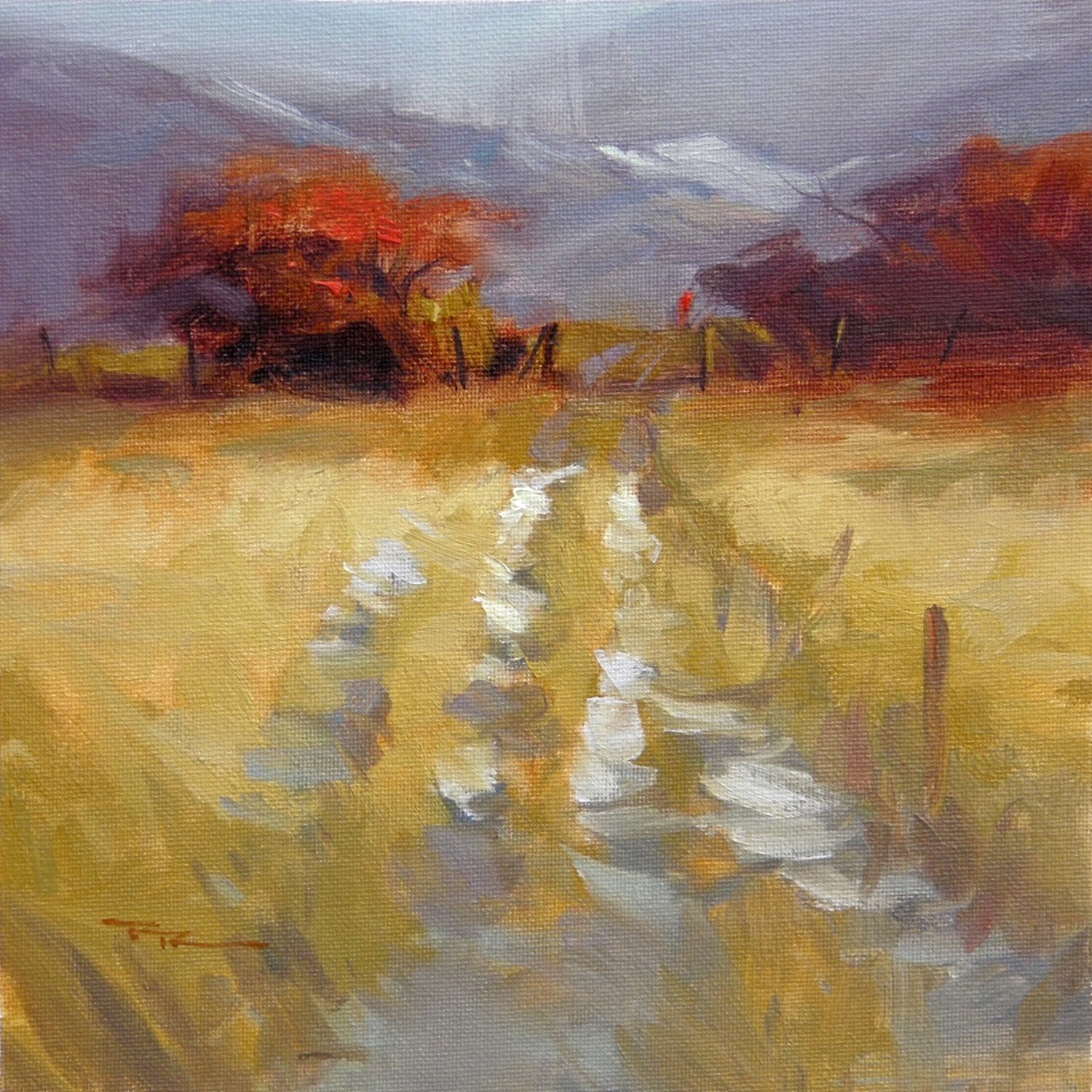
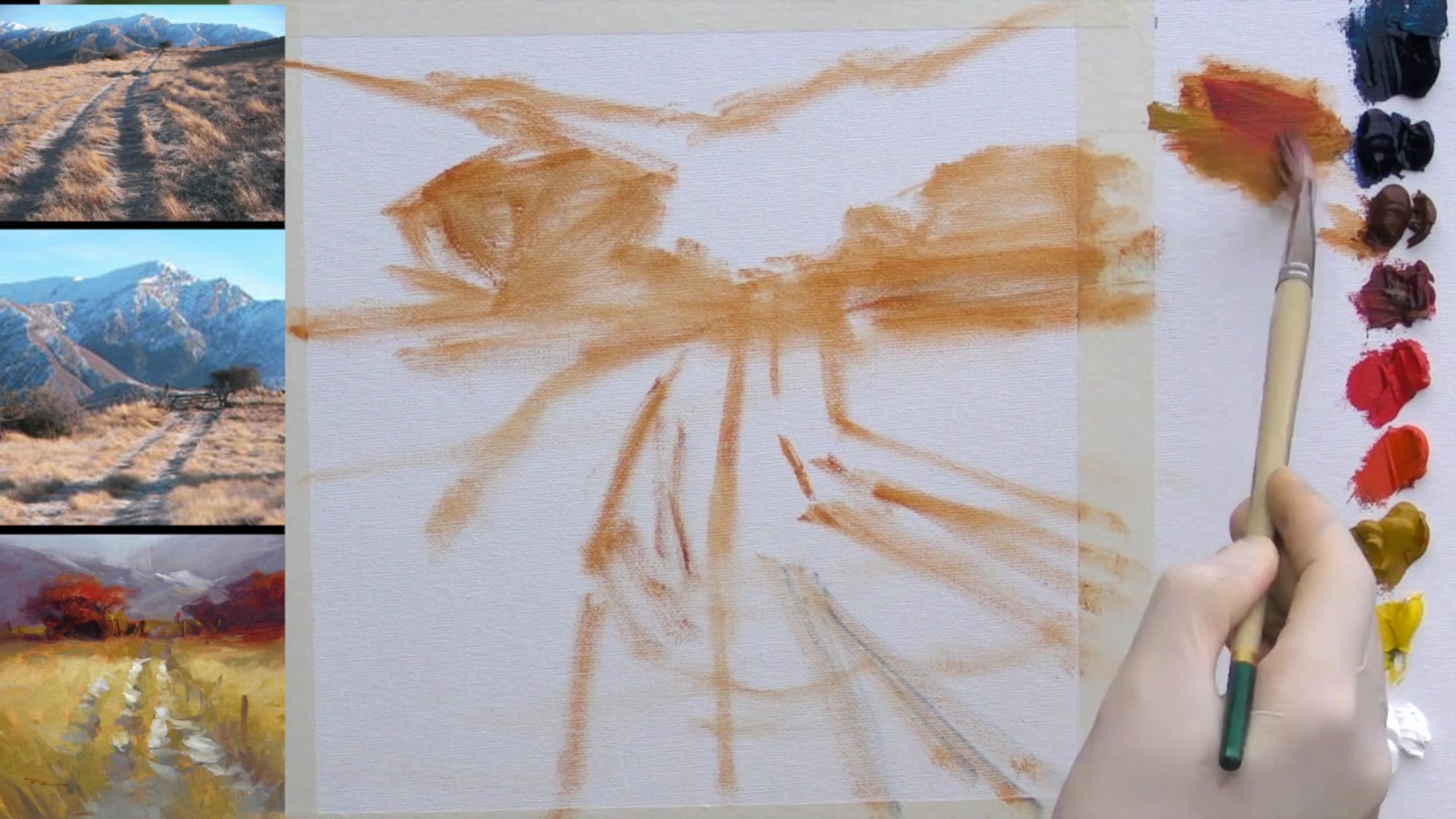
Welcome to this chapter, where we explore the vibrant interplay of color in a stunning scene from the Crown Range overlooking Arrowtown in New Zealand's South Island. This breathtaking location offers a perfect canvas for experimenting with color contrasts. In this lesson, we'll delve into the art of balancing vibrant hues with more subdued, greyed tones to achieve a tasteful and harmonious composition. The simplicity of the scene allows us to focus on pushing the boundaries of color, particularly by contrasting the strong colors of the foreground with a muted background. As you follow along, you'll learn how to enhance your painting's mood by selectively emphasizing certain colors, such as bringing out the reds while softening the background. This approach not only adds depth but also guides the viewer's eye through the painting. Whether you choose to replicate my interpretation or create your own, the goal is to master the delicate balance between vibrancy and subtlety. Happy painting!
This guide accompanies the full video lesson. The lesson includes the complete narrated video, the printable PDF chapter, and personalised critique support.
"Mountain Path" 11x11" Oil on Canvas by Richard Robinson
Step 7Laying Down Darkest Darks
Mix Darkest Dark
Create a dark warm grey by mixing burnt sienna with a touch of blue, red, and a tiny bit of yellow ochre. Add linseed oil to thin the mixture.
Apply Darkest Dark
Brush the dark warm grey quickly at the base of the trees, extending the strokes past the intended area. This will allow for blending with the next layer of paint.
Add Lighter Warm Grey
Mix a slightly lighter warm grey and apply it to the shadow areas. This serves as a base to work with for further layers.
Pro tipExtend brush strokes past the intended area to allow for easier blending with subsequent layers.
Embark on your painting journey by experimenting with color variations to set the mood and tone of your piece. Begin with a basic sketch using a thin blend of linseed oil and burnt sienna, establishing major shapes and a balanced composition by dividing your canvas into thirds. As you progress, focus on creating a natural, organic feel by breaking up straight lines and ensuring asymmetrical balance with varied shapes and sizes.
Pay attention to the interplay of light and shadow, particularly in the grass and snow, to add depth and realism. Use a combination of warm and cool grays to subtly define these areas, and ensure your brush strokes vary in direction for added texture. As you block in the sky and background, maintain soft edges to enhance the mysterious atmosphere and keep the focus on the main subject.
In the final stages, refine details by adding texture and contrast to trees and enhancing the foreground with light and shadow. Use a light touch to introduce color variations without disturbing underlying layers, and consider the composition when adding your signature. With these techniques, your painting will capture the viewer's eye and convey a sense of depth and balance.
Points to remember
Feel free to play with colors to achieve the desired effect.
Divide the canvas into thirds to create a balanced composition.
Avoid dividing the canvas in half vertically or horizontally.
Vary the size and shape of elements to create asymmetrical balance.
Ensure the mountain line is either above or below the bushes.
Use soft edges in the sky to enhance the mysterious atmosphere.
Focus shadows on the left sides of grass clumps for a natural light effect.
Use a thin rigger brush to achieve a ramshackle look for fence posts.