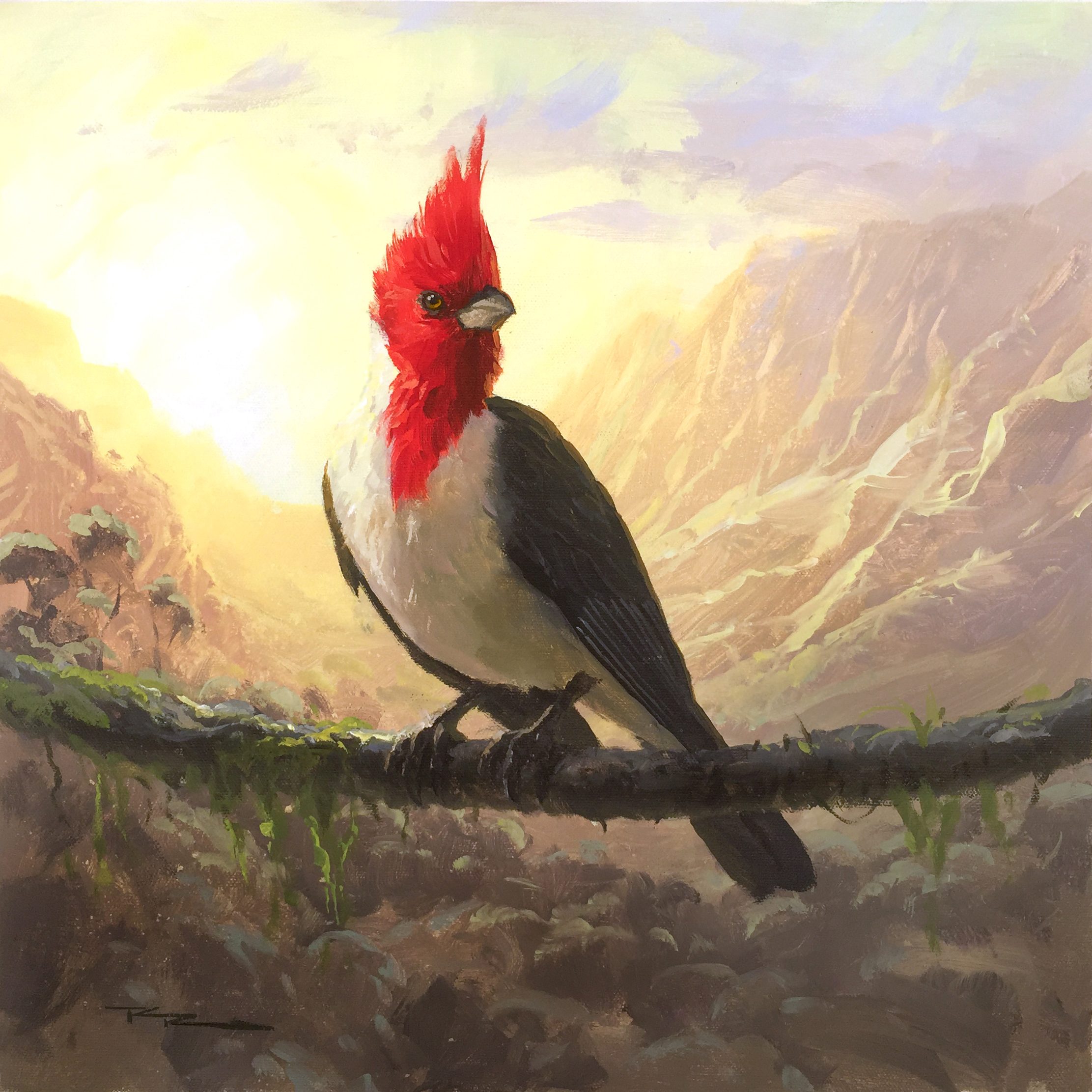
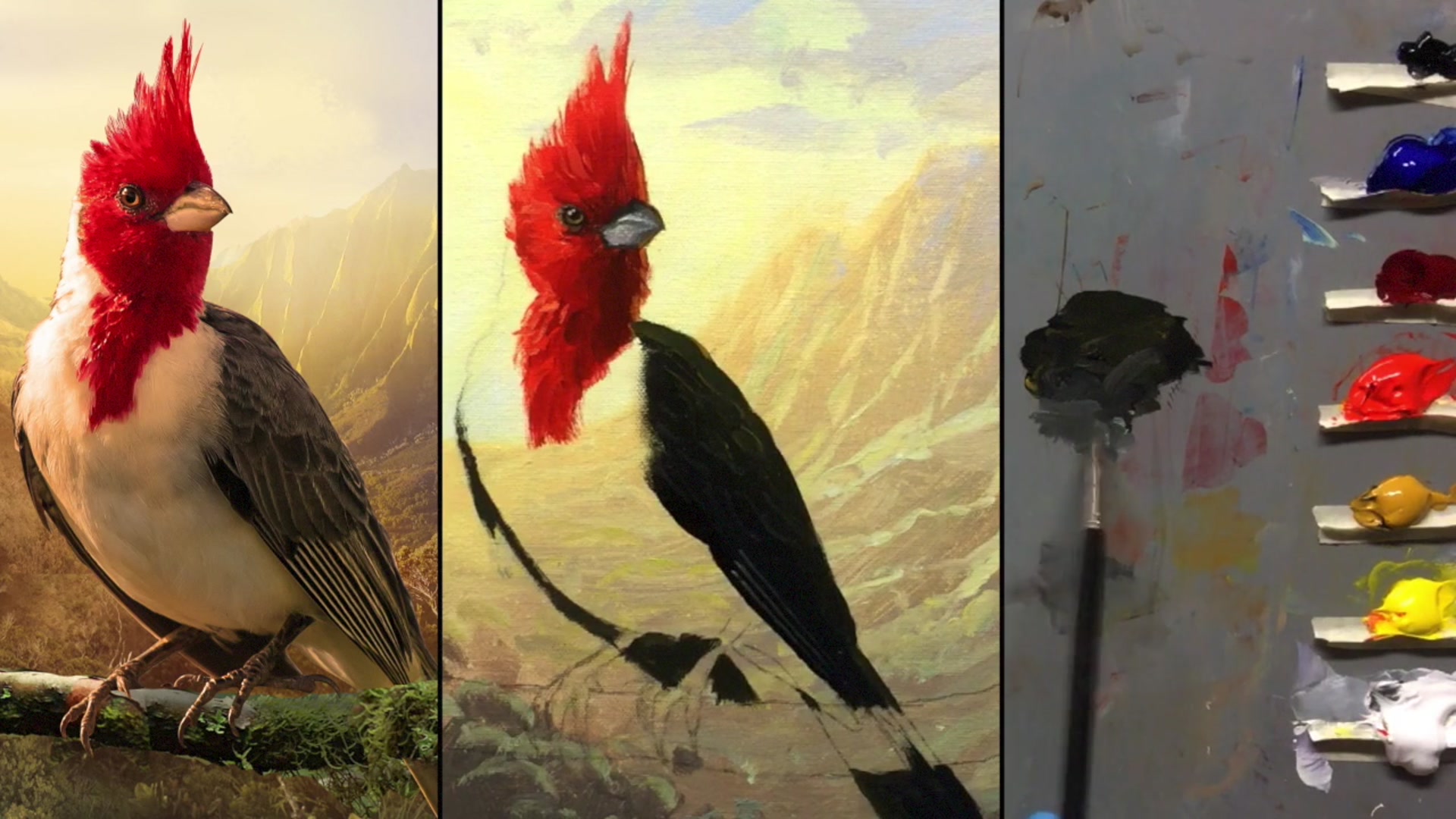
While working on some pieces for my gallery in Hawaii, I stumbled upon a captivating photograph by David Lennard of a red-crested cardinal. This stunning songbird, native to South America and introduced to Hawaii, inspired me to imagine it perched in the breathtaking Kalalau Valley on Kauai. With a bit of creative photoshopping, I combined elements from various photos to create a scene that truly captures the essence of this beautiful bird in its new habitat. In this chapter, I'll guide you through the process of painting this environment portrait on a smaller scale, using a 16-inch canvas. We'll explore how to craft a glowing background that enhances the cardinal's vibrant presence, and I'll share simple techniques for achieving intricate details. Whether you follow my steps closely or adapt the techniques to create your own masterpiece, you'll find this scene a rewarding subject that combines the allure of nature with the joy of painting. Let's embark on this artistic journey together and bring the red-crested cardinal to life on canvas.
This guide accompanies the full video lesson. The lesson includes the complete narrated video, the printable PDF chapter, and personalised critique support.
"Kalalau Opera 2" 16 x 16" Acrylic on Canvas by Richard Robinson.
Step 12Painting the bird's body
Prepare Your Brush Technique
Hold the brush at the back to minimize handshakes affecting the brush tip. Place the brush on the canvas gently, allowing it to glide down without pressure. Consider using a Rigor brush for more precision.
Add Shadows
Carefully apply black to create shadows where the feathers separate. Look for areas where shadows naturally occur to add depth to the painting.
Mix and Apply Base Colors
Start with greys modified with other colors: yellows and greens for the lower body, reds and yellows for the upper body. Mix black, white, and a little yellow ochre for the darker areas. Add more black for shadows under sections.
Introduce Highlights
Add bright yellow with a touch of white to create soft edges. Squint at your subject to see the big shapes and adjust colors. Add a touch of red near the head to reflect the influence of the red feathers.
Refine with Light and Detail
As you move up the body, add more white to lighten the area. Clean the brush and use white and yellow for the brightest spots. Use the tip of the brush or a Rigor brush to create tiny feathers catching the light.
Pro tipSquint at your subject to better see the big shapes and subtle color shifts.
Embark on your painting journey by preparing your canvas with care. Begin with a smooth surface by applying gesso and lightly sanding it down. Select a range of brushes, including flat and filbert brushes, to give you the versatility needed for different textures and details. As you start painting, keep your canvas and paints moist to achieve smooth blends and vibrant colors.
Create a glowing light effect by layering colors and maintaining moisture on your canvas. Progress to painting the landscape, using gestural strokes to build depth and dimension. Pay attention to the natural flow of colors, from the warm glow at the center to the cooler tones at the edges. Add clouds and landscape details, ensuring they integrate seamlessly with the background for a harmonious composition.
As you bring the red-crested cardinal to life, focus on the intricate details of its feathers, eye, and beak. Use a combination of bold and subtle strokes to capture the bird's vibrant colors and delicate features. Carefully position the bird on a branch, ensuring natural placement and realistic anatomy. Finish with the bird's feet and the branch, adding shadows and highlights to enhance the overall realism of your painting.
Points to remember
Always sand the canvas lightly after applying gesso for a smooth surface.
Use a long rigger brush for intricate details.
Keep the canvas and paints wet to create smooth blends with acrylics.
Add a touch of yellow to cloud colors to harmonize them with the sky.
Join dark shapes into larger ones to avoid a bitsy look and create shape harmony.
Use a filbert brush for highlighting tree tops, as its curved shape naturally follows the foliage contours.
Squint at your subject to better see the big shapes and subtle color shifts.
Use a Rig-A-Brush to add fine details and highlights to the bird's feet.