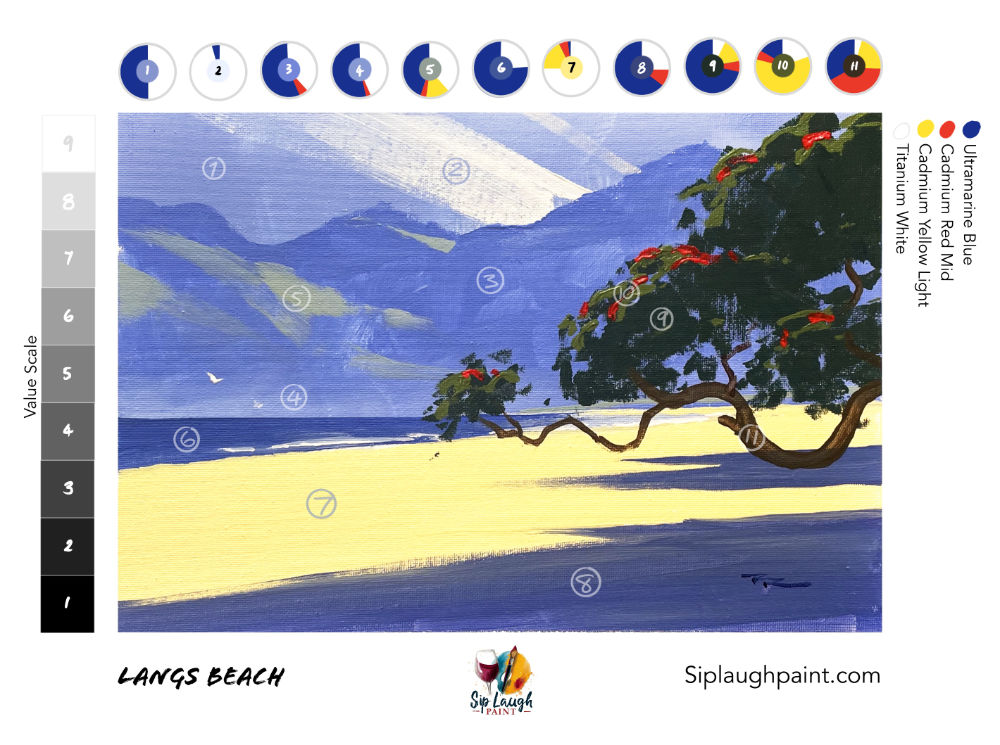
Welcome to this exciting chapter where we dive into painting the beautiful Langs Beach, a scene that holds a special place in my heart. After spending four months exploring New Zealand in my trusty camper, I felt a strong urge to reconnect with my community upon returning to Waipu. This led me to start the Sip Laugh Paint classes, where our first subject was the stunning Langs Beach. In this lesson, you'll learn to create your own masterpiece on a 12 by 8 inch canvas, though you can adjust the size to your preference. We'll explore the use of different brushes, from a one-inch flat brush for broad strokes to a filbert brush for the intricate details of the Pohutukawa tree. This scene is a rewarding subject because it combines vibrant colors and dynamic forms, allowing you to express your unique style. As you follow the step-by-step guidance, you'll discover the joy of painting and perhaps surprise yourself with your artistic abilities. So, gather your materials, invite a friend, and let's enjoy the creative journey together!
This guide accompanies the full video lesson. The lesson includes the complete narrated video, the printable PDF chapter, and personalised critique support.
Wet your brush and mix a really dark brown-gray using blue, red, and a bit of yellow. Avoid any white from other mixtures. Add enough water to make the paint fluid but not too thin, ensuring it covers the canvas without blobs.
Load the Brush
Remove any excess paint by wiping off the outside of the brush. Ensure the brush is loaded with a controlled amount of paint for creating thin lines.
Paint the Trunk
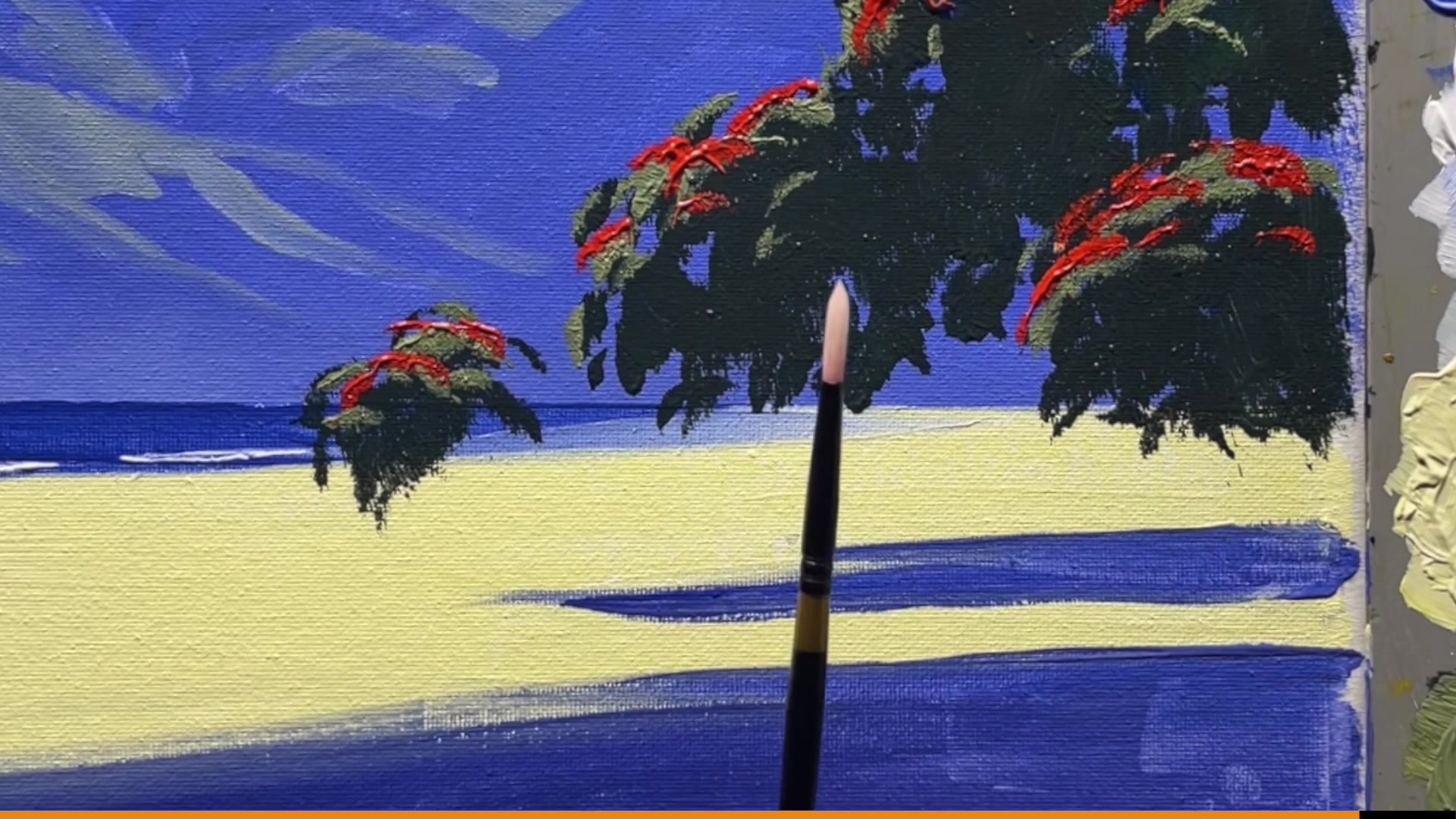
Start on the tape and paint a wobbly U shape, pressing down hard and wriggling as you go. The trunk should start thick and get thinner as you run out of paint. Reload the brush if necessary.
Maintain Brush Position
Keep the brush perpendicular to the canvas and use just the tip to avoid creating fatter marks. Adjust the pressure to make the line thinner as needed.
Add Branches
Squiggle along the trunk, extending thinner lines for branches. Use less pressure for thinner lines. If needed, switch to a small pointy brush for finer details and add a few branches, including broken ones and some inside the tree.
Pro tipKeep the brush perpendicular to the canvas to maintain control over line thickness.
Embark on your painting journey with confidence, knowing that each brushstroke is a unique expression of your creativity. Begin by selecting the right brushes for broad strokes and fine details, and embrace the individuality of your work. As you mix colors, aim for subtlety and precision to capture the essence of your subject, from the delicate sky and clouds to the vibrant Pohutukawa tree.
Maintain your tools with care, ensuring your brushes are clean and ready for each step. As you sketch and paint the landscape, allow your imagination to guide the shapes and forms, adding interest and depth with varied hill heights and misty gradients. Pay attention to the interplay of light and shadow, using complementary colors to achieve a natural look.
As you add the final touches, from the shimmering ocean waves to the intricate details of the tree, remember to let your creativity flow freely. Each element, from the beach to the tree, contributes to the overall harmony of your painting. Celebrate the completion of your artwork, knowing that it reflects your personal style and artistic journey.
Points to remember
Choose the right brush for each task, from broad strokes to fine details.
Mix colors with subtlety, using mainly white for clouds and a hint of blue.
Regularly clean your brushes to maintain their shape and performance.
Vary hill heights and shapes to create visual interest in your landscape.
Mix enough paint initially to cover large areas without interruption.
Use quick, varied brushstrokes for textures in clouds and foliage.
Ensure the background is dry before adding new elements like trees.
Let your creativity flow in activities like the Doodle Dash, embracing imperfection.