In this chapter, I invite you to explore the vibrant world of hay bales, a scene rich with light, color, and movement. This beautiful provincial landscape offers a perfect opportunity to delve into the art of creating movement with bold brushwork and shimmering broken color. As we paint, we'll focus on capturing the essence of the scene using just two brushes and six colors, keeping our approach simple yet effective. You'll learn how to use impressionistic techniques to infuse your work with dynamic energy, reflecting the interaction of wind with elements like grass and trees. This project is all about enhancing the vibrancy and mood of the landscape by adjusting hues and intensities. I hope you'll find joy in applying these techniques to your own paintings. Remember, the key is to have fun and let your creativity flow. So grab your brushes, dive into the lesson, and don't forget to check the online resource page for additional guidance. Happy painting!
This guide accompanies the full video lesson. The lesson includes the complete narrated video, the printable PDF chapter, and personalised critique support.
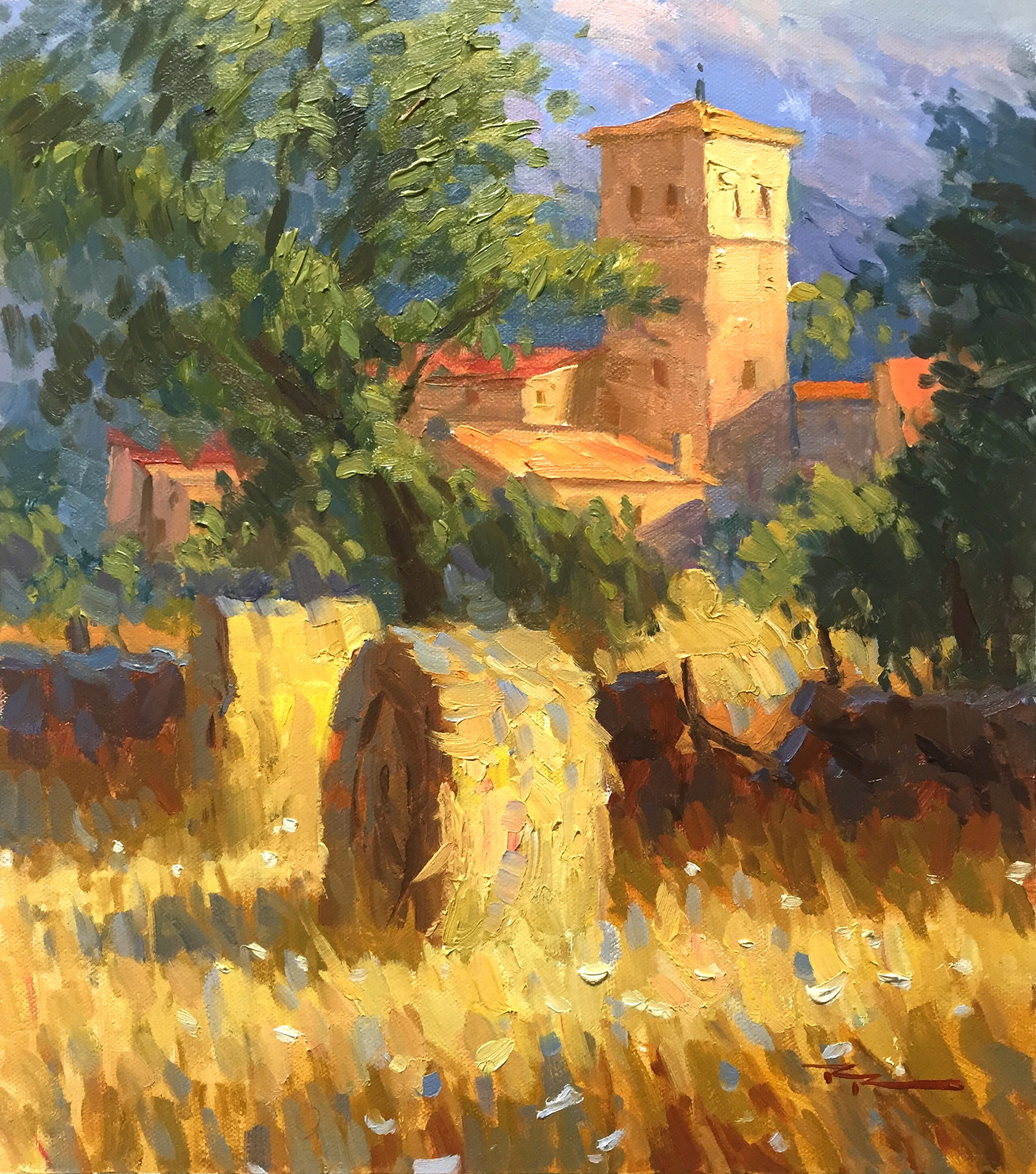
"Hay Bales" 11.5 x 13" Oil on Canvas by Richard Robinson.
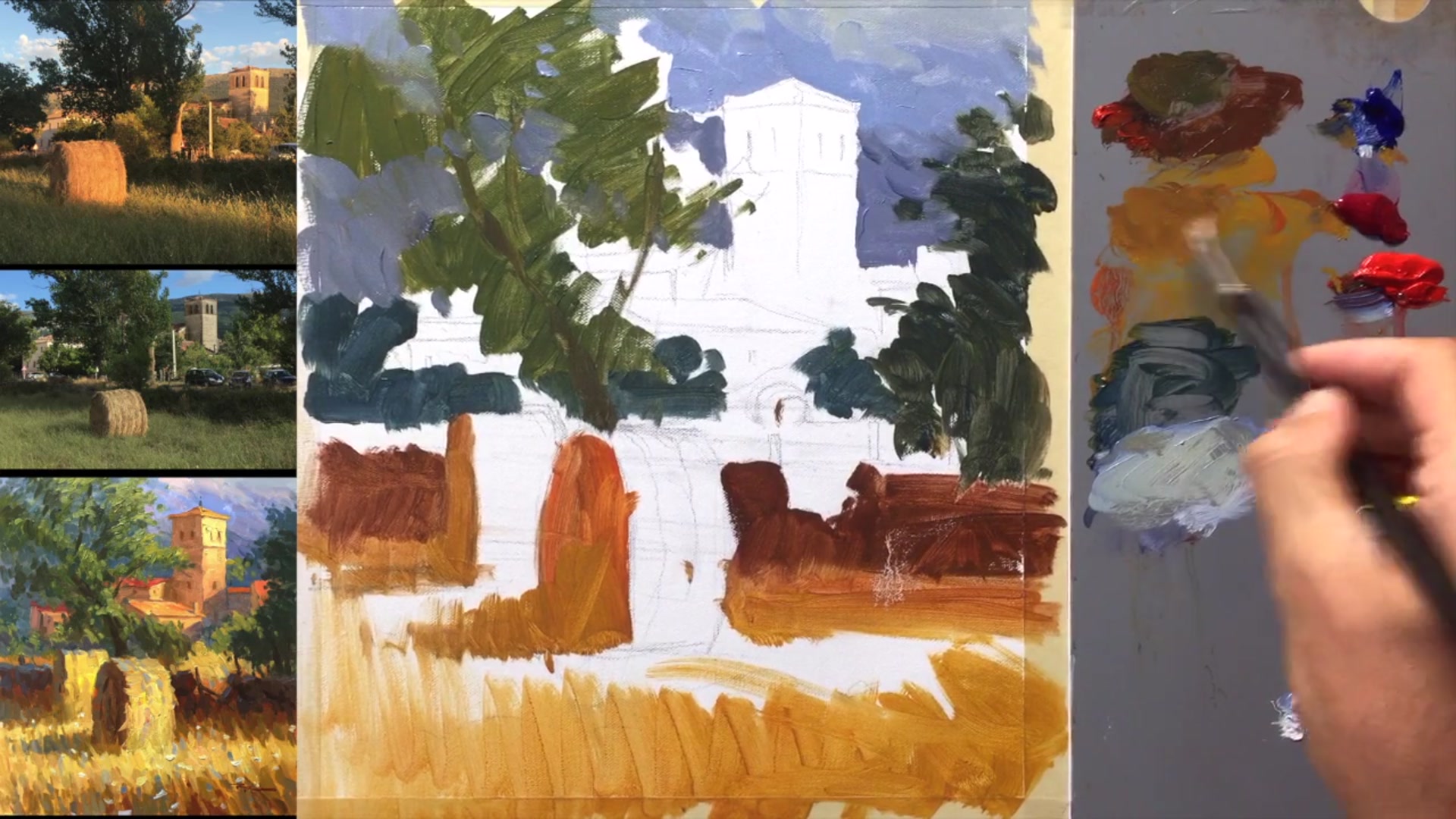
Step 11Shadow Side of the Tower
Mix Shadow Color
Mix a mid-value grayish brown for the shadow side of the tower. This will create a subtle contrast with the lighter areas you'll add later.
Preserve Light Areas
Leave some white spots around the trees to reserve space for painting the lights later. This ensures that the light colors remain vibrant and do not get muddied by the dark tones.
Pro tipLeave room for the lights to keep colors vibrant and avoid muddiness.
Embark on your painting journey by carefully observing your scene and capturing its essence through vibrant colors and dynamic brushwork. Begin with a well-prepared canvas, ensuring it is primed with gesso for optimal paint adhesion. Use expressive strokes to convey movement, guiding the viewer's eye across the landscape.
As you progress, focus on the interplay of light and shadow to bring depth and realism to your composition. Carefully block in dark areas and use mid-tones to transition smoothly between shadows and highlights. Pay attention to the details, such as the texture of hay bales and the form of trees, to enhance the overall impact of your painting.
In the final stages, refine your painting by adding precise details and ensuring the edges are well-defined. Use thick, bold brush strokes to add texture and interest, and vary your color palette to create a vibrant and engaging scene. Remember to leave room for light areas to keep colors vivid and avoid muddiness. With these techniques, your painting will capture the beauty and movement of the landscape, inviting viewers to explore its depths.
Points to remember
Use expressive brushstrokes to capture movement in your landscape.
Always apply gesso to your canvas for better paint adhesion.
Use a center line to accurately draw ellipses, ensuring realism.
Use only Gamsol and synthetic brushes for thick, expressive brushwork.
Start considering brushwork direction early for cohesive composition.
Vary the angles of branches and leave gaps to suggest foliage.
Keep the background and sky at a mid-value for contrast.
Reload your brush after every stroke to maintain bold texture.