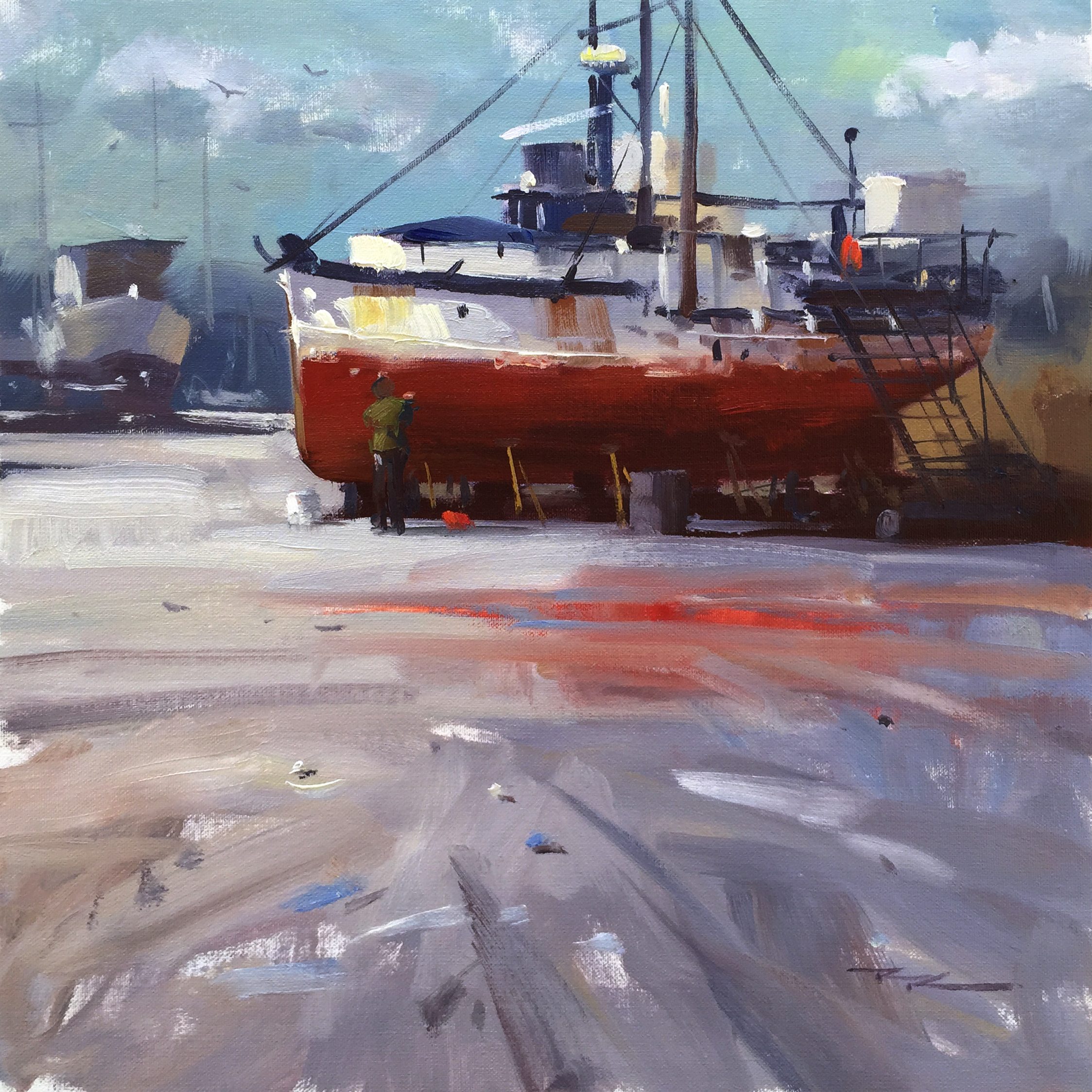
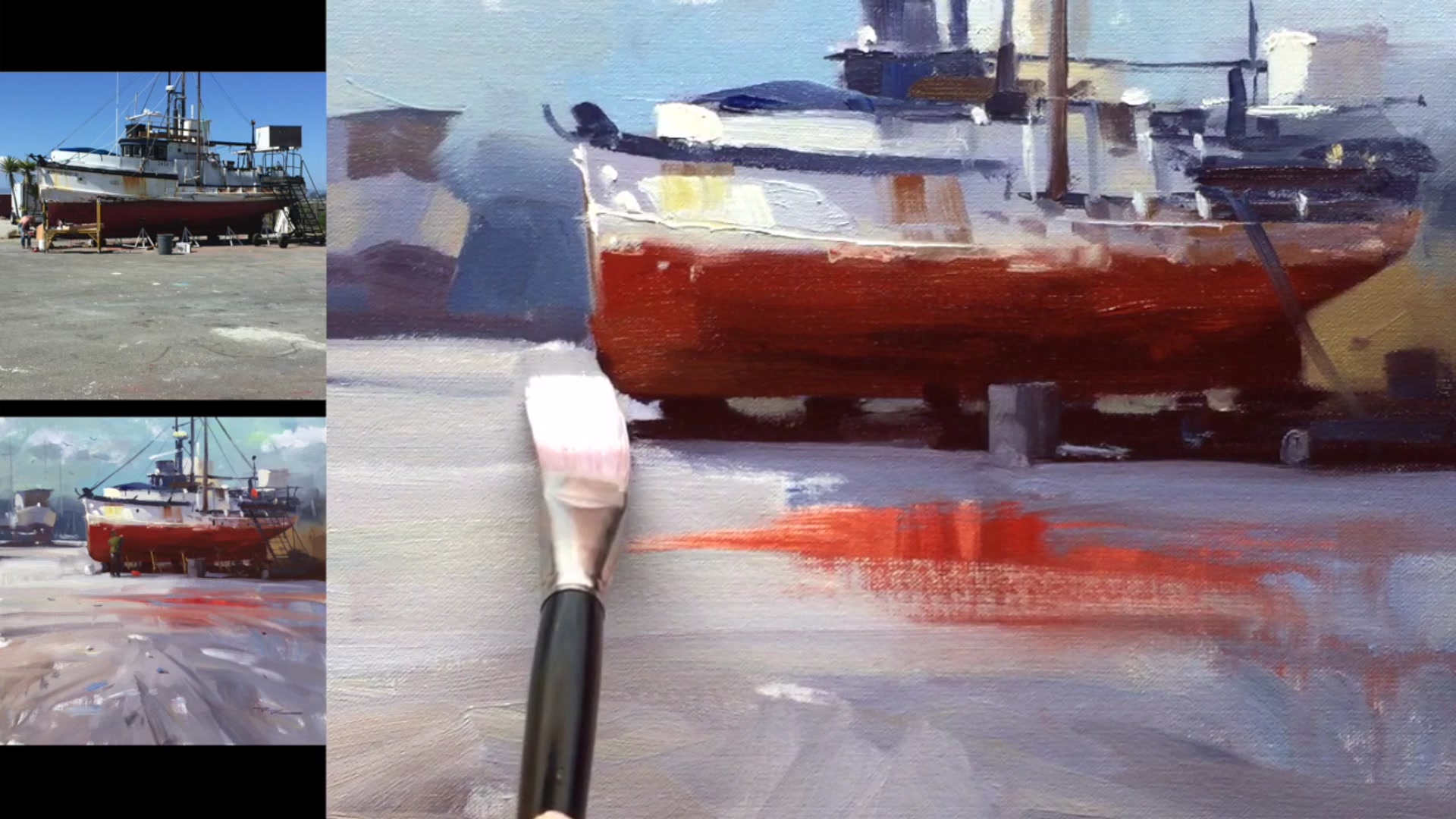
Welcome to Moss Landing on the Californian coast, a charming boatyard filled with beautiful vessels. Today, we're focusing on an old fishing boat in for repairs, a scene that offers a rewarding challenge for any painter. In this chapter, I'll guide you through capturing the essence of this classic boat scene using broad, gestural brushwork. We'll start by painting big, beautiful shapes and learn how to adjust the colors within them. Then, we'll add those crisp finishing details that bring the whole composition to life. One of the key techniques we'll explore is creating a splashy, impressionistic foreground that draws the viewer's eye into the intricate details of the boat. This approach not only enhances your painting's depth but also adds a dynamic quality to the scene. Whether you follow my steps closely or use the resource photos to create something uniquely yours, this lesson will enrich your painting skills and deepen your appreciation for the art of capturing maritime beauty.
This guide accompanies the full video lesson. The lesson includes the complete narrated video, the printable PDF chapter, and personalised critique support.
"Boat Repairs" 14 x 14" Oil on Canvas by Richard Robinson.
Step 11Adding Details with Rig-A-Brush
Create Crisp Details
Switch to a smaller brush to achieve crisp, smaller brush strokes. Use a darker paint mixture to add details like tire tracks leading into the scene. This will add interest and depth to your painting.
Add Foreground Texture
Consider adding a splash of blue paint to the foreground for texture. You can use impasto technique with thick paint to create dynamic, textured areas. Feel free to experiment with splattering paint for a more expressive look.
Paint Soft Clouds
Use a dry brush technique to add clouds with soft, broken edges. Mix white with a little blue to achieve a light, airy cloud effect. This will enhance the sky and add contrast to your painting.
Detail the Boat
Add details to the boat, such as an orange life preserver at the back. This creates a lovely color spot and draws attention. Use a dark mixture of blue, red, and a touch of yellow ochre for shadows and depth.
Enhance with Shadows
Use the rigour brush to create elegant lines and add light spots with drop shadows. These shadows will make elements pop and add a realistic touch from a distance.
Pro tipUse a rigour brush to add elegant lines and enhance details with drop shadows for a realistic touch.
Embark on your painting journey by preparing your materials and setting the stage for a vibrant composition. Begin by mixing your white paint to the right consistency, ensuring it flows smoothly across your canvas. Establish the foundational shapes with light, confident strokes, setting the framework for your scene. As you progress, focus on the interplay of light and shadow, using rich, dark tones to define the hull of the boat and subtle reflected lights to add depth and dimension.
As your painting evolves, pay attention to the harmony of colors and the balance of shapes. Use a variety of brush techniques to create texture and interest, from the roughness of the boat's surface to the soft, receding edges of the distant land. Incorporate mid-value tones to build form and add character, ensuring each element contributes to the overall composition.
In the final stages, refine your painting with precise details and highlights that bring it to life. Use a palette knife for crisp lines and a rigour brush for elegant details, enhancing the realism and narrative of your scene. Add figures and seagulls to inject movement and vitality, ensuring your painting tells a compelling story. Remember, each stroke is an opportunity to express your artistic vision and bring your scene to life.
Points to remember
Add more oil to your white paint for better pliability.
Draw big shapes lightly with pencil or charcoal.
Thin paint with Gamsol for smooth application.
Use walnut alkyde medium to maintain paint thickness.
Extend brush strokes past edges for flexibility.
Soften background edges to enhance foreground focus.