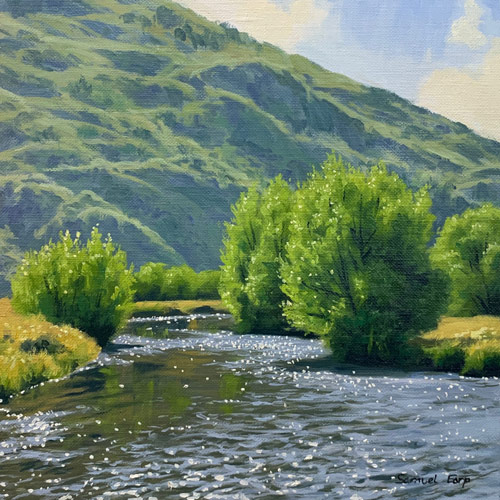
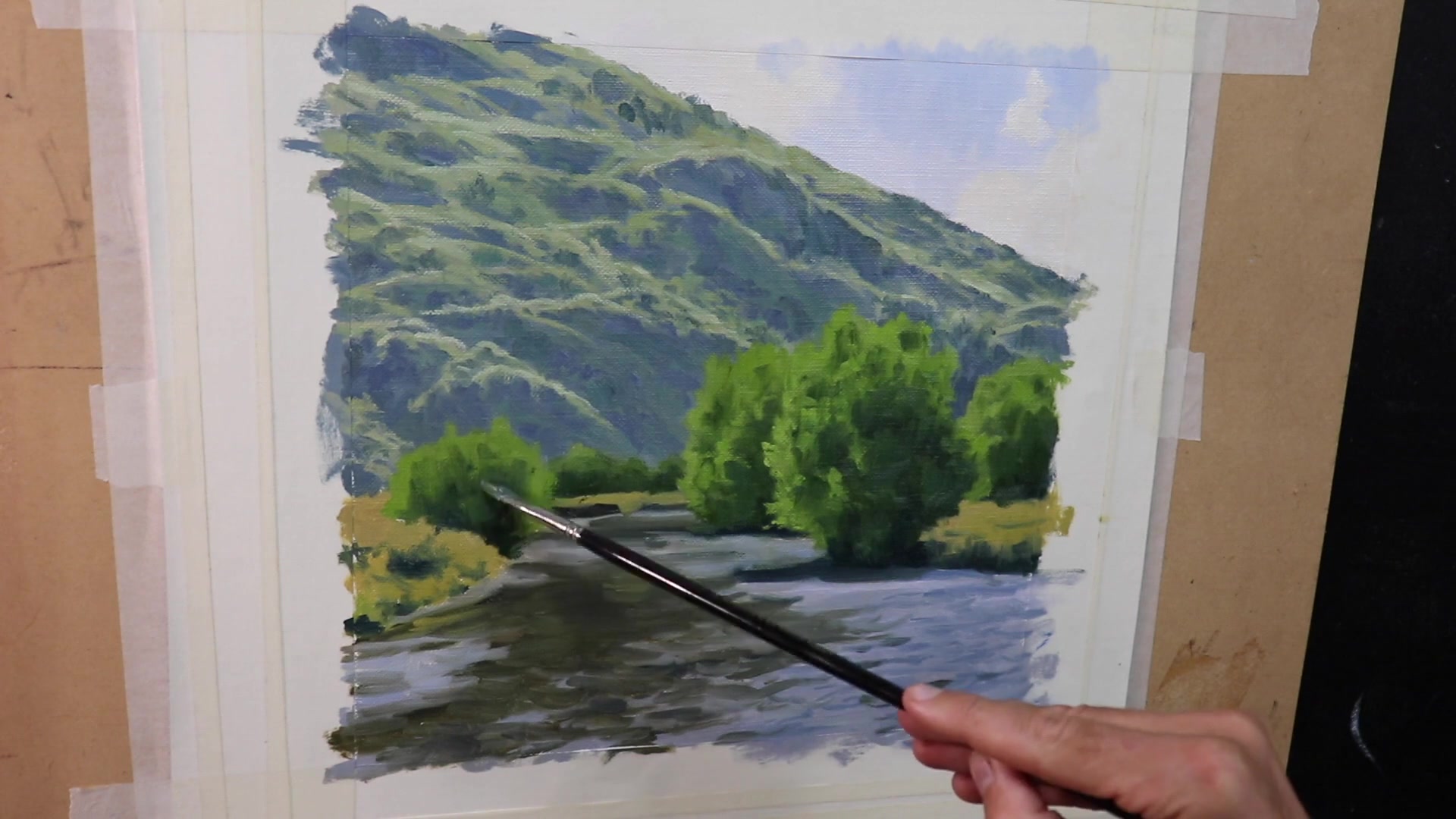
In this chapter, we'll explore the serene beauty of a summer landscape featuring graceful willow trees and a shimmering river under the bright sun. The scene is set with a simple yet effective composition, utilizing an S-shaped curve that guides the eye through the painting, suggesting rhythm and flow. This approach often results in the most compelling landscapes, as it avoids unnecessary complexity. The willow trees stand as a focal point, embodying the essence of summer with their lush foliage. The distant mountains, rendered in lighter tonal values, add an element of grandeur and atmospheric depth, enhancing the illusion of height. Throughout this lesson, I'll guide you in mixing vibrant greens and capturing the play of sunlight on water, all while infusing art theory into our practice. By the end, you'll not only recreate this tranquil scene but also gain techniques applicable to your own artistic endeavors. Whether you choose oil or acrylic paints, this project promises to be both rewarding and enlightening, offering a perfect blend of challenge and enjoyment for your painting journey.
This guide accompanies the full video lesson. The lesson includes the complete narrated video, the printable PDF chapter, and personalised critique support.
Use a mix of ultramarine blue, yellow ochre, and a little burnt sienna to create a dark value color. Reinforce the edges of the riverbanks with this mix to add more detail and definition.
Paint the River Reflections
Start with the still areas of the water, reflecting the background hill and vegetation. Use a greenish-brown color by adding detail with the same mix used for the riverbanks. Adjust the colors as needed while working.
Add Ripples and Reflections
Use a number three filbert brush to add ripples and reflections in the water. Lighten the mix with titanium white to create a lighter value. Incorporate subtle reflections from the foreground grass using a mix of yellow ochre, ultramarine blue, and titanium white, with more yellow ochre added.
Adjust Values as Needed
If the water appears too dark, lighten the value by adding more titanium white. Adjust the colors as necessary to achieve the desired effect, taking advantage of oil paint's forgiving nature.
Pro tipUse a number three filbert brush for adding ripples and reflections, as its rounded edge is perfect for this detail work.
Embark on your painting journey by preparing a stable canvas and selecting your preferred medium. Whether you choose oil or acrylic, ensure your surface is ready for the vibrant colors of a summer landscape. Begin by sketching your composition with a burnt sienna base, setting the stage for a harmonious palette that will bring your scene to life.
As you progress, focus on establishing values and shadows, using ultramarine blue to unify the elements of your painting. Build depth by varying the value scale between foreground and background, and mix colors thoughtfully to achieve natural tones. The key is to maintain color harmony across different zones, ensuring a cohesive and visually appealing result.
In the final stages, refine your painting by blending colors smoothly and adjusting values to enhance depth and contrast. Gradually build up lighter layers to add dimension, and restate shadows to bring out the three-dimensional form of your landscape. Remember to save the lightest highlights for the end, allowing your painting to truly come alive with the brilliance of summer sunlight.
Points to remember
Use a manageable canvas size of around 12x12 inches.
Employ a limited palette to maintain color harmony.
Identify and paint dark values first to establish depth.
Use ultramarine blue consistently for cohesion.
Apply the full value scale in the foreground for contrast.
Mix shadow colors with less titanium white for depth.