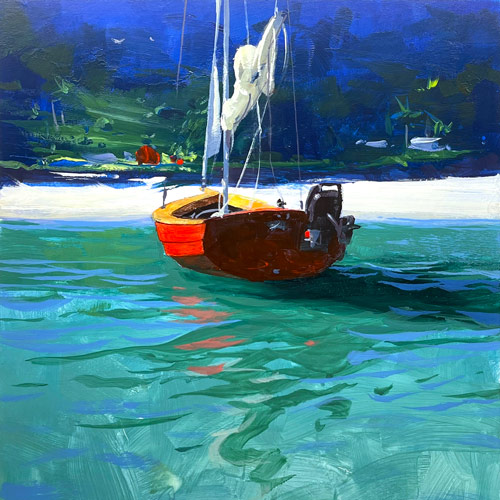
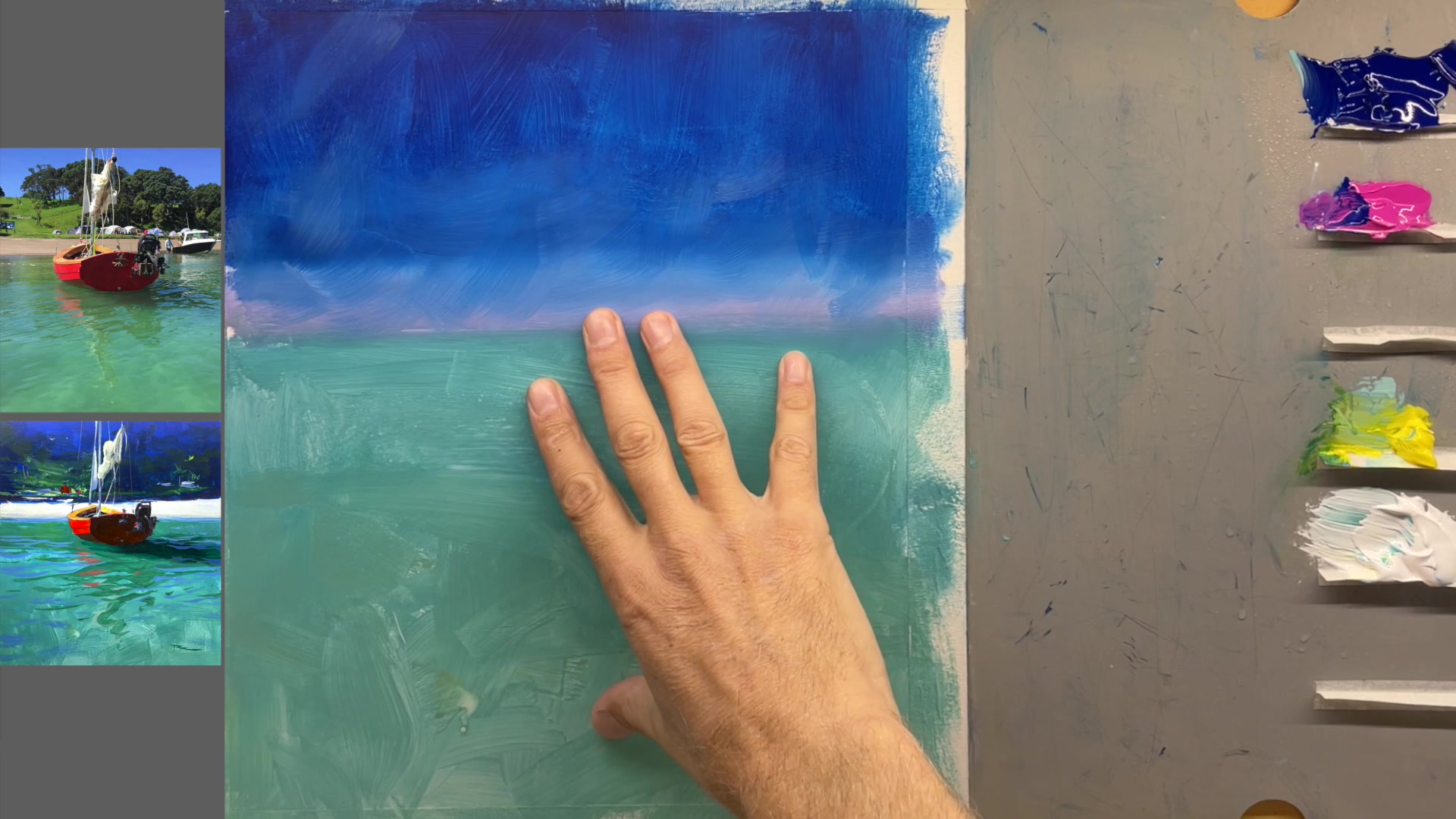
In this chapter, we'll embark on a vibrant journey to capture the essence of a striking red sailboat anchored against the turquoise waters of a tropical paradise. This scene, with its vivid contrasts and serene setting, offers a rewarding challenge for any painter. We'll be working on a 12x16 inch board, primed and ready for your creative touch. Using a mid-grey plastic palette, I'll guide you through the selection of synthetic brushes, primarily flats and a few angles, down to the long rigger brush for those intricate details that bring the rigging to life. The lesson unfolds in six manageable steps, starting with preparing your canvas by sealing the base layer with an acrylic medium. This crucial step ensures a smooth, stress-free painting process. You'll learn to spotlight the background, build translucent water, and make that red sailboat pop with punchy color and crisp details. Whether you're using acrylics or oils, this chapter will enrich your skills and inspire your artistic journey. Let's dive in and explore the beauty of this scene together, one brushstroke at a time.
This guide accompanies the full video lesson. The lesson includes the complete narrated video, the printable PDF chapter, and personalised critique support.
Ensure the painting has dried for at least half an hour. Use a hair dryer for five minutes to speed up the drying process if needed.
Apply Gloss Medium Varnish
Pour a small amount of gloss medium varnish onto the painting surface. Use a flat brush to spread it evenly across the top. Opt for a larger brush to save time.
Seal the Colors
Ensure the varnish covers the entire surface to seal in the colors. This prevents the underlying colors from mixing or reactivating when you add new layers.
Choose Your Finish
Select a gloss or matte finish based on your preference. Ensure it is an acrylic sealer that dries quickly to create a permanent clear layer for further painting.
Pro tipUse a larger brush to apply the varnish quickly and evenly.
Embark on your painting journey by preparing your canvas with a solid base layer, sealed with an acrylic medium for a smooth start. As you build your composition, focus on creating depth by subduing the background and using vibrant colors for your focal point, the red sailboat. This contrast will guide the viewer's eye and bring your subject to life.
When painting the water, use a mix of blues and greens with horizontal strokes to capture its natural flow and movement. Pay attention to light and shadow to add depth and realism. As you move to the boat, apply vibrant, saturated colors with confident strokes to make it stand out against the serene backdrop.
Throughout the process, keep your paints workable by maintaining moisture on your palette and canvas. Use varied brush techniques to add texture and interest, and don't forget to seal your layers to preserve your work. As you add the final details, focus on the big shapes and angles, ensuring your painting captures the essence of the scene.
Points to remember
Seal the base layer with acrylic medium for a smooth painting process.
Subdue the background to enhance focus on the foreground elements.
Use horizontal strokes to capture the natural flow and movement of water.
Apply vibrant colors to make the boat stand out against the background.
Use tape on your palette to prevent paint from dribbling.
Keep the canvas wet with a spray bottle to create interesting textures.
Use a white base under vibrant colors to enhance their intensity.
Squint at your subject to simplify details and focus on big shapes and angles.